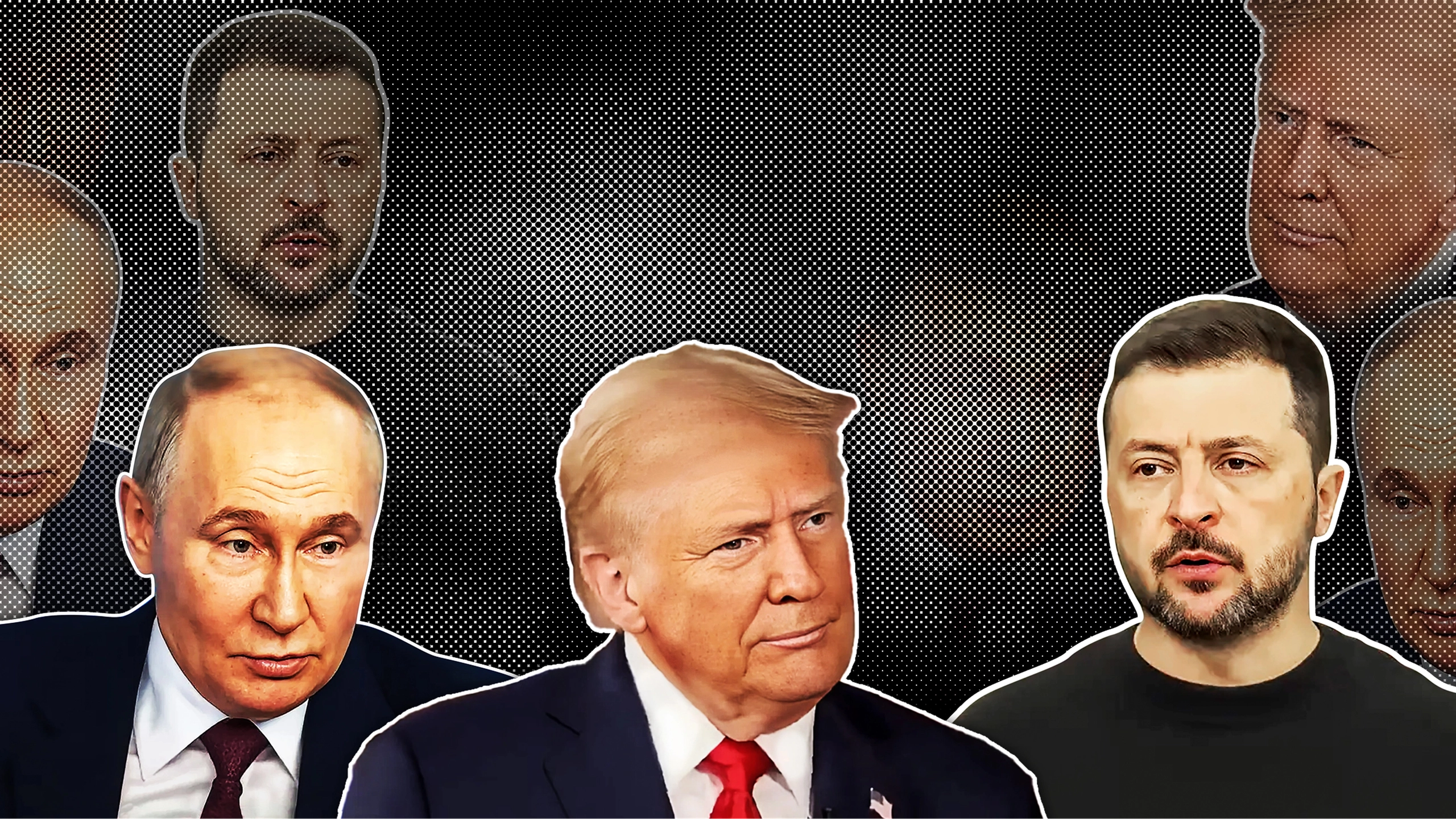
Given that Ukraine peace talks appear to have reached something of an impasse, I thought it perhaps useful to map out what all the main parties want at this stage - what are their objectives with regards to the war in Ukraine, and peace talks.
Anyone’s fault other than Moscow’s
JOIN US ON TELEGRAM
Follow our coverage of the war on the @Kyivpost_official.
A good starting point given that Russia invaded Ukraine and has been the aggressor against Ukraine for more than 20 years – as far back as 2004’s Orange Revolution – since when there is clear evidence of Russian attempts to weaken or undermine Kyiv’s democracy.
Putin appeasers take the view that Russia’s long running aggression against Ukraine was a defensive response to Western exploitation of Moscow’s weakness since the collapse of the USSR in 1991. They would argue that the best representation of this exploitation was the Westward expansion of NATO and EU enlargement through central and Eastern Europe, the Baltics states and to offer prospective membership for Ukraine, Moldova, Georgia, and now even Armenia.
According to this narrative the West has pushed up to Russia’s borders and gobbled up its previous “sphere of influence” making Moscow feel encircled and vulnerable. The West has not respected, or taken any account of, Russia’s defensive and strategic interests.
The argument goes that by annexing Crimea in April 2014, first intervening militarily in Donbas in the summer of 2014, and then resorting to full scale invasion of Ukraine in February 2022, Russia was just responding to genuine fears that Ukraine would be the next domino to fall. Being poised to be the next state to join NATO and the EU, Russia would thereby be further encircled and threatened.
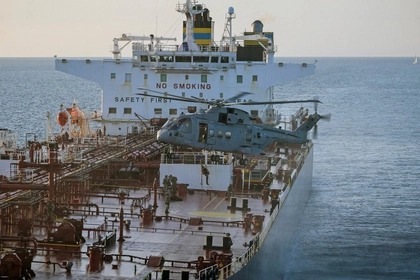
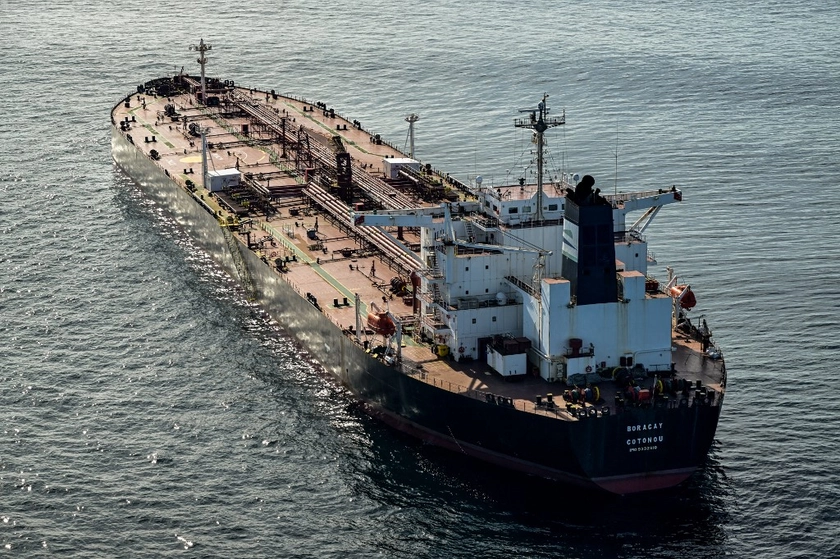
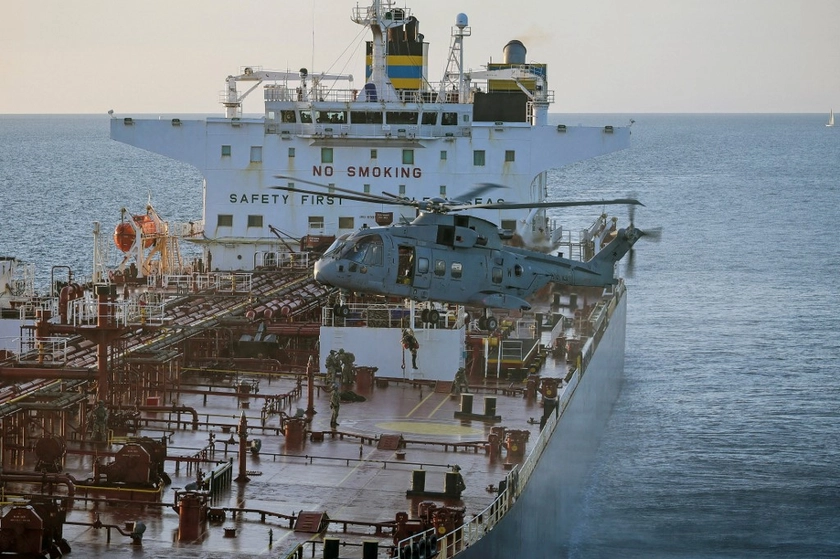
UK Seizure Reveals How Russia’s Shadow Fleet Evades Oil Sanctions
These so-called Russian fears are not actually based on fact – at least when it comes to the real security threat to Russia.
Russia invaded Ukraine, not to counter the perceived NATO threat but because it could.
Was there a threat from NATO expansion?
While NATO did expand across Emerging Europe this was not out of some grandiose Western plot to encircle and eventually attack Russia. Countries like Poland, Romania, the Baltic states et al chose independently to join NATO as they saw this as the best defense against fears over past and future Russian aggression. They voted with their feet, arguably because of Russian failure to reassure them as to its future intentions.
NATO’s expansion across emerging Europe in the years following 1989/91 and the collapse of Communism and the Soviet Union, provided a collective security blanket across the region that made members feel collectively safer and reduced the amounts needed to be spent on defense.
As a result of “collectivization” NATO defense spending in Europe went from 4-5% of GDP during the Cold War, to barely 2% by the time of the annexation of Crimea. The West spent the peace dividend on social needs. The last US main battle tanks had left Europe in 2013. Germany, the UK and most others hollowed out their militaries through countless waves of defense spending cuts. Germany and the UK went from having several thousand main battles tanks each at the end of the Cold War to a few hundred by 2013, and many of those remained barely serviceable. UK’s military has shrunk in size to the smallest it has been since before WWI.
Years of underinvestment in defense in Europe and Ukraine gave Russia the opportunity to invade and it took it.
The unexpected result of NATO enlargement is a situation where Europe is barely able to defend itself, let alone have any real offensive capability to contemplate attacking or invading Russia.
Ukraine and NATO – the historic perspective
Back in 2013, Ukraine had no real desire or prospect of joining NATO. Opinion polls showed single digit support for NATO membership and strong support to retain non-aligned status. Key Western states – Germany and the US were also lukewarm over talk of future further NATO expansion, with Germany actively blocking Georgia’s enthusiastic push for membership.
Ukraine’s military doctrine was still Soviet in design – shaped to counter the threat from the West not the East. It also had little real military capability which Russia knew. This gave the Kremlin the opportunity for a land grab – which ultimately drove Russia’s annexation of Crimea and subsequent invasions of Ukraine. Ironically it was Russia’s aggression which changed the popular mood in Ukraine to a desire then for NATO membership – as a defensive ploy to counter actual Russian aggression.
The apologists will argue that fact that NATO expansion reduced its defensive, let alone its offensive, military capability was not the key point, it’s how this made Russia feel that is important. This in turn implies that by 2013 Moscow was blind to NATO’s diminishing military capability, Ukraine’s all but non-existent military capability, and the barely realistic prospect of Ukrainian NATO membership then and even more so in 2022.
Playing the Russian ignorance card just does not stack up given the huge diplomatic and intelligence capabilities that Russia deploys across the region. Moscow absolutely knew NATO ‘s capabilities in Europe because its members were open in detailing these.
Russia invaded Ukraine, not to counter the perceived NATO threat but because it could, because it perceived Ukraine and NATO to be too weak to push back against Russian aggression. Years of underinvestment in defense in Europe and Ukraine gave Russia the opportunity to invade and it took it.
Putin has a problem with the very existence of Ukraine which he argues is a false construct – Russians and Ukrainians are one people separated by an accident of history, the collapse of the USSR.
Russia’s war was necessary to “protect” Ukraine’s Russian speakers
Russia’s claim to the five regions (Crimea, Kherson, Zaporizhiya, Donetsk and Luhansk) was based, they claim, on a need to protect their Russian-speaking citizens. A line which Trump, Witkoff et al are now parroting as key planks of Russia’s demands in peace talks and war aims.
As someone who has covered Ukraine as an analyst for its entire period since independence I have to say up until Russia’s annexation of Crimea and first invasion of Donbas on 2013, I saw scant reference in Russia to such claims and there were not significant popular movements in any of these regions to join Russia.
Following independence in 1991 all regions of the country voted in a referendum to be part of the newly independent Ukraine and Russia said it accepted Ukrainian independence from the Soviet Union and its territorial integrity. Russia further affirmed its support for Ukraine’s territorial integrity in the now infamous Budapest Memorandum of 1994 where Ukraine – foolishly perhaps with hindsight – surrendered its nuclear Arsenal for these assurances.
Surely at some point prior to 2013, Putin would have set out some claim to Crimea and Donbas, and prior to 2022 to Zaporizhzhia and Kherson. But no, silence. True, in the run up to the full-scale invasion there was talk of the need for Russia to have a land bridge to Crimea, but this seemed to be based more on a military-security calculus rather than some longstanding Russian territorial claim to these lands.
If Russia’s invasion was simply about stopping Ukraine’s NATO membership and claims to the five regions, only, how come the invasion of 2022 appeared full-scale, including an effort even to take Kyiv?
Putin told us the real reason
It is here we get to the real reason for the invasion and Russia’s continuing war objectives remain despite talk of peace.
Usefully Putin spelled it out in his 5,000-word essay on Ukraine released in the summer of 2021 and which was seen as the forebearer of the call to arms for Russian troops in the subsequent invasion.
That essay makes it clear that Putin has a problem with the very existence of Ukraine which he argues is a false construct – Russians and Ukrainians are one people separated by an accident of history, the collapse of the USSR. Putin wants the reunification of Russia and Ukraine, or at the least to regain strategic control of the country.
Trump seems to accept Putin’s premise that weaker countries should bow down to greater powers – an explanation perhaps for his bullying of Canada, Denmark over Greenland, and Panama.
I imagine he could accept a return to the situation in 2009-2013 where Ukraine is run by his puppet – Viktor Yanukovych – with an administration subservient to Russia. But for Putin the idea of an independent and successful Ukraine is abhorrent. He is prepared to continue to intervene, attack, invade, to ensure that an independent Ukraine is not successful. With this mindset there can be no peace between Putin’s Russia and an independent Ukraine.
Putin might accept a peace gift offered by Trump: no NATO for Ukraine, and de jure recognition of Russian territorial claims to the five regions – by the US, at least. But have no doubt this would not be the end state for Putin, but rather a base camp before further intervention and wars to take the whole of Ukraine under his control.
Putin will not be satiated until he controls the whole of Ukraine, that is his aim in war and peace talks, and so it’s a zero-sum game here between Putin, Russia and Ukraine. Hard to see a compromise herein. While during peace talks he might accept these more limited gains, but he would aim for such a bad peace to be ultimately destabilizing and weakening for Ukraine to the point that it would offer him an opportunity for a future attack.
Where does Trump and the US stand?
In Trump’s MAGA cult world, it’s not what US strategic interests are in respect of Ukraine, but where Trump’s personal motivations lie – a complex calculation. He has a long history with both Russia and Ukraine. It seems like much of his thoughts around Russia were formed during his visits to the Soviet Union, and Russia, in the 1980s and later built upon his youthful memories of the Cuban missile crisis.
He seems to respect power and money above all else. He sees Russia as the great(er) power here, at least with respect to Ukraine, and he seems to cherish, or envy, the huge personal power and wealth of Putin himself. Trump seems to crave a strong personal relationship with Putin, and sees Russia, a nuclear power, as perhaps a potential future ally against China – the so called reverse Nixonian.
Trump fails to understand that Putin takes him for a fool. He will ask and take those concessions, but still want more, much more – all of Ukraine.
There is also a sense that Trump still sees the world through the great power prism of the Cold War, agreeing almost with Putin that great powers should have spheres of influence. Trump seems to accept Putin’s premise that weaker countries should bow down to greater powers – an explanation perhaps for his bullying of Canada, Denmark over Greenland, and Panama. Trump seems too willing to agree to Putin’s territorial claims now over Ukraine or sees them as somehow justified perhaps by his own desires toward Greenland, Canada, Panama et al – perhaps as some sort of “quid pro quo” with Putin in terms of Ukrainian territory.
Trump himself has scars from past encounters with Ukraine, including through his own impeachment and perhaps we saw Trump’s own desire for revenge play out then in the now infamous Oval Office encounter with President Zelensky. His instinct seems to be to sell Ukraine down the river to Russia, while also extracting near extortionate terms from Ukraine for any further support – evidenced by the Minerals deal.
But Trump also seems constrained from fully selling Ukraine out to Russia because of ongoing support for Kyiv in the US Congress, amongst the US public but also in Europe – he does not want to be blamed for the collapse of Ukraine.
Trump previously made much of his desire for peace in Ukraine; to avoid bloodshed and even boasted that he could end the war in 24 hours, then 100 days. But he wants easy wins and assumed that a peace could be delivered simply by giving Putin everything he thought the Kremlin desired. He seems to lack a real deep understanding of Putin and seems incapable of investing time in really trying to get inside Moscow’s aims or the war in Ukraine. He is happy to take at face value whatever Putin tells him – putting his trust in a war criminal and serial liar, more than his own intelligence agencies and his allies.
Putin tells him the war is about NATO expansion, Ukrainian arms buildup, and the five regions – and Trump believes him. Trump fails to understand that Putin takes him for a fool. He will ask and take those concessions, but still want more, much more – all of Ukraine.
Ukrainians know they have no choice but to fight and hold out for a victory or a real peace which leaves the country standing as an independent and sovereign nation able to defend itself against future Russian aggression.
Trump either does not understand this or cannot be bothered to invest real time in understanding the reality. Trump thinks his instincts are right on everything even though on this occasion he has been completely wrong on the war, and peace process. It seems from his latest call with Putin that Trump is finally realizing that a quick peace in Ukraine is beyond even his grasp. Perhaps seeing the risks of his failure, he is looking to pass the buck back to Europe, and even the Vatican for peace talks.
Meanwhile, it’s clear that Trump wants to get back to business as usual with Russia. He sees Putin as desperate for US investment and thinks that he can leverage opening US back up for business with Russia to his advantage. Trump wants to move on from Ukraine to doing business with Russia.
And what about Ukraine?
Ukrainians understand completely what Putin’s ambitions are with respect to their country – its total capitulation. They also understand what a Russian victory means – the end of Ukraine as a sovereign state, accompanied by mass genocide against any opposition. Ukrainians know they have no choice but to fight and hold out for a victory or a real peace which leaves the country standing as an independent and sovereign nation able to defend itself against future Russian aggression.
Any Ukrainian leader would be loath to surrender any territory to Russia – because they know that it would be the thin end of the wedge. Itt would not satiate Putin but just increase his appetite to take more Ukrainian territory. It would also mean the end of any Ukrainian politician’s career who agreed any such territory compromise.
Ukraine’s president Volodymyr Zelensky likely knows he would face a military coup if he accepted any such compromise. Ukraine could though accept a freezing of the front lines as, while a de facto acceptance of the status quo, it would be in exchange for assurance of the security of territories remaining under the control of Kyiv.
This security could be either through NATO membership, bilateral security guarantees or assurance of military supplies to Ukraine – sufficient that it will be able to defend itself – along with enough economic support to underpin political and social stability and its own defense. Ukraine will not accept any peace that imposes limits on its military capability.
Ukraine now understands that the US under Trump cannot be trusted and ultimately wants to sell Ukraine down the river to Russia. But Ukraine also understands that while Europe can provide financing to sustain the war, it still needs access to key US munitions.
Ukraine is playing along with Trump’s peace efforts so as not to be blamed for the breakdown of peace talks and the pulling of remaining US military support. It is playing for time but understands that it might have to break with the US, if Trump tries to impose conditions that cross its red lines – including the loss of territory or restrictions on its military capabilities.
While it buys time, it draws down on US military support, builds its own autonomous military capability and hopes that its European allies do the same, sufficient that they can eventually help feed the gap left if the US eventually walks away. Ukraine is though willing to fight on, even without US support, as it has no choice – Putin represents an existential threat to its survival.
The nightmare for Europe is that the US pulls military support from Ukraine and then Russia quickly wins the war, capturing Kyiv’s now substantial military industrial complex.
What about Europe?
The recent Munich Security Conference was a Eureka moment for Europe. The penny finally dropped that it faces its own existential threat from Russia and the US security backstop is no longer guaranteed or to be trusted. It has to build a military capability independent and autonomous from the US, but this will take time – perhaps five to ten years as it recovers from the neglect of the past.
What can do they do in the interim?
Well first they have to continue to be nice to the US, and Trump in particular, even if they find him totally obnoxious. They need the US to continue to sell them key munitions to fill the gap until they can reach some level of autonomous military capacity.
Secondly, they have to hope that Ukraine holds out as long as possible, to buy them time. The nightmare for Europe is that the US pulls military support from Ukraine and then Russia quickly wins the war, capturing Kyiv’s now substantial military industrial complex. This would then leave an enfeebled Europe facing the largest military industrial complex in Europe – Russia plus Ukraine.
That’s an extinction-style event for Europe, the EU, European values, et al. So whatever Trump does, Europe has no choice but to still support Ukraine. It must keep sanctions in place as long as possible to keep the Russian economy weak and unable to regenerate its conventional military capability – which will inevitably be used in the future against Europe if it is not beaten.
Europe thus remains desperate to keep Ukraine in the war, as its own front-line defense. Any peace that is concluded needs to ensure Ukraine is sustainable as Europe’s defensive front line.
The views expressed are the author’s and not necessarily of Kyiv Post.
You can also highlight the text and press Ctrl + Enter