While public opinion across Europe views the reconstruction of Ukraine through a lens of solidarity, the business world faces a far more technical and complex reality: sanctions. On June 10, the Italian Trade Agency in Kyiv organized a webinar entitled “EU Restrictive Measures Related to Ukraine.” The event, opened by Fabrizio Giustarini, Director of Italian Trade Agency (ICE) in Kyiv, featured lawyer Dario Gorji Varnosfaderani from the law firm De Capoa & Partners. At the heart of the discussion was a crucial question: how can businesses operate in a legal landscape dominated by increasingly stringent EU regulations targeting Moscow?
The weight of law in reconstruction
JOIN US ON TELEGRAM
Follow our coverage of the war on the @Kyivpost_official.
More than three years since the full-scale invasion and over a decade since the illegal annexation of Crimea, Europe’s response to Russian aggression has been firm – albeit often underestimated in terms of its practical impact. The EU has implemented a complex sanctions regime aimed at weakening Russia’s political-military apparatus and cutting off its sources of funding. However, these measures also affect the ability of European businesses to operate in Ukraine and, paradoxically, the very process of rebuilding the country.
A multi-level legal framework
The EU sanctions regime currently rests on three main pillars: geographic restrictions, targeted (or subjective) restrictions, and controls on dual-use goods.
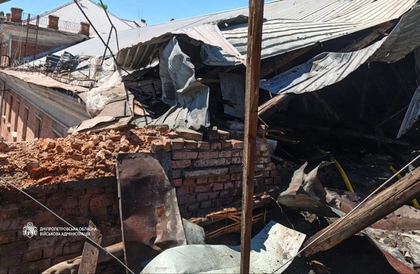
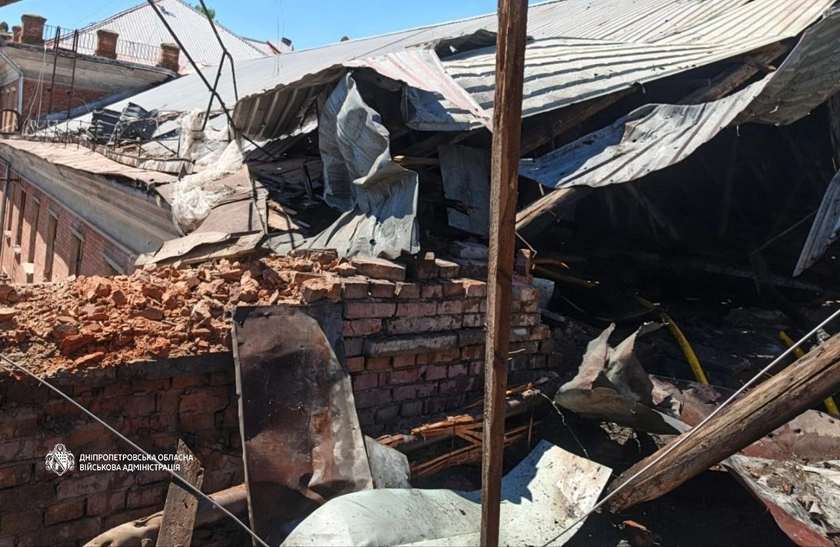
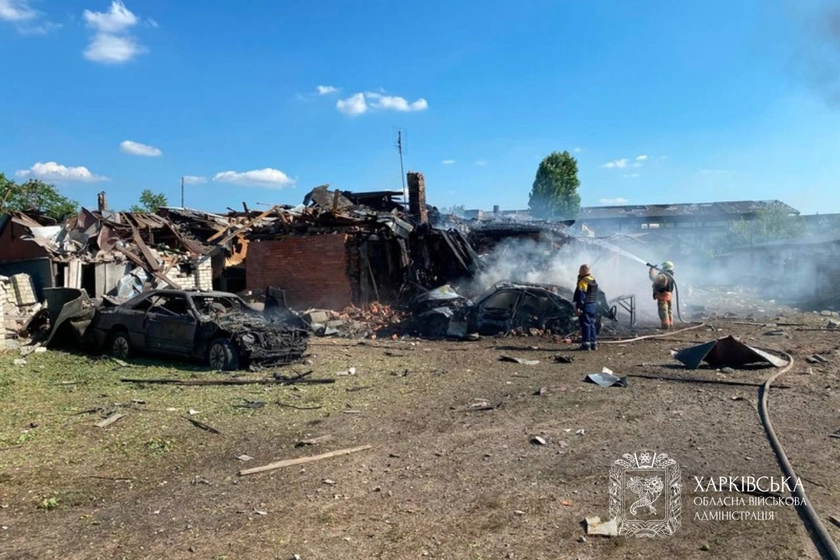
Russia Strikes 4 Districts in Dnipropetrovsk Region, Injuring 2
Prohibited geography
Regulation 692/2014 (concerning Crimea and Sevastopol) and the more recent Regulation 263/2022 (concerning Donetsk, Kherson, Luhansk, and Zaporizhzhia) ban European companies from engaging in economic, financial, or investment activities in the occupied regions.
This does not apply solely to physical goods; affected sectors include transport, energy, telecommunications, tourism, business software, professional services, and financial instruments. The restrictions are codified with precision through customs nomenclature. No joint ventures, subsidiaries, loans, or property purchases are permitted. It is a total barrier – difficult to circumvent and dangerous to ignore.
Sanctioned entities
Regulations 208/2014 and 269/2014 set out a list of around 2,000 sanctioned individuals, companies, and industrial conglomerates with whom any economic exchange is prohibited. While the term “blacklist” is avoided, the effect is essentially the same. European companies must ensure that their transactions do not involve sanctioned beneficiaries, suppliers, buyers, or end users. This legal responsibility requires rigorous due diligence, identity verification (including correct transliteration from passports), and formal declarations from end clients.
Inviting a sanctioned individual to a conference or trade fair? Risky. Selling to a seemingly clean entity that is in fact fronting for a sanctioned group? Even worse.
Dual-use dilemmas: civilian or military?
Regulation 821/2021 focuses on dual-use goods – technologies, components, and software that, while civilian in nature, may also be used for military purposes. This is where ambiguity becomes particularly dangerous. A turbine, microchip, or enterprise software program might easily be repurposed for warfare. Exporting companies are required to pre-assess their products and consult national authorities for specific confirmation on customs classifications.
The illusion of extraterritoriality
Unlike the United States, the EU does not enforce secondary sanctions – those that target third parties outside its jurisdiction. However, the principle of “non-circumvention” is unambiguous: if a European subsidiary trades with sanctioned entities through shell companies based in third countries, it will be held accountable.
The message is clear: EU sanctions cannot be bypassed. They must be respected – and embedded from the outset into business strategy, particularly for companies operating in Ukraine.
A key challenge for reconstruction
On one hand, restrictive measures are essential for isolating Russia’s war economy. On the other, they place significant constraints on the operational capacity of both European and Ukrainian companies that aim to build the future. Every construction project, every investment, every delivery must now pass through the filter of international legality. This is why Ukraine’s reconstruction cannot proceed without full awareness of the current legal framework.
Lawyers are now part of the project team. Legal checklists come before architectural renderings. And an export manager must be able to read EU regulations as fluently as they read financial statements.
The war has changed geopolitics – but it has also changed what it means to be a European entrepreneur.
You can also highlight the text and press Ctrl + Enter