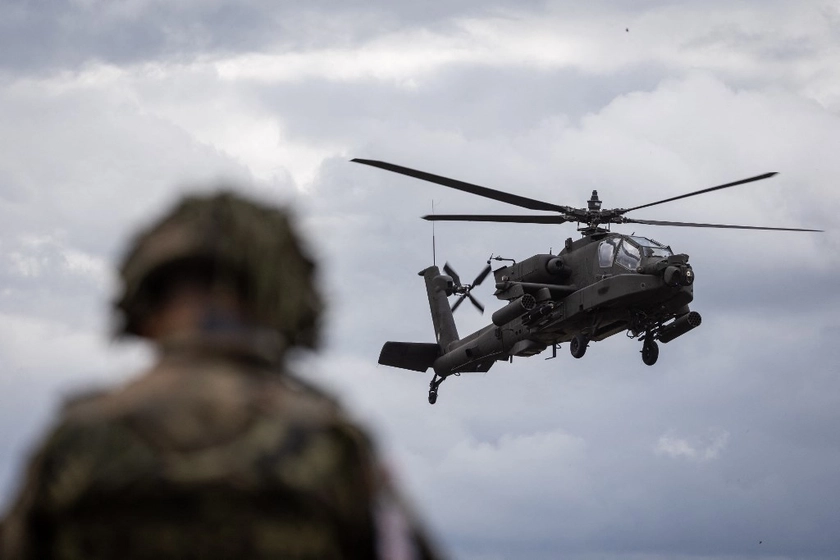
Europe allocated to Ukraine an extra €10.4 billion ($12 billion) in military aid and €9.8 billion ($11.3 billion) in humanitarian and financial aid in March and April 2025 – the largest two-month donation since the beginning of Russia’s full-scale invasion.
Meanwhile, the United States, previously the largest donor, has not provided any new aid to Ukraine since the beginning of the year, according to the latest update to the Ukraine Support Tracker by the Kiel Institute for World Economics.
JOIN US ON TELEGRAM
Follow our coverage of the war on the @Kyivpost_official.
For the first time since June 2022, Europe surpassed the US in total military aid to Ukraine. European countries have now pledged €72 billion ($83.3 billion), compared to Washington’s €65 billion ($75.2 billion) – through to April 2025.
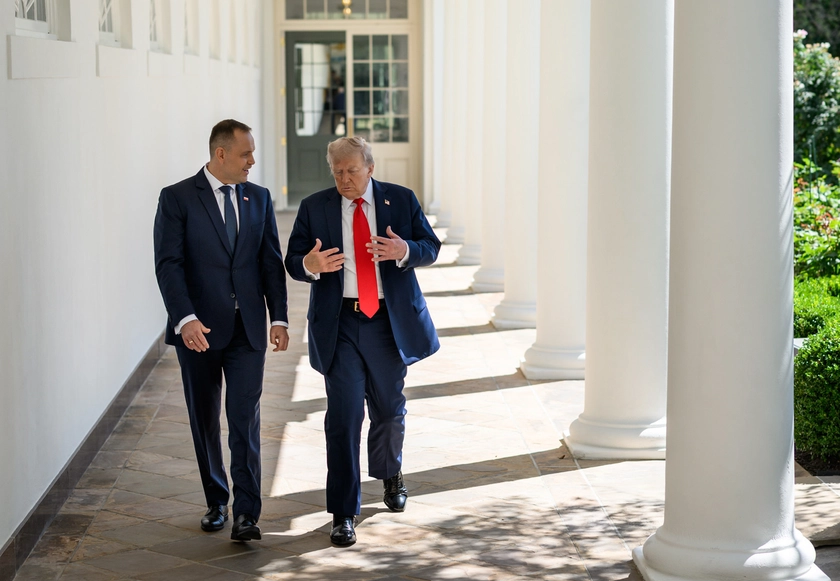
Europe has stepped up aid as the United States has pulled back on its support to Ukraine since Donald Trump returned to the White house, the Tracker shows.
Europe has managed to partially close this gap, especially in terms of financial aid. According to the Kiel Institute, average monthly aid from January to April 2025 was slightly higher than the average for 2022-2024.
“It is remarkable that Europe has filled the gap,” Christoph Trebesch, head of the Ukraine Support Tracker project said. “It remains to be seen whether this is a temporary spike or the beginning of a more lasting shift in Europe’s role as the main supporter of Ukraine.”
Czech Party Seeks to Strip Zelensky of Country's Highest Honor
The surge in European aid came from a handful of countries: Sweden pledged €1.6 billion ($1.9 billion) in March, Norway followed with €670 million ($775.1 million) in April – record monthly figures for both. Together, they and other Nordics increased their support by €5.8 billion ($6.7 billion) in the first four months of 2025.
Among Europe’s larger economies, the United Kingdom also stepped up with €4.5 billion ($5.2 billion) in aid since January – €1.8 billion ($2.1 billion) of which came from dividends on frozen Russian assets. France allocated €2.2 billion ($2.5 billion), including €195 million ($226.6 million) from Russian assets. EU institutions collectively added €12.2 billion ($14.1 billion), the Tracker shows.
In June 2024, the G7 countries and their allies signed an agreement launching the Extraordinary Revenue Acceleration (ERA) initiative, under which Ukraine will receive a $50 billion loan, financed by interest income from frozen Russian sovereign assets.
Moscow’s assets were frozen following Russia’s full-scale invasion of Ukraine. Ukraine still aims to fully obtain the principal €210 billion ($227 billion) in immobilized Russian central bank assets.
Germany, by contrast, pledged €650 million ($752.1 million) in 2025 – a drop of 70% compared to the same period last year. Spain and Italy provided just €10 million ($11.6 million) and €20 million ($23.1 million) respectively.
“... It is striking how little Germany has allocated in recent months. Rather than increasing its support after Trump took office, we observed a sharp decline in German aid compared to previous years. The same trend applies to Italy and Spain,” Trebesch said.
The Ukraine Support Tracker project records military, financial, and humanitarian aid from 41 countries, as well as EU institutions. It does not account for private donations or support to neighboring countries like Moldova.
The EU could compensate for the loss in US aid to Ukraine, should Washington pull its support, by increasing its contribution by a mere 0.21% of its annual GDP.
This would see it increase from €44 billion ($50 billion) to €82 billion ($93.3 billion), Trebesch said in April.
You can also highlight the text and press Ctrl + Enter