Hungarians consider Ukraine almost as big a threat as Russia, Hungarian daily Népszava reported on Sunday, citing a survey by Pew Research Center.
According to Népszava, the outcome of the survey comes as a result of the “effectiveness of Viktor Orbán’s government propaganda.”
JOIN US ON TELEGRAM
Follow our coverage of the war on the @Kyivpost_official.
The survey respondents were presented with a list of several countries and asked whether they considered them a threat to Hungary. A third (33%) said they consider Russia to be the main threat. Ukraine came in second, with 27%.
There were notable differences in how people answered based on their voting preferences.
“Only 11% of the ruling Fidesz’s supporters consider Russia the main threat, whereas among those who do not vote for Prime Minister Viktor Orbán’s party, the figure is 52%,” the Népszava reported.
By contrast, 45% of Fidesz voters see Ukraine as the main threat to their country, whereas the number is 14% among supporters of other parties and undecided voters.
The survey cited by Népszava also showed that about three-quarters of Hungarians do not trust Ukraine’s president, Volodymyr Zelensky.
The survey by Pew Research Center also produced another interesting result, Népszava noted. In spite of Orbán’s anti-EU policies, 24% of Hungarians consider the bloc Hungary’s most important ally, closely followed by the U.S., with 23%.
Russia Jails LGBTIQ Club Staff in First ‘Extremism’ Case, Sentences Up to 7 Years
Anti-Ukrainian campaign
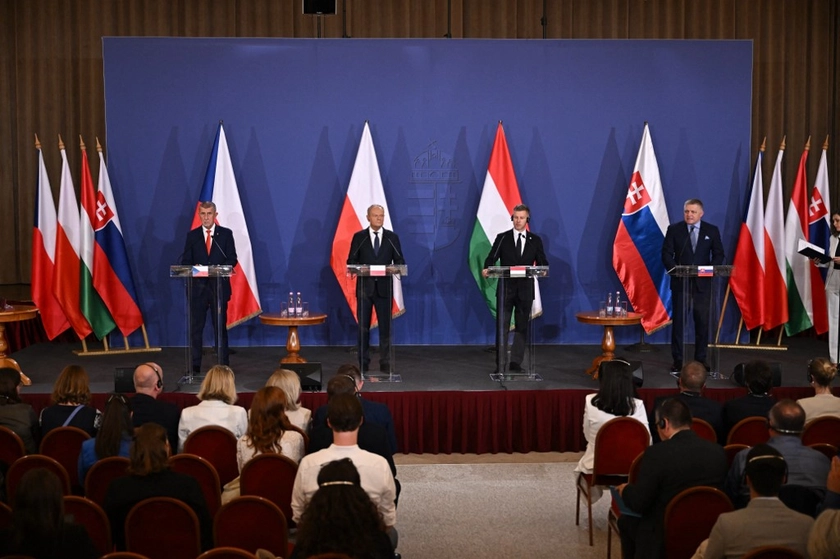
The Hungarian government strongly opposes Ukraine’s accession to the EU and has been criticizing Kyiv for “prolonging” the war with Russia.
What is more, the government carried out a non-binding referendum, dubbed a “national consultation,” in which it asked Hungarians how they felt about Ukraine’s accession to the EU, according to which 95% of those who voted were against Kyiv joining the bloc.
Throughout the duration of the “consultation”, Hungarian authorities were conducting an anti-Ukrainian campaign.
It should also be noted, however, that fewer than 2.3 million participated in the online and mail-in survey, which was held over a period of over three months (March 15 - June 20).
For comparison, more than 5.7 million out of some 8.2 million eligible voters participated in the most recent parliamentary election, held on April 3, 2022
You can also highlight the text and press Ctrl + Enter

Hungary Blocks Ukraine, Moldova’s EU Membership Talks