Is there any turning back Zelensky’s anti-corruption rollback?
President Volodymyr Zelensky signed the controversial Bill 12414 into law on the evening of July 23. The legislation places both agencies under the authority of the Prosecutor General, effectively ending their ability to conduct independent investigations into corruption.
JOIN US ON TELEGRAM
Follow our coverage of the war on the @Kyivpost_official.
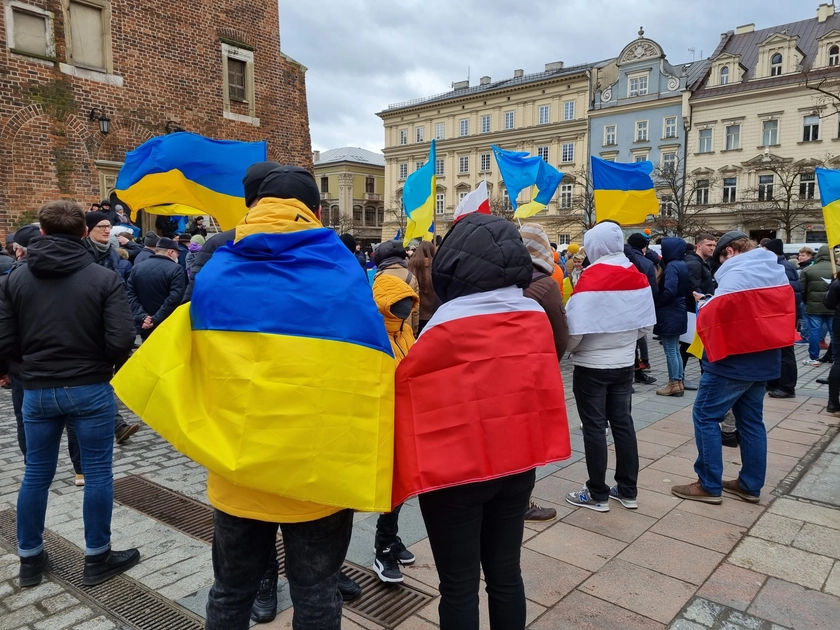
As a result, thousands of demonstrators gathered in Kyiv last week in fierce opposition to the bill, though some lawmakers argued that the move was necessary due to concerns that the agencies could be infiltrated or influenced by Russian interests.
In response to mounting domestic and international criticism, Zelensky has proposed a new draft law aimed at restoring the agencies’ independence. His version includes a requirement for polygraph tests for anti-corruption officials who have relatives in Russia.
On Thursday, July 31, the Ukrainian parliament is expected to consider not only the president’s proposal but also 7-9 alternative drafts submitted by other lawmakers.
Kyiv Post has reached out to members of all parliamentary factions to assess the chances of Zelensky’s new draft being adopted and to identify any potential pitfalls.
What do lawmakers say?
Oleksandr Vasyuk, a member of Zelensky’s Servant of the People party and the parliament’s Legal Policy Committee, told Kyiv Post that the faction will back Zelensky’s new draft law, No. 13533, following their support for the previous bill No. 12414.
Ukraine Approves National Pantheon Law to Honor State Builders, Military Leaders and Cultural Icons
“This is an important and truly high-quality document that was jointly developed and publicly supported by NABU, SAPO, the National Agency for the Prevention of Corruption (NAZK), as well as our international partners,” Vasyuk said.
“We expect that it will receive the support of a constitutional majority in parliament. The Servant of the People faction will vote for it,” he added.
According to the lawmaker, Bill No. 13533 will enhance the independence and effectiveness of Ukraine’s anti-corruption agencies.
“Moreover, this is an important step on Ukraine’s path to European integration and a confirmation of our irreversible commitment to the principles of the rule of law,” Vasyuk told Kyiv Post.
“I insist that the state must guarantee the anti-corruption bodies’ resource independence. The budget for 2026 must clearly include funds for the full-fledged work of NABU, SAPO, and NAZK – without delays, cuts or attempts to apply pressure through financial leverage,” he added.
“It is a situation [Zelensky] created himself.”
Meanwhile, lawmaker Lyudmila Buimister from the Batkivshchyna faction, who is also a serving military officer, criticized the recent events in parliament, calling them not a reform, but a major political distraction from three key issues.
“The first is the Istanbul negotiations, which started completely without public awareness or red lines... The Russian side is talking about some memorandums that we know nothing about, while we are dealing with laws on NABU and SAPO,” Buimister said.
She added that the second distraction is the situation on the front lines, which requires “maximum unity of Ukrainian society and mobilization of all resources.”
“Thirdly, the authorities have written into the previous law that came into force an additional immunity for the head and deputies of the President’s Office – formally legalizing their immunity, particularly from the independent anti-corruption bodies,” Buimister said.
“They’ve completely removed themselves from their jurisdiction.”
Buimister said that while Zelensky’s draft law partially addresses the situation, “it is a situation he created himself.”
“But even in this draft, Zelensky is trying to preserve the possibility for the Security Service of Ukraine (SBU) to influence NABU and SAPO through polygraph tests,” she added, warning that in the worst-case scenario, this could paralyze the agencies’ work.
Buimister supports the alternative draft submitted by her faction, which, she says, includes the creation of a National Assembly of Heroes of Ukraine.
“I think this is a very important step, so that we begin to build a policy of honor and respect for living heroes – not just in words, but in action. We need to make it clear: If you are a Hero of Ukraine, then you should influence everything that happens in the state,” she said.
“At least some law must be passed.”
Oleksiy Honcharenko, a lawmaker from the European Solidarity faction linked to former President Petro Poroshenko and a member of Ukraine’s delegation to the Parliamentary Assembly of the Council of Europe, told Kyiv Post that his faction will decide how to vote on Thursday.
“And I will, of course, support the law – even the presidential version – although it is not ideal. It is obvious that the presidential draft has the best chance of being adopted. At least some law must be passed,” he said.
Honcharenko added that he had submitted an alternative bill, which he said reflects all the recommendations of the Agency for Legislative Initiatives. His main criticism of Zelensky’s draft is that it still allows the Prosecutor General to access NABU and SAPO case materials.
“We understand that the Prosecutor General is a political figure appointed by the president. Therefore, in my opinion, this is unnecessary,” Honcharenko said.
Yulia Sirko, a lawmaker from the Holos (Voice) faction and first deputy chair of the Committee on Transport and Infrastructure, told Kyiv Post that her faction’s version of the draft law was registered first – and they will demand it be put to a vote.
“Colleagues from different factions are also registering alternative drafts to the president’s,” Sirko said. “There will be a variety of bills that can be supported. If they correspond to what was there before, plus or minus 80%, and there are no pitfalls, then we support all the bills that will be in the hall.”
According to Sirko, Zelensky’s bill essentially reverts the situation to where things stood before the previous bill was passed. However, the draft omits a provision that would have prohibited searches without a court decision – a measure that had been requested by business groups in particular.
“Now, both business and many, let’s say, opposition politicians complain that they are being searched without any court decisions,” Sirko said.
“On the one hand, such a norm seems to be an interference in the activities of prosecutors, which should not be, but if it were written in a normal way, it would be a kind of safety net that would allow this arbitrariness that is currently taking place to be stopped,” she said.
Sirko described Zelensky’s new bill as “normal for voting.”
“But in any case, the presidential draft, let’s say, is normal for voting,” she added.
However, opinions among lawmakers about how the vote might proceed are divided.
While Vasyuk is counting on Zelensky’s bill being supported by a constitutional majority, Buimister argued that the vote last week should be scrapped altogether.
“Instead of analyzing various alternative bills, we need to do a very simple thing – all the factions should cancel the vote on No. 12414, and never raise this issue during the war.”
Honcharenko believes the bill should be passed in full without delay.
“I believe that this draft law should be voted on immediately as a basis and as a whole. That would be right,” he said.
“We need to vote on it as a whole and not open Pandora’s box with the second reading.”
Potential pitfalls
Sirko does not share her colleague’s optimism, noting that the draft might go to a second reading.
“As far as I understand, the pro-government faction has issues with the votes and, perhaps, they are trying to convince their colleagues to vote, as an option, only in the first reading,” she said.
Sirko sees this as a serious risk.
“First of all, we are dragging out this process and are not responding to the demands of our people. Secondly, this will allow dragging out the process for those people who are trying to somehow escape justice, and during this period, until the vote in the second reading, they can do it,” she said.
She also pointed out that the earlier bill, which Zelensky already signed into law, is currently in effect. Under that legislation, the Prosecutor General can already take cases from the NABU and SAPO.
“I consider this a great danger and believe that the bill, even if it is not perfect, returns 80% of what it was. We need to vote on it as a whole and not open Pandora’s box with the second reading,” Sirko said.
In his July 29 evening address, Zelensky assured Ukrainians and international partners that he would fix the damage caused by a law he signed earlier this month. He submitted a corrective draft to parliament on July 24.
The urgency comes amid reports that the EU has frozen major funding until the independence of NABU and SAPO is restored. According to Ekonomichna Pravda (EP) sources, the EU informed Kyiv through diplomatic channels that all financial aid was suspended pending reform.
“Everything has been put on hold until the situation is resolved,” a source told EP.
EP also reported a letter warning Ukrainian Prime Minister Yulia Svyrydenko that the EU could block future funds if reforms are not enacted. The aid is contingent on restoring NABU and SAPO’s independence from the Prosecutor General’s Office.
But following the article’s publication, EU Delegation spokesperson Nicolò Gasparini and a French Embassy official told Kyiv Post the €1.5 billion ($1.7 billion) cut was linked to Ukraine’s “underperformance” under the Ukraine Facility – not the anti-corruption law.
“In this specific case, the €1.5 billion [$1.7 billion] cut is not linked to last week’s developments on the anti-corruption bodies, but it refers to the fourth request for payment under the Ukraine Facility,” Gasparini said.
“Indeed, on June 6, Ukraine requested a partial payment (€3 billion [$3.5 billion]) instead of €4.5 billion [$5.2 billion],” he added.
You can also highlight the text and press Ctrl + Enter