Introduction
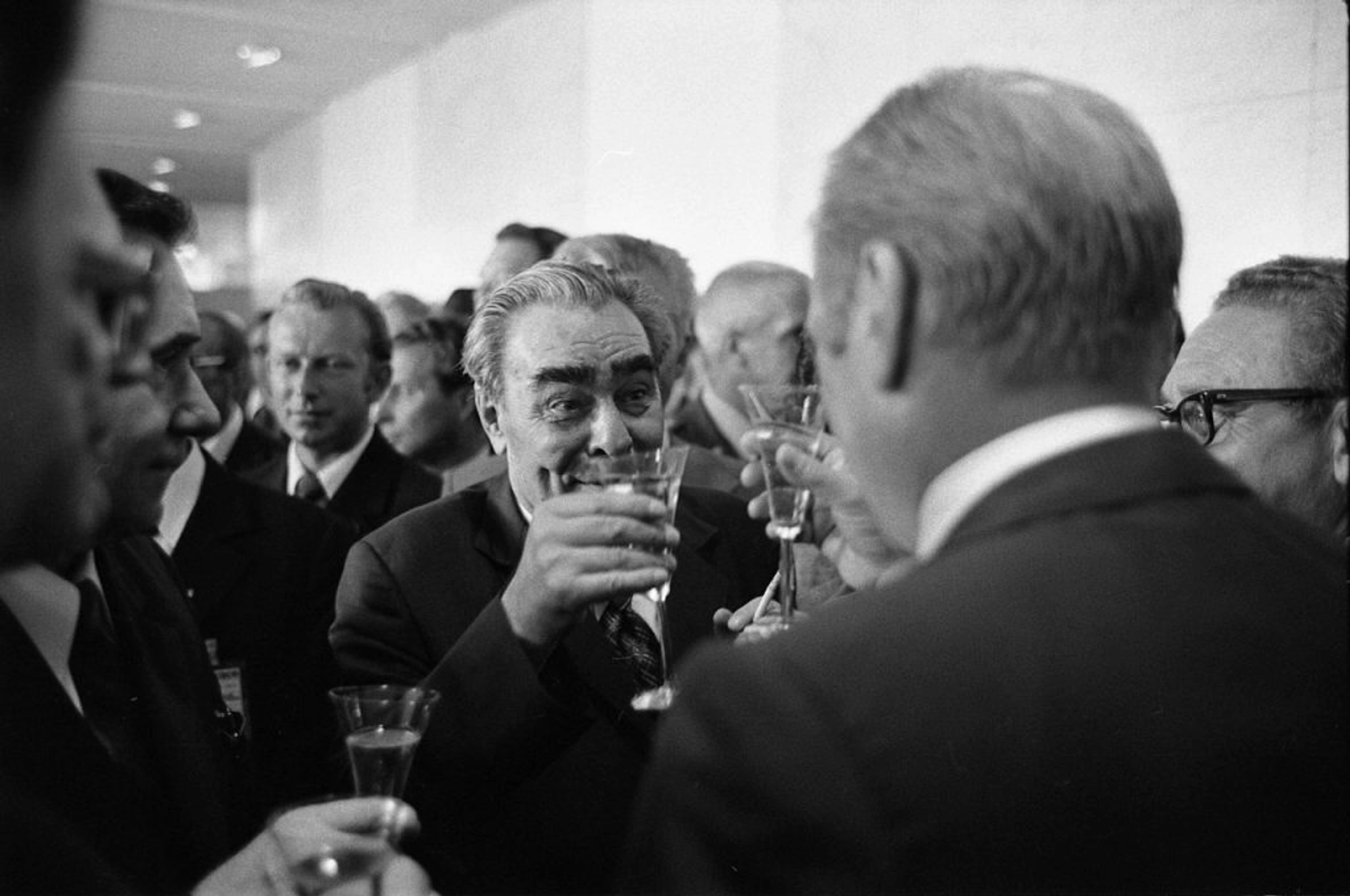
On 1 August 1975, after the conclusion of the Conference on Security and Cooperation in Europe in Helsinki in 1975, its Final Act affirmed the European nations’ mutual respect for the inviolability of borders and the protection of human rights and fundamental freedoms.
JOIN US ON TELEGRAM
Follow our coverage of the war on the @Kyivpost_official.
It marked a breakthrough in the Cold War conditions of that time because it provided a new framework for human rights campaigners to work within and for international dialogue on these sensitive issues to be conducted.
The development of the Helsinki process was influenced by the efforts of human rights activists within the Soviet Union and Eastern Europe and of their committed supporters in the West, and by hard bargaining and trade-offs in the sphere of realpolitik between two adversary camps – the Western and the Moscow-dominated communist bloc.
Background – Soviet Domination Over Eastern Europe and Western Responses
Soviet control over Eastern Europe had been endorsed through the Yalta agreement of 1945 by the victorious Allies (Stalin, Roosevelt, Churchill) and was further reinforced by subsequent armed interventions in East Germany (1953), Hungary (1956), Czechoslovakia (1968), and, indirectly, Poland (1981). Protests from the West had no impact.
Without a formal peace settlement after the Second World War, the Soviet Union pursued a European security conference to secure diplomatic recognition of the postwar political status quo and its gains in Eastern Europe.
Trump to Join Zelensky for G7 Working Session on Ukraine Peace Conditions
The Helsinki Accords and Human Rights
Eventually, a trade-off was achieved in Helsinki in 1975. The Soviet Union achieved diplomatic recognition of the status quo in exchange for agreeing to uphold basic human rights.
While Soviet leaders may have doubted the enforceability of these commitments, for human rights activists in the USSR and Eastern Europe, the Helsinki Final Act was a significant breakthrough. By linking human rights to broader security and cooperation agreements, activists gained a new tool to challenge their governments and sought backing from other signatory states.
Competing Priorities in the West
Although Western states publicly supported human rights, their priorities often lay elsewhere. The United States focused on NATO’s missile deployments and countering Soviet influence, while West Germany’s Chancellor Helmut Kohl publicly advocated for German reunification.
Economic interests also shaped policy, as seen in the disagreement between the Reagan administration, which called for a boycott of the Euro-Siberia pipeline, and British Prime Minister Margaret Thatcher, who prioritised British jobs and contracts.
Shifting Strategies and Persistent Advocacy
While the Reagan administration promoted gradual democratization in the Soviet Union, Western European leaders distanced themselves from this approach, dismissing it as “megaphone diplomacy.”
The deaths of three Soviet leaders between 1982 and 1985 further complicated international relations. Despite hesitation and double standards among Western officials, persistent advocacy by activists and NGOs kept human rights on the agenda at Helsinki review meetings. Some dissidents, freed and allowed to emigrate, became powerful voices for change, aided by the Helsinki process.
Consensus, Linkage, and Reform
The Helsinki process, built on consensus and interconnected issues, ensured continued engagement of the Soviet Union and its allies. To advance their interests, these states had to address human rights concerns. In the latter half of the 1980s, Mikhail Gorbachev’s policy of glasnost sparked unexpected political liberalization, the release of political prisoners, and growing tolerance for pluralism. As debates over human rights subsided, the Soviet focus shifted toward disarmament, and the political landscape of Eastern Europe began to transform.
The End of Division and the Birth of the OSCE
With the collapse of the communist bloc and the fall of the Berlin Wall in 1989, the principles enshrined in the Helsinki Final Act were finally realized.
At the Paris summit of November 1990, the Charter of Paris for a New Europe was adopted, reaffirming and expanding on the initial commitments and recognizing the vital role of NGOs and religious groups.
The Conference on Security and Cooperation in Europe (CSCE) evolved into the Organization for Security and Cooperation in Europe (OSCE), poised to address the challenges of a new era—most notably, the dissolution of the Soviet Union and the emergence of 15 independent states.
Legacy of the Helsinki Process
The Helsinki process contributed to the democratization of Eastern Europe and the end of the continent’s political division. The dedication and resourcefulness of activists, NGOs, and dissidents were pivotal in this transformation, and their efforts stand as a testament to the power of persistent advocacy for human rights and political change.
The Situation Now
After Russia’s violation of international law from 2014 onwards by its disregard for the inviolability of recognized international borders, seizure of Ukrainian territory, and launch of a full-scale war against its neigbor in 2022, as well as its reliance on severe repression at home and in allied Belarus, the Helsinki process and the OSCE itself appear to have been made largely defunct.
This Explainer is based on a Foreword by the author for Christina Isajiw: Negotiating Human Rights. In Defence of Dissidents during the Soviet Era. A Memoir (Canadian Institute of Ukrainian Studies Press, Edmonton, Toronto, 2014).
You can also highlight the text and press Ctrl + Enter

Putin’s Worst Nightmare