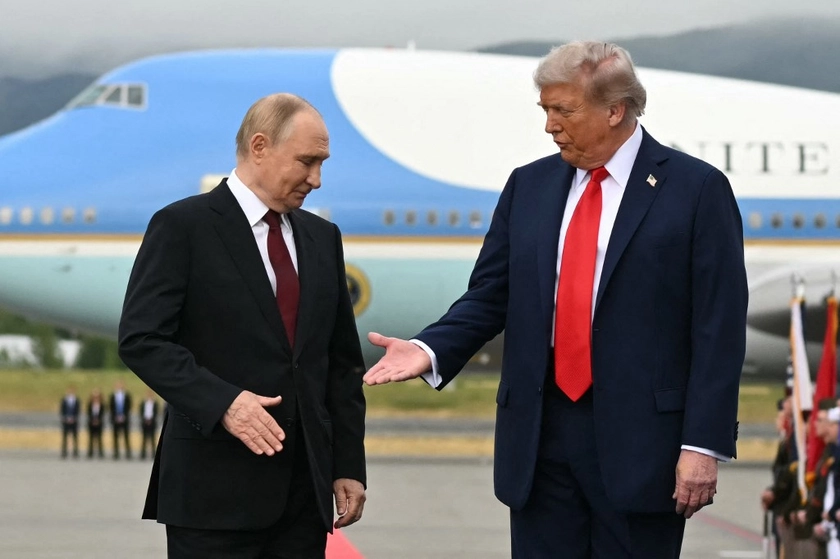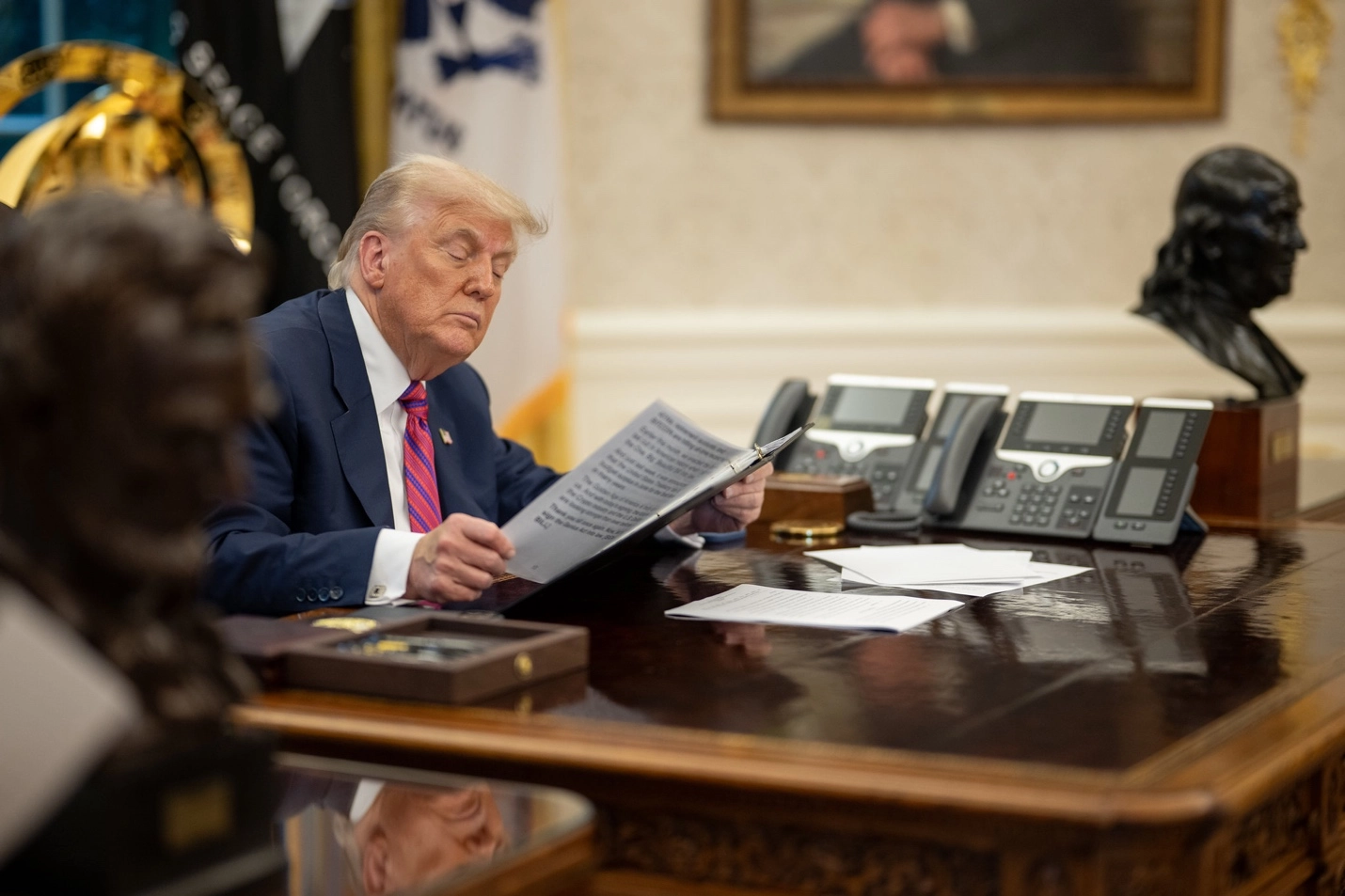
WASHINGTON DC – As US President Donald Trump threatens a new round of tariffs and secondary sanctions aimed at punishing Russia for its ongoing war in Ukraine, the question of their effectiveness is once again front and center.
The answer, according to analysts and specialists in this geopolitical field of sanctions economics, may depend less on the specific tools used and more on the administration’s willingness to enforce them consistently.
JOIN US ON TELEGRAM
Follow our coverage of the war on the @Kyivpost_official.
Trump has indicated that new sanctions could be implemented this week if Russia does not agree to a ceasefire.
Yet, he has also voiced skepticism, telling reporters that Russians are “wily characters and they’re pretty good at avoiding sanctions.”
Challenge of ‘follow-through’
Brad Brooks-Rubin, a former senior adviser in the Office of Sanctions Coordination at the State Department from 2022 to 2024, told the Kyiv Post on Monday that, “There are lots of technical ways to make secondary sanctions useful,” but that ultimately, “they’re only going to be as useful as there is willingness to implement and enforce.”
He stressed that the important thing about looking at any new sanctions is “less about well, what are the specifics, and how will those specifics work? And much more, will they be monitored closely?”
Three critical pillars for sanctions success
Brooks-Rubin, now a partner at the law firm Arktouros, identified three critical pillars for the success of any sanctions program.
Putin's Patsy
The first pillar is monitoring. Brooks-Rubin emphasized the need to closely monitor sanctions, a task he acknowledged is challenging due to the decreasing number of government employees. He also questioned whether government employees are willing to inform senior officials when a sanctions program is not working as intended.
The second pillar is political will. Brooks-Rubin suggested it is reasonable to question whether government officials are willing to inform their superiors when a decision is not producing the desired results.
The third pillar is enforcement. Brooks-Rubin stated that a government must be willing to enforce sanctions, as a lack of strong enforcement renders them ineffective. He concluded that this is a persistent challenge for any sanctions program.
The State Department officials noted that sanctions are generally better when imposed “in a multilateral fashion,” while acknowledging that with “real clear divisions between the US and its traditional allies,” a repeat of the “kind of multilateral coordination that existed in the last administration” is “certainly hard to contemplate.”
However, he said a strong, unilateral approach could still be effective. “If the Trump administration is willing to unilaterally and strongly monitor, ...implement and enforce the sanctions on their own… I don’t think that’s inherently a problem,” he said.
He concluded that, “It’s not the traditional way of doing it. But, I don’t know, President Trump’s foreign policy is not traditional. It’s just a question of the follow-through.”
India’s defiant stance
A significant risk of international consequences accompanies the proposed sanctions, particularly from key trading partners as India.
During his first term, Trump demonstrated a capacity for both imposing and waiving sanctions based on perceived strategic interests, sanctioning Turkey for purchasing a Russian air defense system while granting a waiver to India for the same purchase. India, which became a major buyer of discounted Russian oil, has pushed back against recent pressure.
In late July, the Indian Ministry of External Affairs rejected any suggestion of a strain in its relationship with Russia, with a spokesperson stating, “Our bilateral relationships with various countries stand on their own merit and should not be seen from the prism of a third country.”
While Indian officials have publicly stated they will take all necessary measures to safeguard national interests, reports indicate that India has already begun to reduce its imports of Russian crude oil.
More targeted approach
Yuriy Boyechko, the CEO of the humanitarian organization Hope for Ukraine, suggested a different approach. Speaking to Kyiv Post’s Washington correspondent, he said that to make Russian oil “toxic for any countries to touch,” the US would need to enforce the same level of sanctions as it has on Iranian and Venezuelan oil.
He argued that a more effective and targeted strategy would be to sanction the shipping companies that comprise Russia’s “shadow fleet.”
He noted that these companies rely on SWIFT and access to Western capital. “If owners of these oil tankers are notified that they might face serious restrictions on their use of SWIFT and access to western capital, they would think twice before transporting Russia oil,” Boyechko said.
This is a “crucial week for Ukraine and the entire western world,” he concluded.
You can also highlight the text and press Ctrl + Enter
Moscow Refinery, Krasnodar Oil Depot Burning in Massive Ukrainian Drone Raid