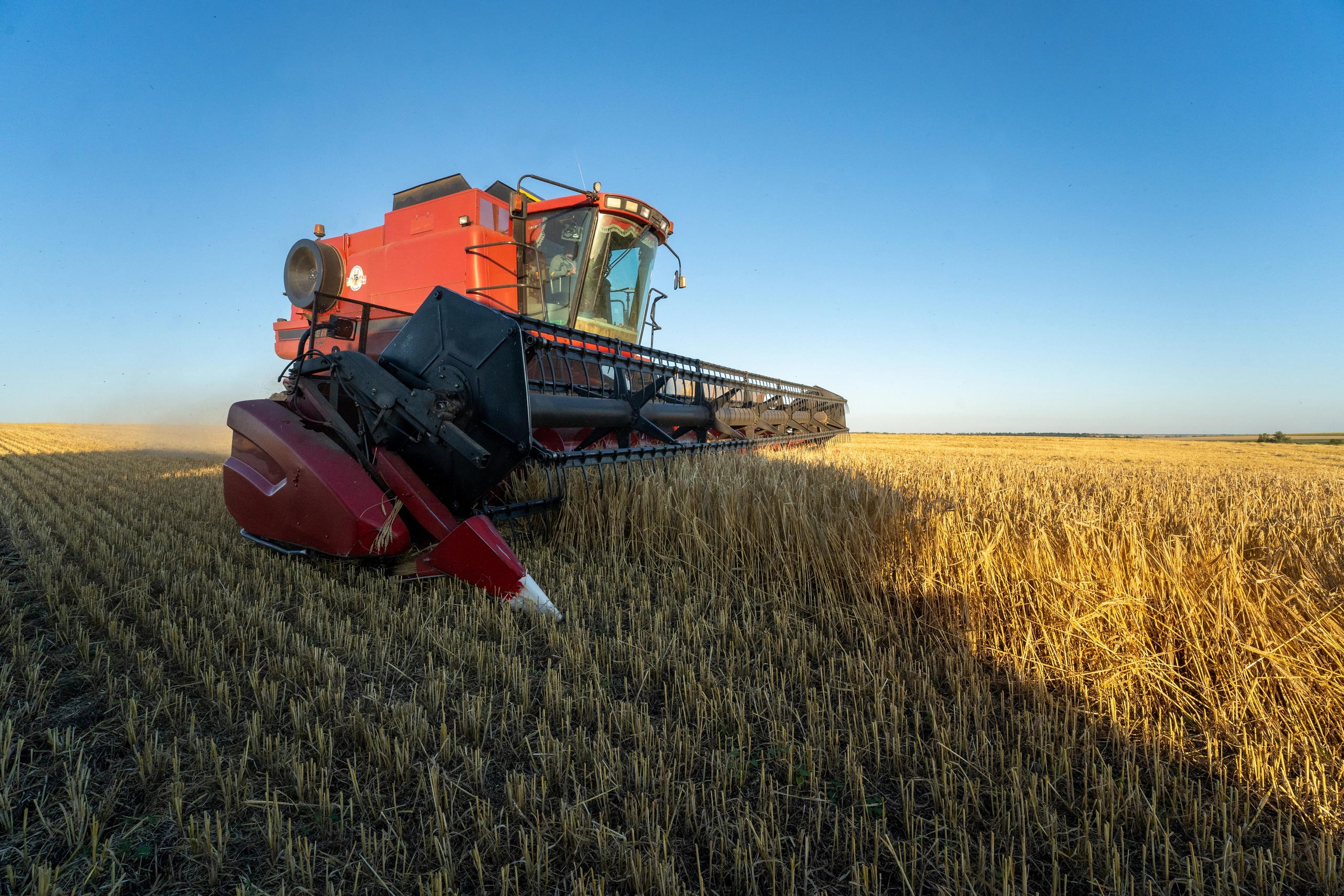
Ukraine’s grain and flour exports dropped 57.7% in the opening weeks of the 2025/26 marketing year, falling to 2.345 million tons from 5.539 million tons in the same period a year earlier, according to the Ministry of Agrarian Policy.
The figures cover shipments from July 1 through Aug. 11, 2025 – just over one month into the marketing year, which runs from one harvest to the next. The comparison is to July-August 2024, during the 2024/25 marketing year.
JOIN US ON TELEGRAM
Follow our coverage of the war on the @Kyivpost_official.
The sharp decline reflects two main factors: a smaller harvest following the 2024 drought and the reinstatement of EU export quotas, which have limited Ukrainian farmers’ access to European markets.
Grains and legumes remained the largest export categories, totaling 2.338 million tons compared with 5.529 million tons in the same period last year. By Aug. 11, wheat exports stood at 1.229 million tons and maize at 764,000 tons. In contrast, by Aug. 16, 2024, Ukraine had exported 2.608 million tons of wheat and 2.061 million tons of maize, Ukrainian Ministry of Agrarian Policy data shows.
The 2024 drought sharply reduced yields, leaving smaller reserves for the current marketing year. Much of the available grain was exported quickly in the first weeks of the season, slowing the pace of shipments later in the summer.
“The 2024 summer drought affected the exports during the first half of 2025. Ukraine quickly exported the grain during the first months and exports pace decreased,” Pavlo Martyshev, a research associate at the Kyiv School of Economics, told Kyiv Post.

Ukrainian Drone Maker Buys Seized Apartment of Russian Propagandist
Exports also suffered from the suspension of EU trade preferences for Ukraine on June 5, 2025, known as the Autonomous Trade Measures.
“Back in April, we identified this factor as a risk, and given that no long-term solution has been found, certain losses are now inevitable,” Deputy National Bank (NBU) Governor Serhiy Nikolaychuk said during the Centre for Economic Strategy online presentation of the macro forecast for the second half of 2025.
The National Bank estimates that removing the EU trade preferences will cost Ukraine $700 million in revenue by the end of 2025.
“This reflects losses to our exports, taking into account that a significant share of supplies to Europe will continue, though competitiveness will be somewhat reduced due to tariffs that exceed quotas,” Nikolaychuk said.
Agricultural products accounted for more than 40% of Ukraine’s total exports in July, with 3.5 million tons of agri-food goods shipped abroad, worth $1.7 billion, according to the Ministry of Economy. The EU remains Ukraine’s largest trading partner, taking in more than half of its agricultural output.
Exports to EU countries reached $1.9 billion in July, up 10.1% compared to June. The largest buyers of Ukrainian products were Poland ($405.9 million), the Netherlands ($201.8 million), Germany ($199.8 million), Spain ($161.4 million), and Italy ($142.5 million).
According to Nikolaychuk, Ukraine is now weighing a partial pivot to non-European markets: “These estimates also factor in the possibility of redirecting part of Ukraine’s exports to third-country markets.”
Potential destinations include Asia – especially Indonesia and Bangladesh – and African markets, with China, Pakistan, and South Korea also under consideration, Martyshev previously told Kyiv Post.
You can also highlight the text and press Ctrl + Enter