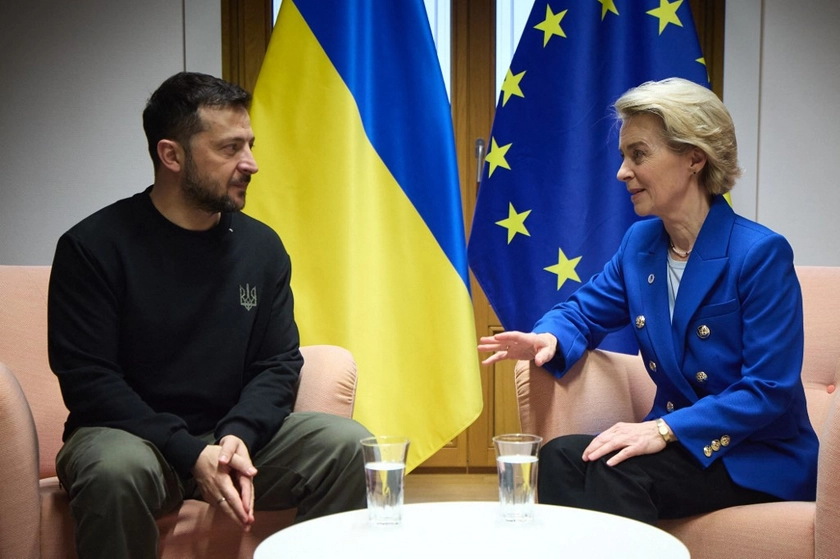
Three years ago, the EU opened the tariff-free doors for Ukraine’s exports – now Europe is rolling back to pre-war tariff quotas. Cancelling the duty-free trade has bred skepticism among Ukrainians, some wondering if the EU is as reliable a partner as it used to be.
“[Russian strongman Vladimir] Putin is counting heavily on our allies to lose patience – to grow tired of supporting us financially and giving us access to their markets. Now we’re seeing the EU reverting to pre-war trade conditions with Ukraine,” Volodymyr Fedorin, Forbes Ukraine co-founder, said during the Forbes Money conference at the end of May, in a conversation with one of the negotiators for the new trade regime, Ukraine’s trade representative Taras Kachka.
When Russia launched its full-scale invasion of Ukraine in February 2022, Russian mines in the Black Sea blocked Ukraine’s cargo exports. The EU stepped in to help by removing tariff rate quotas on 36 categories of Ukrainian goods through the Autonomous Trade Measures (ATM), boosting revenues for war-torn Ukraine. This policy lasted three years and expired on June 5, 2025.
During this time, Ukraine’s exports to the EU doubled from $2.3 billion in 2021 to $4.7 billion, the Institute for Economic Research and Berlin Economics estimated. The EU’s share of Ukrainian exports under tariff rate quotas increased to 42% in 2024, Kachka said.
Kasparov: Ukrainian Flag in Sevastopol Is the Shock Russia Needs to Accept Empire Is Dead
“Some businesses invested to meet European standards, only to find their exports now restricted by quotas,” Pavlo Martyshev, research associate at the Kyiv School of Economics told Kyiv Post.
The ray of light from the EU’s political support changed when Ukraine’s neighbors – including Poland, Romania, and Hungary – began lobbying to end barrier-free trade.
As the EU yields to this pressure, Ukraine faces losses that vary across product groups. Estimates of annual export losses range from $77 million to $3.5 billion.
Reverting to pre-war trade rules, however, may reduce Ukraine’s dependency on the EU’s political shifts. “The logic of trade is changing. It is a step forward,” Ukraine’s Trade Representative Taras Kachka said at the Forbes.Money Conference.
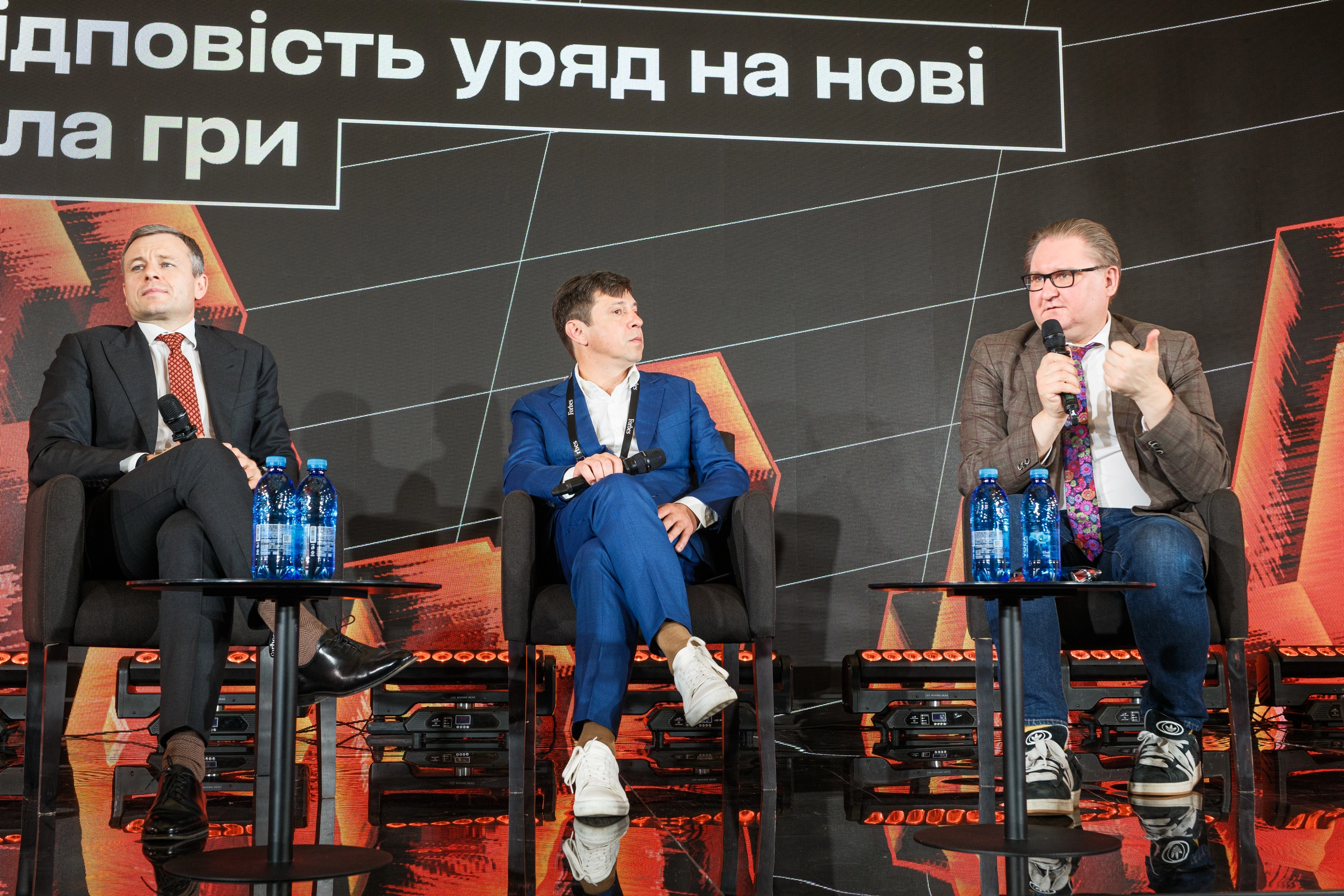
Yet the optimism has not managed to dispel the fears of Ukraine’s business community. “Ukrainian businesses are currently facing complete uncertainty about the future rules of trade with the European Union,” European Business Association (EBA) press service told Kyiv Post in a written comment.
Competitive war victim: why the EU is returning to pre-war policy
With the ATM expired, Ukraine-EU trade will return to rules under the Association Agreement and the Deep and Comprehensive Free Trade Area (DCFTA), signed in 2014 and effective since 2017.
“Further negotiations will undoubtedly be based on the DCFTA agreement, but with significantly improved conditions for Ukrainian producers. The talks are ongoing and are expected to be concluded by the end of July,” Ukraine’s Ministry of Agriculture press service wrote Kyiv Post in an email.
The trade will once again be regulated by the agreement, but the Ukrainian and European governments need to update its terms. Much has changed since pre-invasion times – Ukraine’s economy is recovering from Russia’s invasion while still suffering damages from Russia and simultaneously integrating deeper into the EU.
“Ukraine was effectively pushed into a dominant position as an agricultural exporter — because the world needed food security.”
Since 2022, the EU has deliberately increased demand for Ukrainian agricultural products, resulting in 60% of Ukraine’s agricultural exports being directed to Europe.
“Ukraine was effectively pushed into a dominant position as an agricultural exporter – because the world needed food security. We transported grain through Europe not just because Europe needed it, but because it was an act of solidarity and the need to transit,” Veronika Movchan, research director of the Institute for Economic Research and Policy Consulting (IER), told Kyiv Post.
Out of all exports within tariff rate quotas, Ukraine mostly exported maize, wheat, chicken meat (poultry) and sugar, according to IER and Berlin Economics research.
Ukraine’s sudden agricultural leadership in the EU did not sit well with Ukraine’s neighbors, who began physically blocking shipments – shutting down land borders with Ukraine at a time when foreign currency earnings were vital for funding the country’s defense efforts.
In the first half of 2024, Polish farmers blocked roads to the Ukrainian border and forcibly opened two Ukrainian railcars at the Medyka crossing, causing a grain spill, DW reported. The farmers considered Ukraine the cause of decreased prices for grain, “flooding” the EU market.
Ukraine’s agricultural industry is different from the EU’s: 93% of EU farms are small family farms averaging 11 hectares, EU Parliament research says, while Ukraine has many medium-sized (200 to 2,000 hectares) and several gigantic (compared to Europe’s) agricultural enterprises.
For example, Ukraine’s largest agricompany Kernel wrote on its website that it comprises 8% of world sunflower oil exports. Agrotrade, which holds the 171st place among Ukraine’s 202 largest companies in the Forbes Ukraine rating, operated the land bank of 70,000 hectares in 2018, according to the company’s website.
Europe did not expect Ukraine’s industry to be that large in size.
“I think the ATM measures were a kind of test drive. The Europeans tested how much of our products could enter the European market. They saw that we are competitive on the European market, and at the same time, we’re not massively dumping prices,” KSE’s Pavlo Martyshev told Kyiv Post.
Movchan disagrees with Martyshev, instead comparing the ATM measures effect with Friendly Floatees – thousands of rubber ducks, beavers, turtles, and frogs that gained fame after a shipping container carrying them spilled into the Pacific Ocean in 1992. Scientists later used them to study ocean currents.
“[The rubber ducks] are already released, it was not on purpose. Now we can study the outcomes,” Movchan told Kyiv Post.
But Ukraine’s neighbors do not seem happy with the rubber ducks? It doesn’t seem so.
Polish farmers profited, but Poland gave in to political populism
Polish farmers earned twice more because Russia’s invasion pushed global grain prices significantly up, according to the research conducted by Martyshev and his KSE colleague Oleh Nivyevskyi.
Ukrainians instead had their enormous grain supplies unexported due to a long period of the blocked Black Sea, which made the grain price drop and caused losses for farmers during 2022-2023, before Ukraine reopened the Black Sea corridor.
KSE Agricenter scholars compared the benchmark prices for grain on Euronext Commodity Exchange (Paris) to those of neighboring Poland and Hungary, and saw Ukraine had not decreased the grain prices, unlike what Polish farmers claimed. “There wasn’t a significant drop in Polish prices compared to Paris prices,” Martyshev explained.
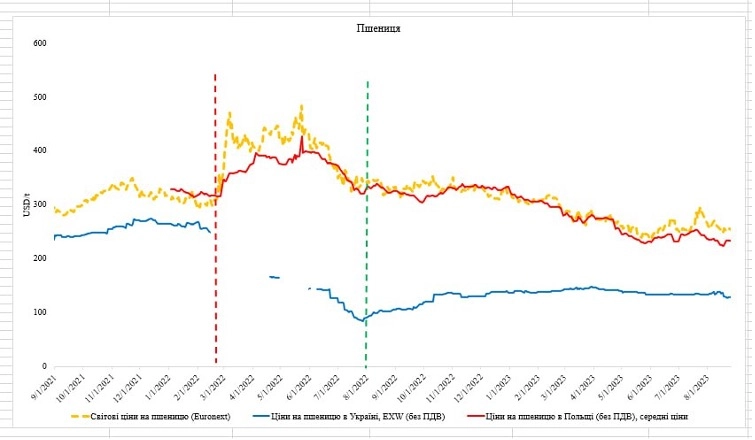
Blue line – lower prices for grain for Ukraine’s agricultural producers
Although Ukraine did not disrupt the EU’s agricultural market, populism in Poland still overrode common sense. Polish Prime Minister Donald Tusk launched a campaign for the EU to end the ATM, arguing that support for Ukraine should not come “at the expense of Polish producers.”
As a result, Poland, alongside France and Hungary, pushed for an “emergency brake” mechanism. Under this system, when Ukrainian imports of five products – barley groats, eggs, sugar, oats, and honey – exceeded set limits, tariffs were reinstated, causing a decrease in exports of these products to the EU.
Tusk and other EU ministers succeeded in their intentions.
What’s next? Ukraine faces uncertain losses
Economists cannot agree on exactly how much Ukraine stands to lose after June 5. Ukrainian agribusiness club (UCAB), one of the major agrifood business associations, stated that Ukraine could lose around €3 billion ($3.4 billion) if the EU reinstates tariffs.
Veronika Movchan from IER along with her Berlin Economics colleague Dr Ricardo Giucci think the total losses might be half as much. There are options when Ukraine can gain benefits – but this will depend on the future negotiations outcomes.
Movchan and Dr Giucci estimated four scenarios for Ukraine after the EU’s ATM Measures expire. Two of them are negative:
- If the EU returns to trade like in 2021, rebooting tariff rate quotas for 36 Ukrainian goods and not changing anything, Ukraine will lose $1.5 billion annually in exports. Ukrainian agrifood businesses are also paying $89 million (Hr.3.7 billion) less corporate profit taxes in this scenario. This is almost the same amount of Ukraine’s spending for the Ministry of Veterans for 2025, according to Ukraine’s budget data. Ukraine’s Supreme Court needs even less cash for this year to sustain Ukraine’s rule of law.
- The EU could reinstall tariff rate quotas only for the so-called “sensitive products” – those that cause the most concern from Ukraine’s neighbors and include wheat, maize, oats, poultry, sugar and honey. But in this case, losses only decrease to $1.2 billion, and tax profits to $69 million.
But there is a silver lining if Europe and Ukraine agree on better terms – this leaves Ukraine with no losses, though lessens export revenues anyway.
- The EU could impose higher tariff rate quotas only for the so-called “sensitive products” that are grounded on exports to the EU in 2024, not in pre-war 2021 when Ukraine exported half as much in goods. Ukraine’s exports to the EU would increase by a “very moderate” $77 million.
- The best scenario for Ukraine is a full tariff liberalization, which will lead to an increase in $290 million in exports for Ukraine. This scenario also adds longer-term predictability and can stimulate investments in additional production in the long run.
Ukraine’s government is hoping for the best – and says the EU is not leaving Ukrainian farmers behind.
EU signals it doesn’t want to bully Ukraine
Ukraine’s government remains optimistic about the future EU-Ukraine trade negotiations, saying the EU should propose a more beneficial trade regime for Ukrainian producers, better than in 2022, in summer this year.
It would be “ideal” to remain exports without tariff barriers, but it’s impossible, Movchan told Kyiv Post. The key concern for Europe is only Ukraine’s agrifood production. On the contrary, Ukraine has no problems exporting industrial goods – there are no tariffs on these, Movchan said.
The outcome of the EU-Ukraine negotiations will depend on the tariff-free volumes Ukraine can export, Movchan and Martyshev told Kyiv Post.
Martyshev also insists Ukraine should pay attention to non-tariff barriers the EU may use to restrict Ukraine’s exports that stay within tariff-free trade. “[The EU countries] can say that the market has been liberalized, but then claim there’s a potential risk of avian flu in your poultry – when in reality there isn’t – they use that as a reason to close the market to you,” he told Kyiv Post.
As Ukraine and the EU are negotiating the new terms, the EU imposed a temporary policy for Ukrainian exporters. Both countries revert to the trade conditions of 2021 for the time period of the next six months. But the EU excludes the products that were exported before June 6, 2025, Ukraine’s Ministry of Agriculture press service wrote Kyiv Post in an email.
If the worst case scenario materializes, Ukraine’s agrifood can refocus on Asia (especially Indonesia, Bangladesh) and Africa, Martyshev said. China, Pakistan and South Korea also remain an option.
The EU gave in to the political pressure of Ukraine’s neighbors horrified by the “flood of Ukrainian grain” after 2022. Now it is reverting the tariff-free trade with Ukraine it had for three years – and Ukraine’s business is concerned. “This creates serious barriers to long-term planning, puts new agreements at risk, and threatens the stable operation of companies,” European Business Association (EBA) press service told Kyiv Post in a written comment.
But Ukraine’s government remains positive about the new trade regime with the EU that should be based on the Ukraine-EU Association Agreement – it will be updated after Ukraine tries exporting more to the EU.
Ukraine will still lose its export and tax revenues – question is, how much. This will only be understood after June 6 when the ATM deadline is reached. The EU still remains Ukraine’s key trade partner, but time will show whether the skepticism in business relationships grows or decreases.
You can also highlight the text and press Ctrl + Enter

EU Investigates von der Leyen Over Zelensky Chat
France Seizes Shadow Fleet Tanker Near Sicily
Russian Economy 'in Dead End' as War Costs Devour Budget