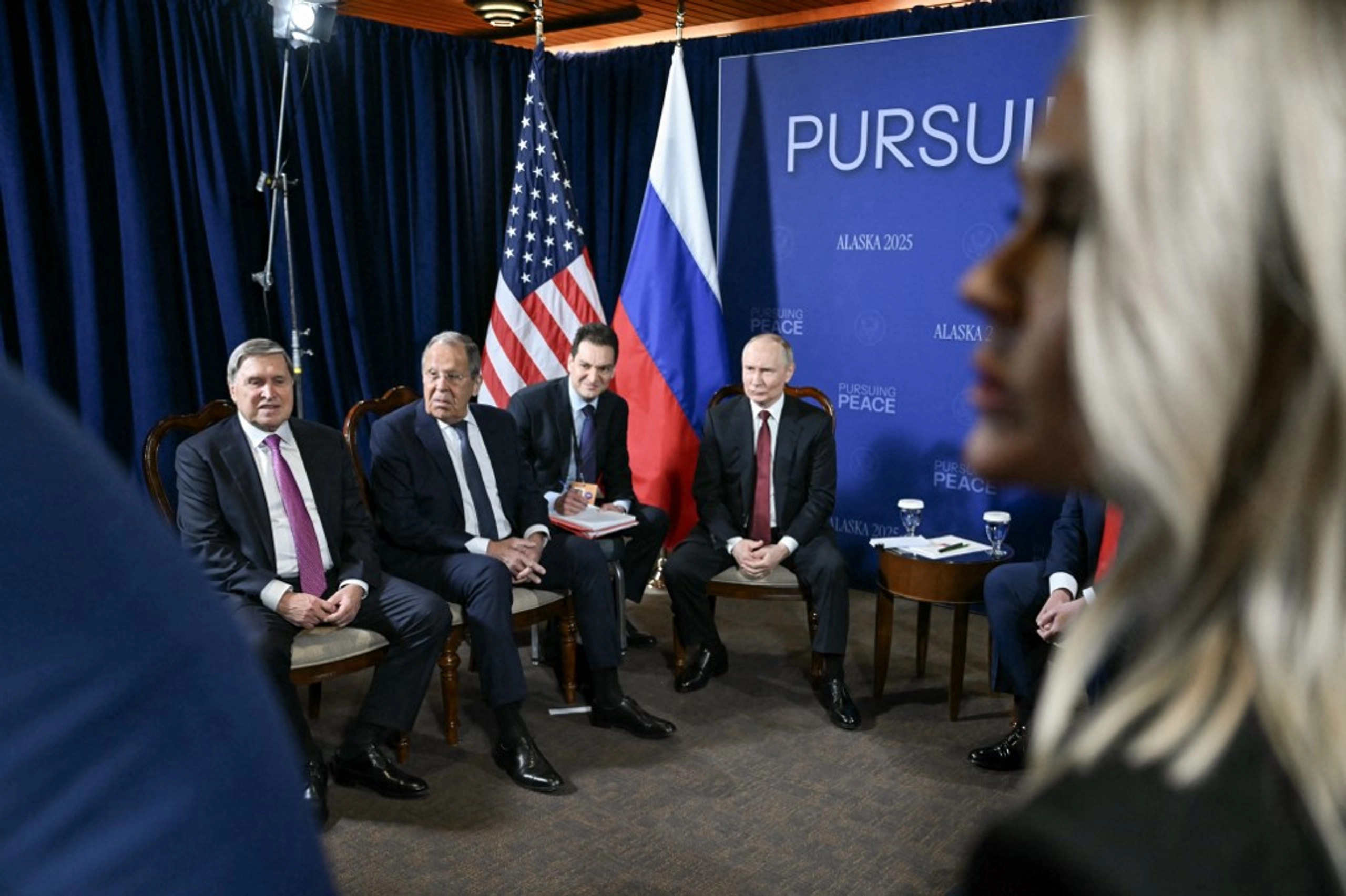
As US President Donald Trump meets Russian leader Vladimir Putin in Alaska for high-stakes talks on the war in Ukraine on Friday, the composition of the Kremlin’s delegation reflects Putin’s priorities for the meeting – a mix of veteran propagandists, economic managers, and trusted loyalists.
Far from neutral envoys, these figures oversee or support Moscow’s military, financial and political operations against Ukraine. Each plays a defined role in sustaining Russia’s war effort while projecting a managed image of diplomacy to the outside world.
JOIN US ON TELEGRAM
Follow our coverage of the war on the @Kyivpost_official.
The top members of the Kremlin’s Alaska delegation include Foreign Minister Sergey Lavrov, Defense Minister Andrey Belousov, Russian Direct Investment Fund head Kirill Dmitriev, Finance Minister Anton Siluanov and presidential aide Yuri Ushakov.
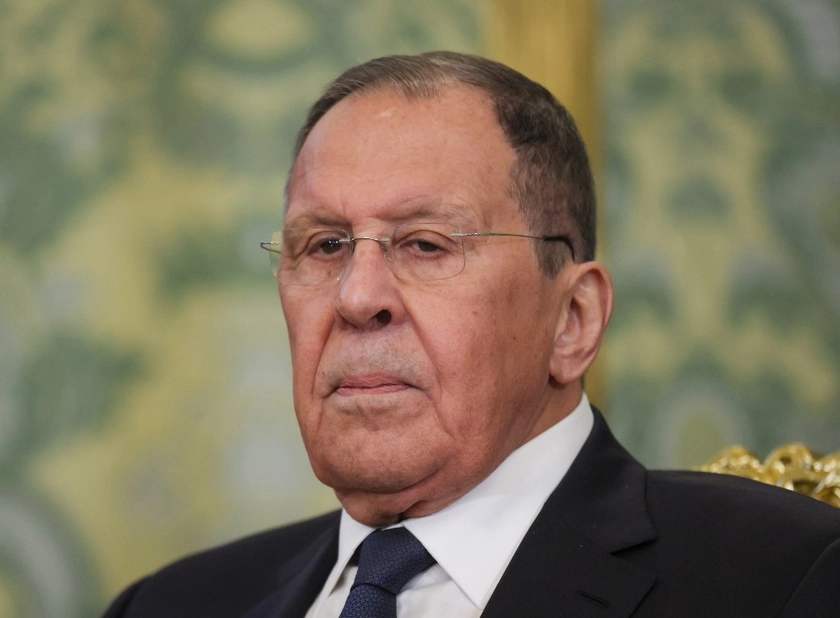
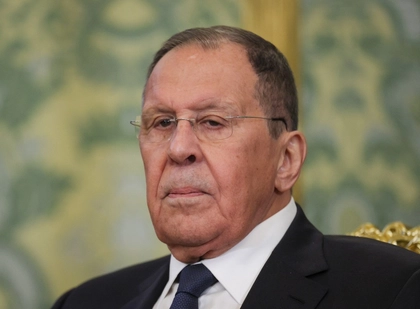
Lavrov: Putin’s longtime enforcer on the world stage
Sergey Viktorovich Lavrov, born in Moscow in 1950, is one of the longest-serving foreign ministers in modern Russian history. A graduate of the Moscow State Institute of International Relations (MGIMO) in 1972, he joined the Soviet diplomatic service and rose steadily through the ranks, eventually becoming Russia’s permanent representative to the UN from 1994 to 2004, and foreign minister under Putin in 2004 – a position he still holds today.
Lavrov is known for his hardline rhetoric and unwavering loyalty to Kremlin doctrine.
In an April interview on CBS’s Face the Nation, he dodged questions about Russian troop withdrawals and dismissed calls to return Crimea, claiming instead that Russia was ready for peace if Kyiv would give up territory and the West would lift sanctions, according to Reuters – a message Kyiv officials described as pure propaganda.
Lavrov Demands Russian Language Rights as Core Condition for Peace
At the ASEAN foreign ministers meeting in July, Lavrov doubled down, restating that Russia’s war goals remain unchanged and accusing NATO of prolonging the conflict, as reported by Al Jazeera.
A master of Kremlin disinformation, Lavrov has long played the role of Putin’s attack dog on the international stage – blending legalistic doublespeak with open hostility toward Ukraine’s sovereignty.
For more than a decade, he has been central to Russia’s campaign to delegitimize Ukraine as a state and frame the war as a Western proxy conflict. His public comments have routinely echoed Kremlin conspiracy theories and denied Russian war crimes, making him a key architect of Moscow’s diplomatic aggression.
RDIF Director Kirill Dmitriev: Kremlin’s sanctions-busting deal maker
Kirill Dmitriev, 50, has helmed Russia’s sovereign wealth fund (RDIF) since 2011 and was appointed by Putin in February 2025 as special envoy for foreign investment and economic cooperation, per Reuters – a clear signal that Moscow sees economic leverage as strategic diplomacy.
A US-educated investment banker – Stanford undergrad, Harvard MBA – Dmitriev spent years at Goldman Sachs and McKinsey before returning to lead RDIF, as reported by the Financial Times. Reuters called him “one of the most US-savvy Kremlin insiders,” straddling business and foreign policy, including vaccine diplomacy and high-stakes investments.
During the Saudi talks in February, he led economic diplomacy in Washington alongside American envoy to Russia Steve Witkoff – remarkable for a sanctioned Russian figure. That access raised alarms when a private dinner at Witkoff’s residence was proposed; US officials pushed back, citing security concerns, and the event was relocated to the White House, according to Reuters.
Dmitriev’s portfolio merges soft power and hard economics, helping Moscow navigate sanctions, court Trump-world channels, and rewrite war politics under the guise of so-called win-win investments.
Defense Minister Andrey Belousov: the technocrat running Russia’s war machine
Andrey Belousov, 66, a civilian economist appointed by Putin in May 2024 to replace former Defense Minister Sergei Shoigu, was brought in to impose economic discipline on Russia’s war effort – a move Reuters says aims to squeeze more output from the defense budget and industry amid corruption probes at the defense ministry.
A Moscow State University-trained economist, he built his career in budget and industrial policy – serving as Putin’s economic adviser (2013-2020) and first deputy prime minister (2020-2024) before moving to the defense post.
His promotion followed a high-profile clean-up of the ministry – notably the arrest of deputy defense minister Timur Ivanov on bribery charges – and broader moves to align the defense sector with Kremlin macroeconomic priorities. Analysts read the reshuffle as an effort to hard-wire Russia’s wartime economy to the defense ministry and deepen militarization under a loyal technocrat.
Belousov is there to run the war like a balance sheet – fewer generals making pronouncements, more spreadsheets driving shells, drones, and payroll.
Finance Minister Anton Siluanov: architect of Russia’s wartime finances
Anton Siluanov has served as Russia’s Finance Minister since 2011, taking over from Alexei Kudrin in a surprise move that stripped a prominent fiscal hawk of influence, per Reuters.
A trained economist from the Moscow Finance Institute, the 62-year-old rose steadily through the Ministry of Finance before becoming the budget chief across several ministries. He later held the additional post of First Deputy Prime Minister from 2018 to 2020, though he retained his finance portfolio throughout.
From the earliest phases of the Ukraine war and Western sanctions, Siluanov has been a vocal proponent of the Kremlin’s so-called “fortress Russia” strategy – arguing for tighter fiscal discipline and economic resilience under siege. His early insistence in 2014 that Russia could not afford large-scale military spending programs reflects that stance, as reported by Reuters.
Siluanov’s retention through several political reshuffles – including 2020, when he relinquished the first deputy PM role but remained finance minister – underscores the Kremlin’s reliance on his fiscal stewardship. Analysts see him as the regime’s go-to number-cruncher in times of crisis.
Russian presidential aide Yuri Ushakov: Kremlin’s backroom diplomat
As one of the Kremlin’s most enduring operatives, 78‑year‑old Yuri Viktorovich Ushakov has polished the veneer of diplomacy while advancing Russia’s aggression.
A career bureaucrat trained at MGIMO, he rose through Soviet and Russian foreign service ranks, using his fluency in English and Danish to cloak Kremlin intentions behind diplomatic polish, per his Kremlin biography.
In comments earlier this week, he framed the Alaska talks as starting from a position of peace-making and mutual interest, but critics say that such language just masks aggressive diplomacy. 
His most influential assignment came as ambassador to the United States (1999-2008), where he quietly promoted Kremlin interests across multiple administrations. Since 2012, he has served as Putin’s top foreign policy adviser, placing him at the heart of Russia’s disinformation efforts and attempts to divide the West.
Known for his calm demeanor and deep institutional memory, Ushakov helps coordinate Putin’s international engagements and shapes Kremlin messaging for state media, according to The Guardian. In much of Europe – and certainly in Kyiv – such discretion is no longer seen as diplomacy. It’s a war strategy.
You can also highlight the text and press Ctrl + Enter