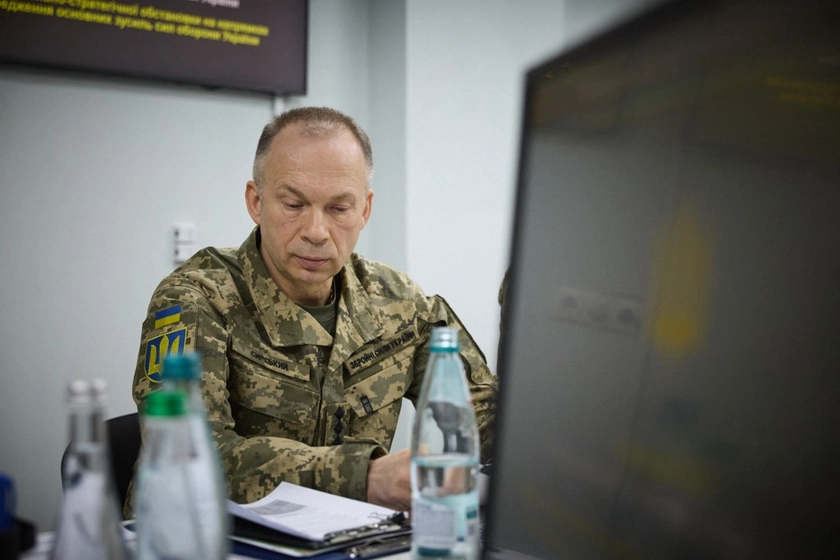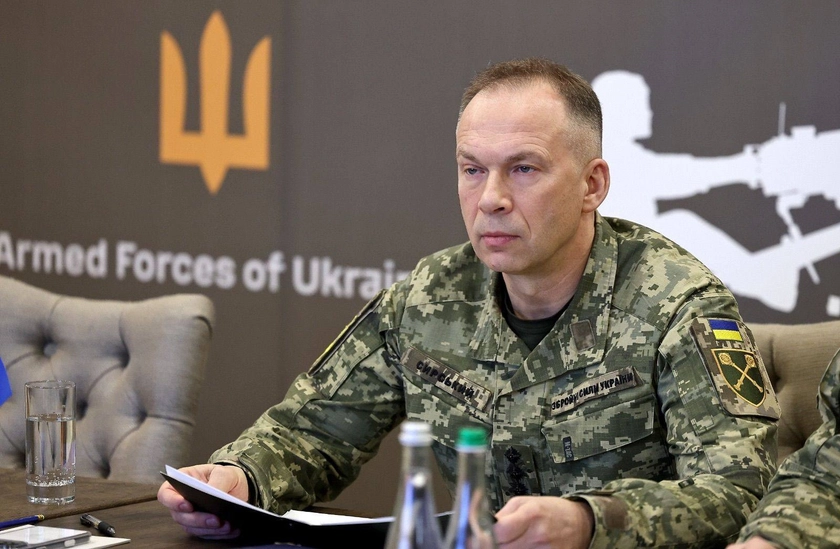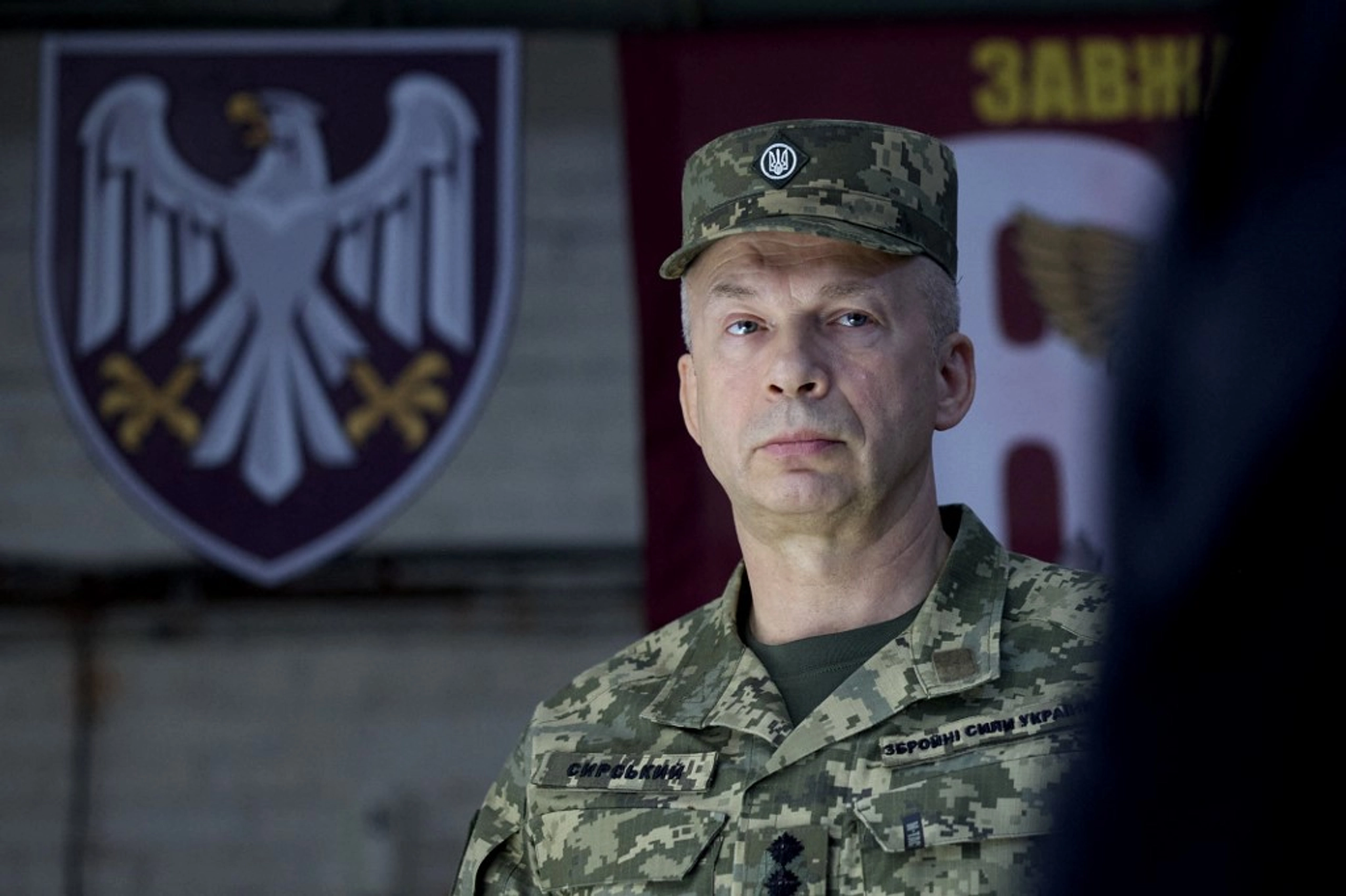
Ukrainian Armed Forces (AFU) Commander-in-Chief Oleksandr Syrsky said, while Russian troops suffered defeat in the Sumy sector, they managed to advance 10-12 kilometers toward several Ukrainian settlements near Dobropillya in the Donetsk region.
Russia’s “victorious mood” quickly shifted to despair
In an interview with RBC-Ukraine, Syrsky stated:
JOIN US ON TELEGRAM
Follow our coverage of the war on the @Kyivpost_official.
“In the Sumy region, the enemy, one might say, suffered defeat.”
He revealed that Russia had concentrated some of its strongest units in the region – paratroopers, marines, and elite motorized rifle forces – but “the enemy has not had any success in the last two months.”
“On the contrary, Russia has lost several settlements,” he added.
According to Syrsky, the last Russian attempt to advance in the Stepne and Novokostyantynivka areas “ended in complete failure for them. They were eliminated, thrown back across the border.”
He said that Russia tried to exploit the difficult terrain and the absence of a continuous front line near Dobropillya. But once Ukrainian reinforcements arrived, Syrsky said, Russia’s “victorious mood” quickly shifted to despair.
He admitted that Russian forces had advanced 10-12 kilometers toward several settlements in the Dobropillya sector, but stressed that the area’s geography favored covert movement.
“The terrain there is full of ravines and rivers – natural features that allow for concealed movement. In summer, dense vegetation makes it difficult to control the line of contact,” he said.
The Illusion of a Peace Deal for Ukraine
He added that the lack of a continuous frontline troop coverage in this sector gave Russia an initial advantage.
“But after a number of decisive measures were taken, additional airborne units were transferred, we cleared settlements and areas, and the enemy’s victorious mood changed to despair. Their publications on social media initially had the tone of ‘forward, victory,’ and now – ‘surrounded. The end,’” Syrsky said.
He said that Ukraine is not relying on passive defense.
“We adhere to the principle of never going into passive defense. Our defense is active. If we take the statistics of combat operations over the recent period, then in fact one-sixth to one-seventh of all combat actions at the front are our offensive or counteroffensive operations,” Syrsky said.
Syrsky also cited the defense of Pokrovsk as an example, saying that although the Russian forces expected to capture the town last fall, the Ukrainian military continues to hold its positions.
“If you calculate how much the enemy lost in the battles in this area, I think entire fields would be covered with the bodies of its soldiers. This is the price of every square meter of our land,” he said.
According to him, the Ukrainian military will continue to adhere to tactics of active defense, though the details of future actions are not being disclosed.
Russia’s drone improvements and Ukraine’s countermeasures
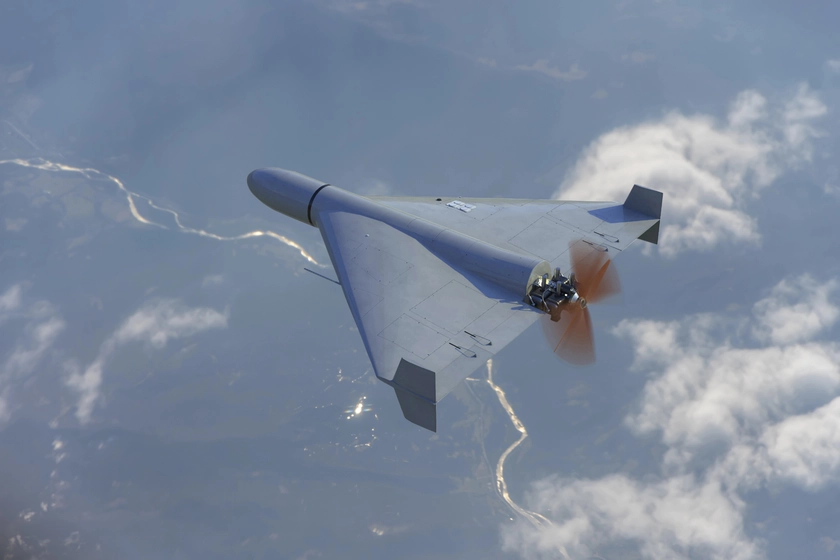
Russia is constantly improving its drones, including Iranian-made Shaheds, which are now equipped with modern interception protection systems and even self-destruct mechanisms.
According to Syrsky, Shaheds are already being fitted with optical guidance systems, 12-16-channel antennas that make them resistant to interference, as well as fire and collision avoidance sensors.
These features allow Russian drones to perform automatic defensive maneuvers, making them more difficult to destroy.
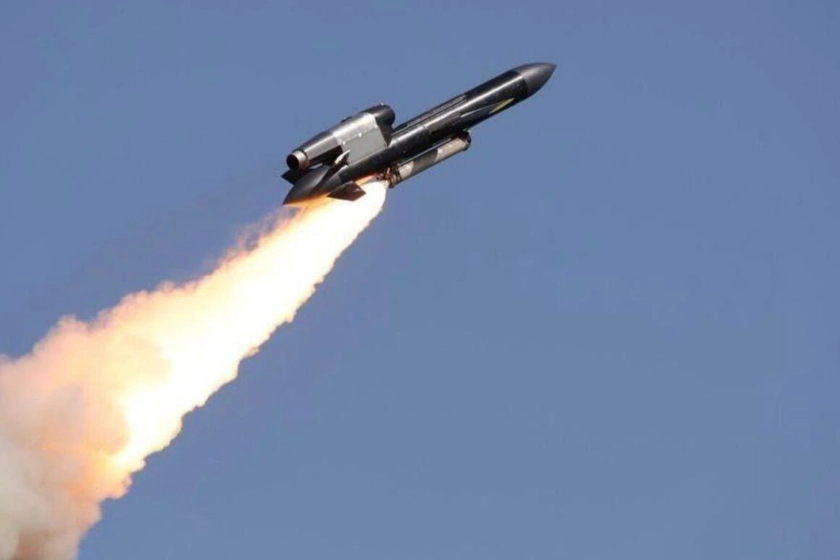
“In fact, all long-range drones currently used by the enemy – even the Gerans, which Russia employs as decoys – are equipped with explosives for self-destruction,” the AFU’s chief said.
“So that this drone cannot be captured after it falls and to destroy all those who approach. You have to be very careful: when such a drone falls, it can explode,” said Syrsky.
He added that the Ukrainian forces are actively increasing the number of high-tech air defense systems and modernizing mobile fire groups, equipping them with sights using artificial intelligence.
Syrsky said that military aviation has shown significant effectiveness against drones:
“Helicopters with machine gun weapons show great effectiveness. I can say that from August last year to August this year, they shot down over 3,200 Shahed drones – these are impressive numbers.”
Ukrainian forces also actively use light aircraft and anti-aircraft missile systems.
The general added that interceptor drones are a promising area of development.
“We have many developments here that can easily compete with well-known companies such as Merops,” said Syrsky, noting that plans to increase the use of such systems continue to be implemented.
Russian losses Versus Ukrainian losses
Syrsky told RBC Ukraine that in Bakhmut in 2023, the ratio of losses was at least 1 to 7 in favor of Ukraine. He added that the situation was similar during the Kursk operation, where Russian forces also suffered several times greater losses.
According to Syrsky, the prolonged defense of Bakhmut had strategic importance. The battles for the town lasted eight months, and the main Russian forces involved were Wagner Group mercenaries.
“When the battles in Bakhmut were ending, Prigozhin (the deceased former leader of the Wagner PMC) himself admitted in one of his interviews that he had already lost 20,000 of his best fighters in this town,” Syrsky said.
According to estimates by the Ukrainian General Staff, this figure was closer to 23,000 personnel.
“And since their losses were 50 to 50 – killed and wounded – then together with the wounded, the losses amounted to approximately 40,000. While the total number of the Wagner group was up to 50,000. That is, Wagner as a structure was no longer restored,” Syrsky said.
The AFU’s chief stressed that if Ukrainian forces had not held town, Chasiv Yar, Kramatorsk, Kostyantynivka, and Druzhkivka would have come under attack.
“And based on the level of losses that Wagner suffered – and I do not take into account other Russian units that also took part in the battles there – then, according to various estimates, the ratio between our losses and the enemy’s was 1 to 7 – 1 to 7.7. That is, we lost seven times fewer than the enemy,” Syrsky added.
He said this was the best indicator of the entire full-scale war. “Therefore, if we talk about the role of Bakhmut, it actually saved a significant area of the front and a significant number of territories.”
A similar situation was observed during the Kursk operation. According to Russian sources, the losses of the Russian forces there exceeded the Ukrainian ones by 5.5 times.
“That is, in the offensive we suffered losses five times less than the enemy. This is also the best indicator during a full-scale war. Perhaps this is a feature of the war, although in reality it was simply a well-thought-out operation,” Syrsky added.
Robots and AI in the Ukrainian Armed Forces
In 2025, Ukraine plans to transfer 15,000 ground robotic platforms for various purposes to its army, Syrsky said, adding that the country is actively developing drones and robotic systems to reduce risks for soldiers on the battlefield.
“We are betting on high-tech weapons, high-tech systems that will help us reduce the presence of our servicemen directly on the battlefield. This primarily concerns robotic platforms, unmanned systems of various types and various purposes – these are primarily aerial drones. But we are also actively developing ground systems – logistical, medical for evacuating the wounded,” he said.
Syrsky added that aerial platforms for evacuating the wounded are already being tested. He confirmed that Ukrainian forces are actively using robotic complexes during combat operations.
“This year, we plan to receive 15,000 ground robotic platforms for various purposes,” he said.
According to him, these include both strike systems with machine guns or other weapons, and auxiliary platforms for logistics or medical evacuation.
Currently, virtually all technological weapons of the AFU are equipped with AI elements, including air defense systems.
Syrsky revealed that dedicated structures have been created in the General Staff and other headquarters to oversee the application of artificial intelligence in the military sphere.
“Even ordinary anti-aircraft installations – machine gun or cannon – have modern systems for aiming, capturing, automatic tracking, classification, and identification of the target, which allows them to increase their effectiveness by several times,” Syrsky said.
However, he cautioned that AI is not flawless:
“It must be taken into account that AI can be mistaken, because now is only the beginning of its development and use.”
You can also highlight the text and press Ctrl + Enter