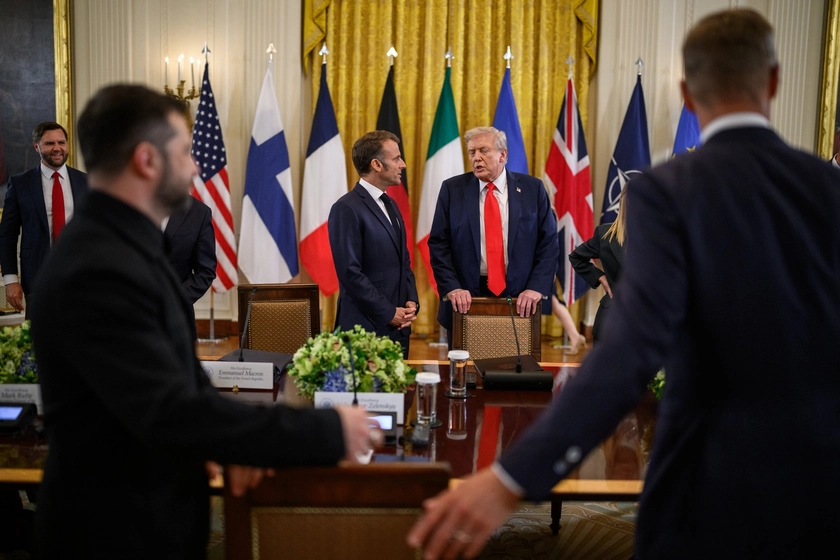
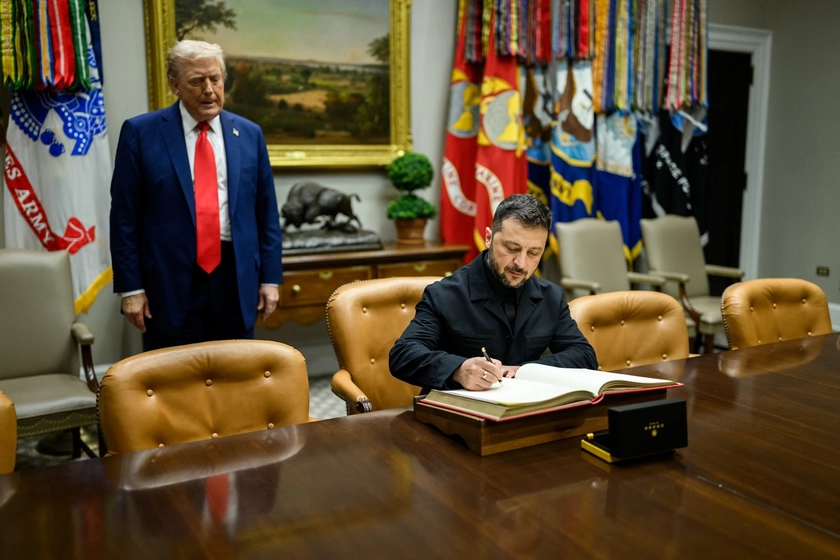
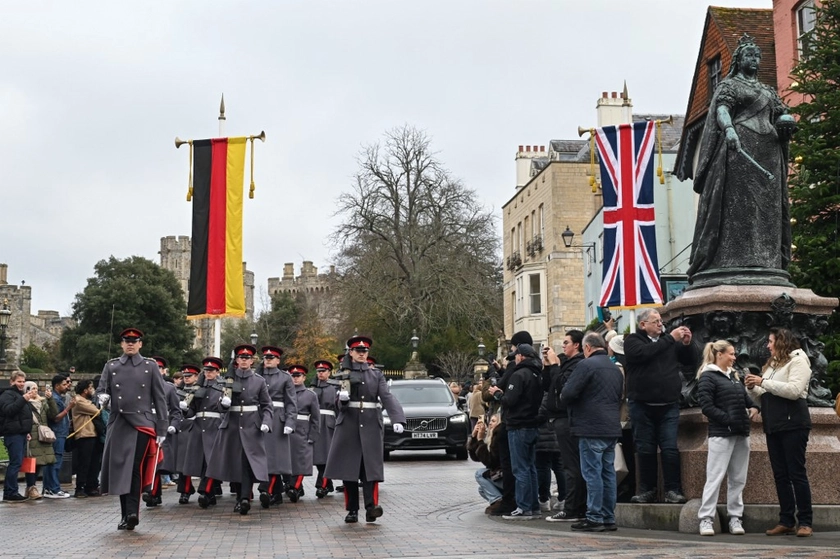
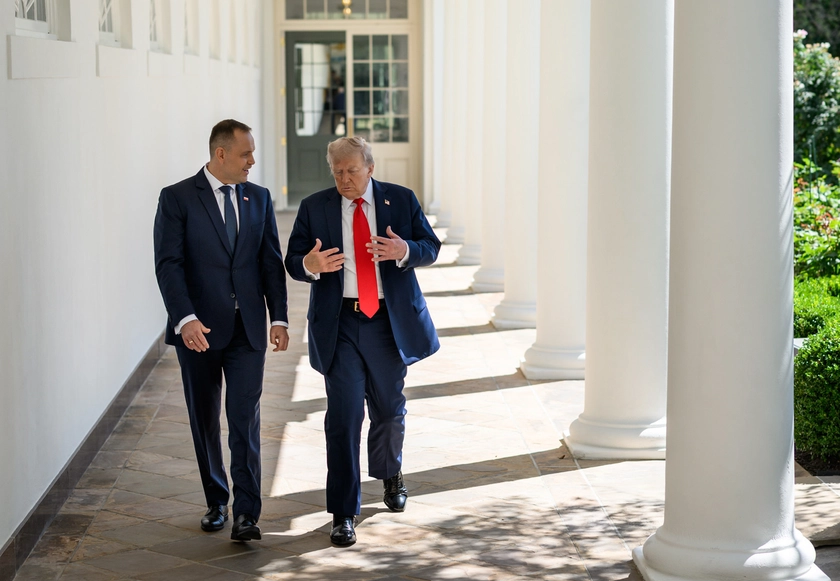
As President Volodymyr Zelensky and a delegation of European leaders step into the White House today, they do so under the long shadow of the disastrous Trump-Putin summit in Alaska.
What should have been a demonstration of US resolve instead looked like a geopolitical gift to Moscow. Donald Trump, rather than confronting Vladimir Putin, appeared to swallow the Kremlin’s narrative whole – hinting at territorial “swaps” that would condemn more than 200,000 Ukrainians to what many describe as “hell on earth,” in exchange for vaguely worded security guarantees.
JOIN US ON TELEGRAM
Follow our coverage of the war on the @Kyivpost_official.
This is no peace plan. It is a poison pill. And Zelensky is right to bring with him not just allies, but a dump truck-sized load of skepticism.
Ukrainians know better than anyone the worthlessness of paper promises. The Budapest Memorandum of 1994 saw Ukraine surrender the world’s third-largest nuclear arsenal in return for “security guarantees” from the US, UK, and Russia. Those guarantees disintegrated the moment Moscow invaded Crimea in 2014, and again with the full-scale assault in 2022. Any deal today that trades territory for flimsy pledges risks repeating that betrayal.
The urgency of peace is undeniable. After more than three years of full-scale war, Ukraine is exhausted. Almost every family knows someone killed or maimed. The strain on society, the economy, and potential investment is immense. Ukrainians desperately want the war to end. But there are red lines.
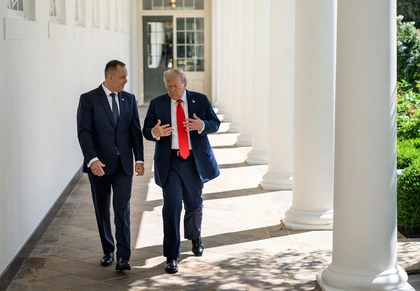
Trump Downplays Russian Drone Incursion into Poland as ‘Mistake,’ Drawing Sharp Rebuke From Allies
Surrendering sovereign territory to Russia is not peace – it is capitulation.
Europe’s leaders, too, arrive in Washington with a heavy burden: guilt. They know that had they provided Ukraine with the weapons it needed at the start – tanks, missiles, munitions – the battlefield might look very different today. Instead, military aid was delayed, trickled out over months, while Russia dug in. Sanctions followed the same pattern. It has taken the European Union more than three years to pass its 18th sanctions package. Why weren’t the toughest measures unleashed immediately, when they might have had maximum effect?
And then there is the staggering question of frozen Russian assets. Nearly €300 billion sits idle in Western capitals – money that could and should be directed to Ukraine, now, for both weapons and reconstruction. Why are European leaders holding back? Ukrainians notice. So do the Russians.
The stakes are bigger than Ukraine alone. As one military analyst recently warned, if Europe fails to strengthen its defenses and support Ukraine, Russia could be in a position to attack a NATO country within three years. That is not alarmism. It is a sober assessment of where this war is heading if deterrence fails.
And let us not forget Russia’s behavior in real time. Even as talk of “peace deals” circulates, the Kremlin continues to wage terror from the skies. In the past 24 hours alone, missiles and drones struck Kharkiv, Zaporizhzhia, and Odesa – killing at least ten people and wounding dozens more. These are not the actions of a credible negotiating partner. They are the crimes of a state that thrives on brutality and impunity.
For Zelensky and his European counterparts, the message in Washington must be clear: Ukraine is willing to fight for peace, but not to surrender for it. Any arrangement that rewards aggression or erases sovereign borders would set a catastrophic precedent – not just for Ukraine, but for every nation vulnerable to authoritarian neighbors.
Trump may see a quick deal as a political win – and as a springboard to the Nobel Peace Prize. Putin may see it as vindication. But for Ukrainians, who have already suffered betrayal once under the Budapest Memorandum, the cost of another “false peace” would be unbearable.
Zelensky’s task today is to remind the world that peace built on concessions to a war criminal is not peace at all – it is an invitation to further war. And for Europe, the task is to confront its past hesitations and act with unity, speed, and resolve.
Ukraine cannot afford to be betrayed again. Neither can Europe.
Michael Bociurkiw is a Sr. Fellow at the Atlantic Council and creator of the World Briefing newsletter on Substack.
The views expressed in this article are the author’s and not necessarily those of Kyiv Post.
You can also highlight the text and press Ctrl + Enter