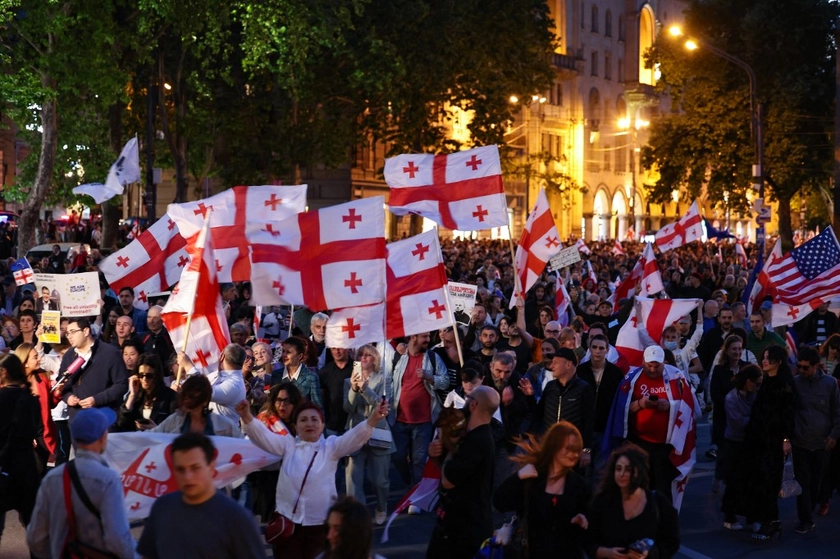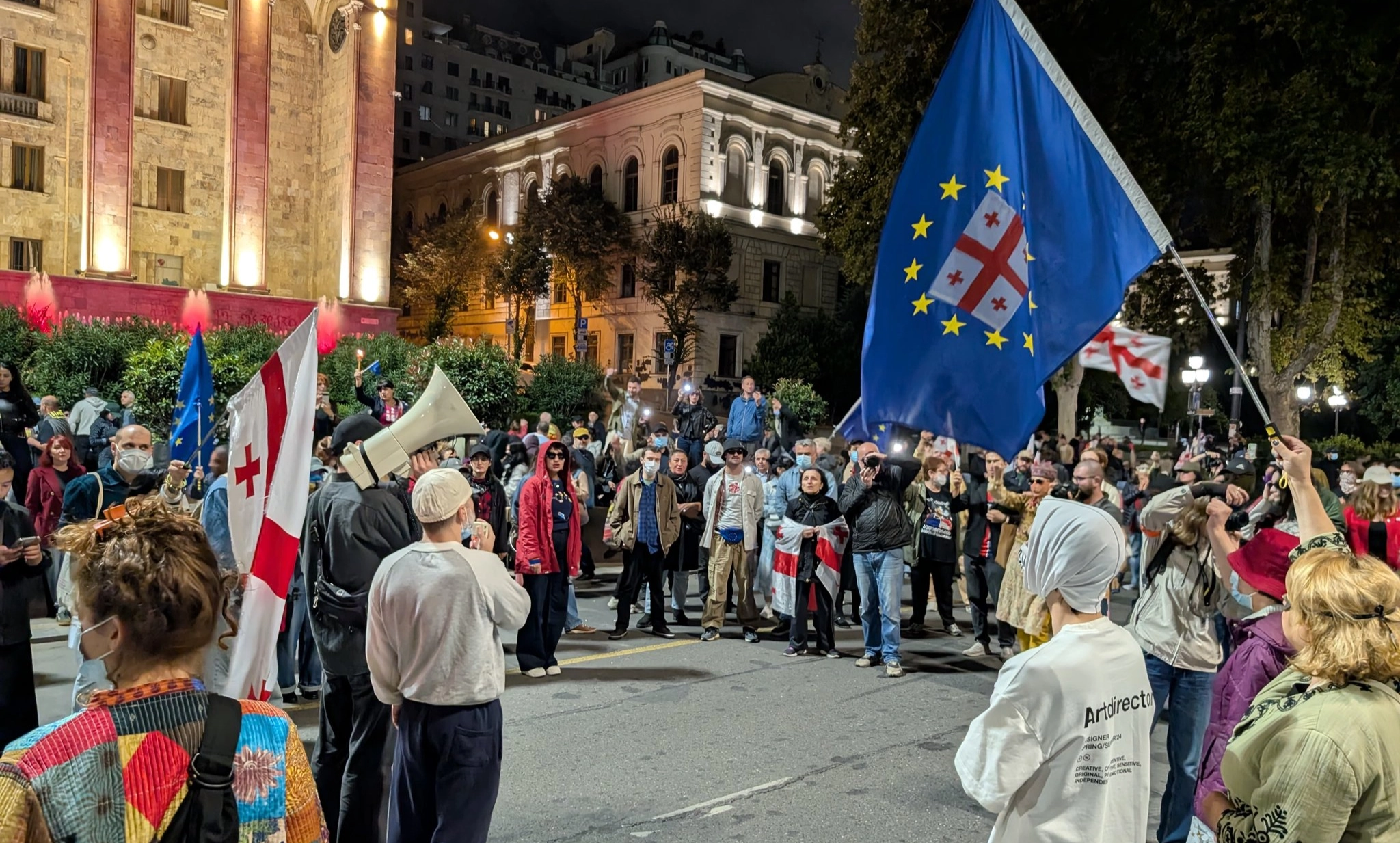
Mass demonstrations in Georgia have continued for more than 300 days, with protesters blocking central Tbilisi’s Rustaveli Avenue and rallying in over eight cities nationwide. The movement is now approaching its one-year mark.
The protests began after the disputed October 2024 parliamentary elections, which the opposition and international observers denounced as fraudulent. Discontent intensified when the ruling Georgian Dream party said it would delay talks on joining the European Union until 2028.
JOIN US ON TELEGRAM
Follow our coverage of the war on the @Kyivpost_official.
For the 299th day in a row, Rustaveli Avenue is blocked. Protests continue in 8+ cities across Georgia.
— Rusudan Djakeli 🇬🇪🇺🇦 (@rusudanjakeli) September 22, 2025
Tomorrow, it'll be the 300th day of our uninterrupted protests. pic.twitter.com/boWYqXQzD8
Prime Minister Irakli Kobakhidze, speaking Monday to reporters ahead of possible new rallies, repeated Russian propaganda claims that Ukraine’s 2013-14 Maidan Revolution had been funded by foreign intelligence services.
Historians and participants in the Revolution of Dignity have long debunked that accusation. The support given by various Western NGOs to Kyiv and Ukrainian democracy advocates since Ukraine’s independence in 1991 paled in comparison to the efforts of Moscow to bring Ukraine back into its fold.
He alleged that Georgia’s protests are also financed from abroad, without naming specific countries.
“All of this is orchestrated by foreign special services, just as it was during the Maidan,” Kobakhidze said, according to Georgian media.
“You remember how those protests were financed by foreign intelligence agencies, and you also recall what followed for Ukraine; today, the Ukrainian state has collapsed, and the country has endured two wars, both triggered by revolutions financed from abroad.”
Not So Fast! EU Membership, with Strings Attached
The Prime Minister added: “Of course, we cannot allow such a scenario to unfold in Georgia. We simply do not have the resources for that. That’s why we must expose any such external financing and interference.”
Georgia is an official candidate for EU membership in the 27-nation bloc, a bid supported by more than 80 percent of the population, according to opinion polls, and enshrined in the country’s constitution.
During the protests’ initial phase, security forces used tear gas and water cannons to disperse demonstrators and made hundreds of arrests.
Georgia’s top human rights official, ombudsman Levan Ioseliani, and Amnesty International have accused police of “torturing” detainees – a charge the government denies.
Authorities have since resorted to harsh financial penalties and increased surveillance, deploying facial recognition technology to identify protesters and issue hefty fines.
You can also highlight the text and press Ctrl + Enter

Putin’s Worst Nightmare
Zelensky Reveals Intercepted Intel From Putin’s Desk