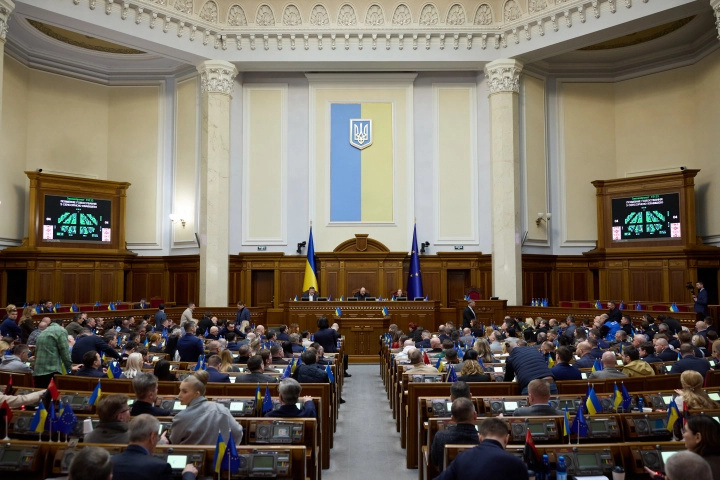
Ukraine’s national legislature, the Verhovna Rada, has taken up a draft bill that would deploy Ukrainian combat units to Poland following a Warsaw call for assistance in air defense against Russia.
Submitted by the Office of President Volodymyr Zelensky and likely to be approved by the ruling majority controlled by Zelensky’s Servant of the People Party, bill number 14059, dated Sept. 22, authorizes the deployment outside Ukraine of combat units numbering 1,000 troops or less, with equipment, to the Republic of Poland.
JOIN US ON TELEGRAM
Follow our coverage of the war on the @Kyivpost_official.
The Ukrainian combat troops will deploy to Poland “for joint training, exercises, and participation in international peacekeeping operations under the auspices of the North Atlantic Treaty Organization,” key language in the bill says.
Deployment is authorized through Dec. 31, 2026. As written, the law, once passed, would not set a limit on the number of military units that might be deployed to Poland.
The bill allocates the equivalent of $3.2 million to support the combat units while in Poland. Before the full-scale Russian invasion, Ukrainian combat units trained with NATO units on NATO territory regularly, among other locations in Estonia, Bulgaria, Poland, Romania, and Latvia. In those exercises, NATO or host states paid almost all the Ukrainian troops’ expenses.
Ukrainian Defense Minister Denys Shmyhal and Polish Defense Minister Władysław Kosiniak-Kamysz on Sept. 18 signed a bilateral memorandum of understanding (MOU) on defense cooperation, specifically focusing on counter-drone measures.
Russia May Launch Oreshnik Missile at Ukraine on Friday, Air Force Warns
According to that agreement, the Ukrainian military would provide training to the Polish military on intercepting attacking Russian kamikaze drones, and building and maintaining the air watch networks needed to make the intercepts.
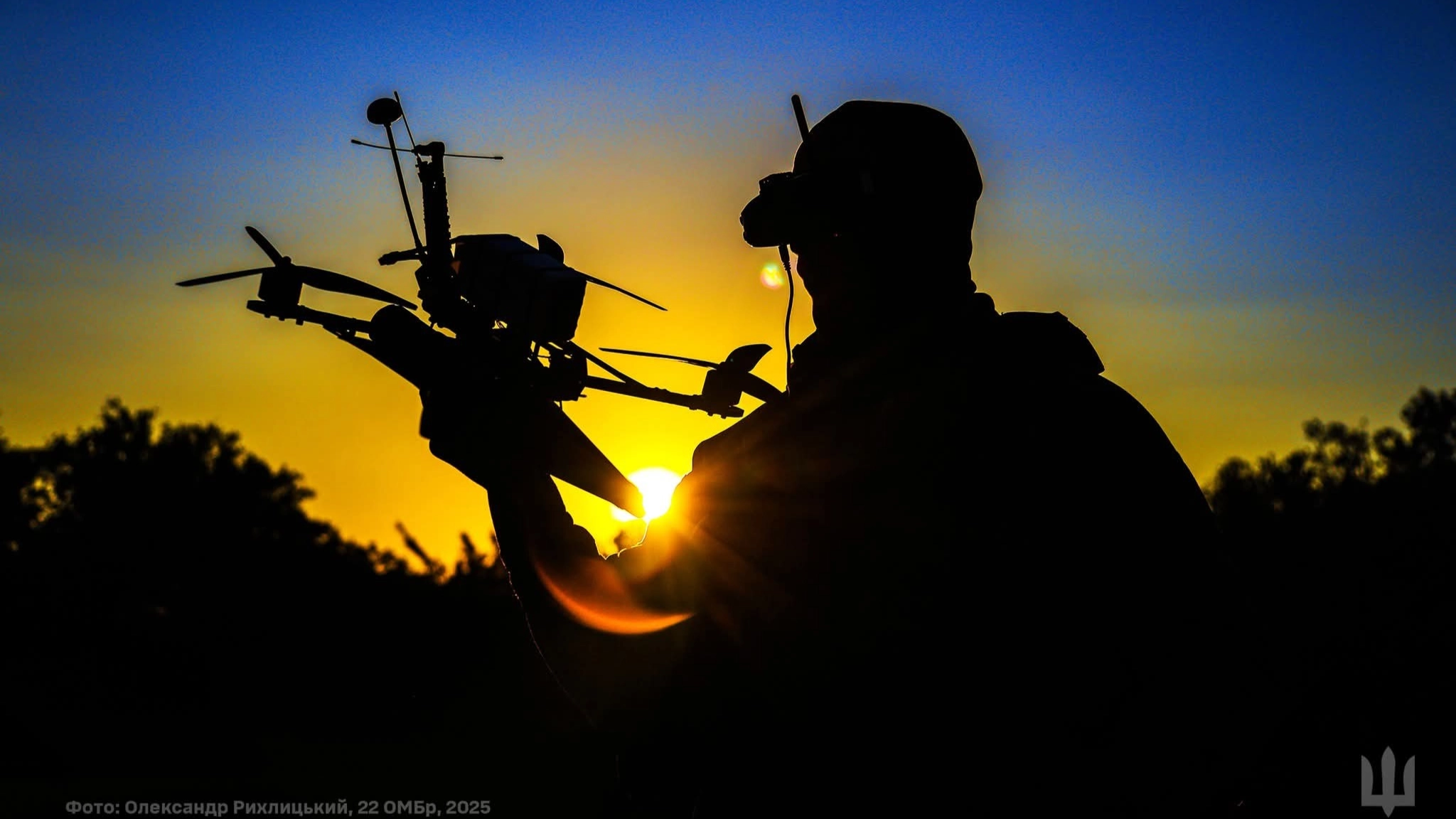
In Ukraine, the Air Force leads a wide-reaching, multi-layered national air defense effort tying together combat aircraft, batteries of interceptor drones, high tech active duty and lower tech national guard air defense systems, civilian air watch volunteers working from homes, and data fusion centers linked a network of 1,000s of acoustic sensors, to track and attack explosives-toting Russian drones heading toward targets inside Ukraine.
Honed by years of practice against nearly nightly Russian strikes that sometimes have numbered close to 1,000 drones and missiles, Ukraine’s air defense network in a typical night of combat destroys 70-85 percent of encroaching aircraft.
In contrast, NATO’s air defenses, on Sept. 10, using only fighters firing advanced air-to-air missiles costing four to five times more than the Russian drones that they were intercepting, managed to shoot down 4 of 19 Russian robot aircraft violating the NATO airspace over Poland.
Ukraine has much to offer its allies to improve how they cope with this new world they’re in, including their performance in these scenarios.
Of course, the low success ratio is directly related to Poland and NATO not expecting to be attacked by Russian drones entering their airspace from western Ukraine and Belarus, and thus not being on a wartime footing.
This necessarily means the NATO fighter pilots were operating without combat rules of engagement (ROE) in effect, and under peacetime assumptions, absent NOTAMs (notices to airmen) for civilian pilots to follow.
So, they had to assume the blip on the radar was a civil aircraft until it was determined to be a hostile aircraft, manned or otherwise.
Additionally, from a ground alert status, it would take about five minutes to get airborne after the drones were already in Polish airspace.
The inherent lag in response time forces NATO fighters to chase down drones on multiple divergent vectors before decisions to employ weapons can be made.
This includes considerations of a clear avenue of fire to prevent “own goal” civilian collateral damage to people, objects, and structures on the ground.
However, in establishing new combat airspace procedures, including civilian notices, no-fly areas along the border (“If it flies, it dies”), etc., Poland and other NATO air forces should obtain low-cost interceptor drones, deploy ground-based air defenses in a more effective array, and receive training in anti-Shahed tactics from combat-experienced Ukrainian units.
The bill, as written, authorizes the transfer of Ukrainian defense technologies to Poland and other NATO states.
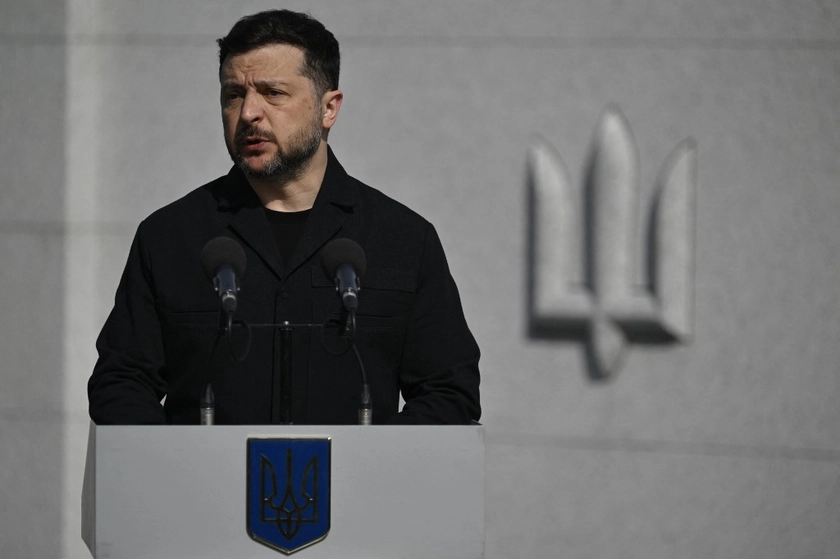
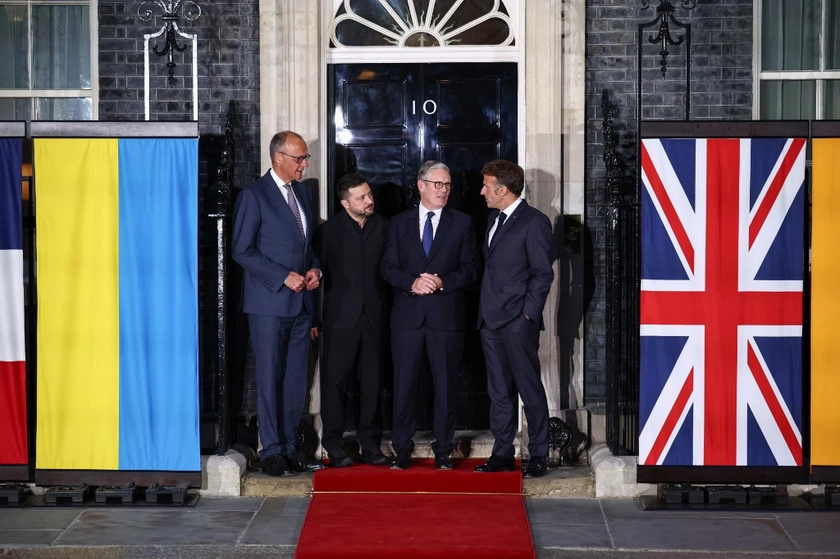
Zelensky, in a Sept. 23 press conference in Kyiv, which followed a bilateral meeting with UK Prime Minister Keir Starmer, said Draft Bill No. 14059 marked a dramatic shift in the Ukraine-NATO state relationship away from unidirectional Western support to Ukraine, toward a bilateral relationship with both sides working together to improve each other’s combat efficiency to deter Russia’s military more effectively.
Zelensky said in part:
“By sending our troops to train and operate alongside our NATO partners, we are taking a significant step toward true reciprocal security partnerships.
“This is not just about Ukraine receiving aid—it’s about us bringing our unmatched experience from the battlefield, especially in countering drones and hybrid threats, to strengthen the collective defense of Europe.
“Our soldiers will train in Poland, work with advanced naval assets in the UK and Turkey, and show that Ukraine is a contributor, not just a beneficiary, in NATO’s framework. This mutual commitment builds the trust and strength we need for lasting security guarantees against Russian aggression.”
The bill, as written, does not, as Zelensky possibly implied in his comments alongside Starmer, authorize combat unit deployments to Turkey or Great Britain, but only to Poland.
Under other training and assistance programs, however, Ukrainians in uniform have deployed to NATO states for years.
Since Russia’s Feb. 2022 invasion of Ukraine, tens of thousands of Ukrainian soldiers have traveled to NATO states for training.
The biggest contingent, some 80,000 men and women, deployed primarily to Poland and Germany via an EU program running basic, advanced, combat specialist, and weapons technician training.
A 14-state group led by Great Britain has trained an additional 56,000 Ukrainian soldiers, the great majority of them former civilians passing through initial basic military training.
Ukrainian troop training since the full-scale Russian invasion has not taken place in Turkey, but a warship under construction at the Istanbul Shipyard (STM consortium) is nearing completion, and the Ukrainian crew is on site and working the vessel up to combat readiness.
The Project 58260 Ada-class Corvette, named Hetman Ivan Mazepa, is rated for a crew of 106. The Mazepa is undergoing sea trials, while her sister ship, under construction in the yard, the Hetman Ivan Vyhovyskyi, is set to begin sea trials in 2026.
In Britain, Ukraine has created a naval headquarters called the 1st Division of Mine Countermeasures Vessels to command a minesweeper unit made up of ships donated by London.
According to British news reports, two Sandown-class sweepers slated to be stricken from Royal Navy lists have been donated to the Ukrainian Navy and renamed Cherkasy and Chernihiv, each rated for 34 officers and sailors.
A 1936 treaty called the Montreaux Convention obliges Turkey to close the Dardanelles and Bosporus straits to any nation with Black Sea shoreline, provided Turkey is not a belligerent. Once Russia invaded Ukraine, both countries lost the right to send warships between the Black Sea and the Mediterranean.
The overseas troops bill currently before Ukraine’s parliament would legalize the long-term presence of Ukrainian navy crews aboard warships based in Turkey and Britain, who would be unable to return home aboard their ships, until there is peace between Ukraine and Russia and Turkey re-opens the Straits.
You can also highlight the text and press Ctrl + Enter


FACT-CHECK: Is Donald J. Trump Truthful About Ukraine?
Sweden Warns Russia Could Test NATO in Near Future
Rada Ratifies Zelensky’s €90B EU Loan for Ukraine’s Defense and Budget Support