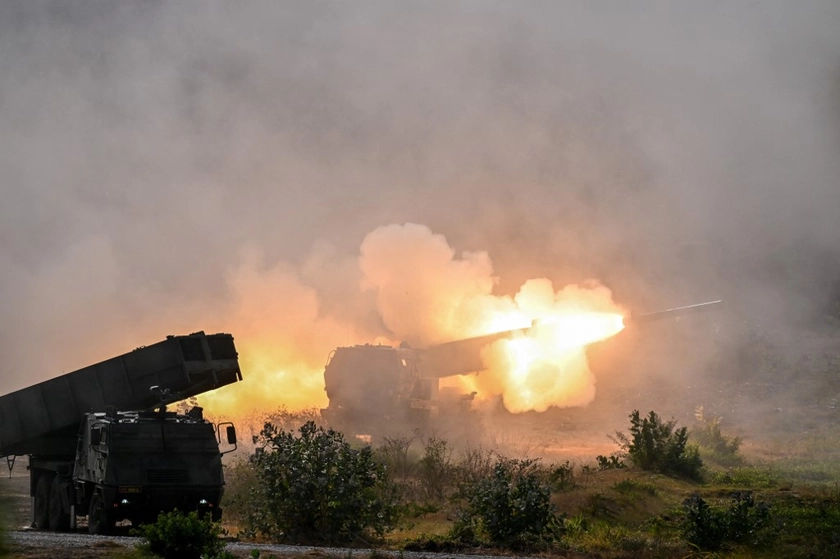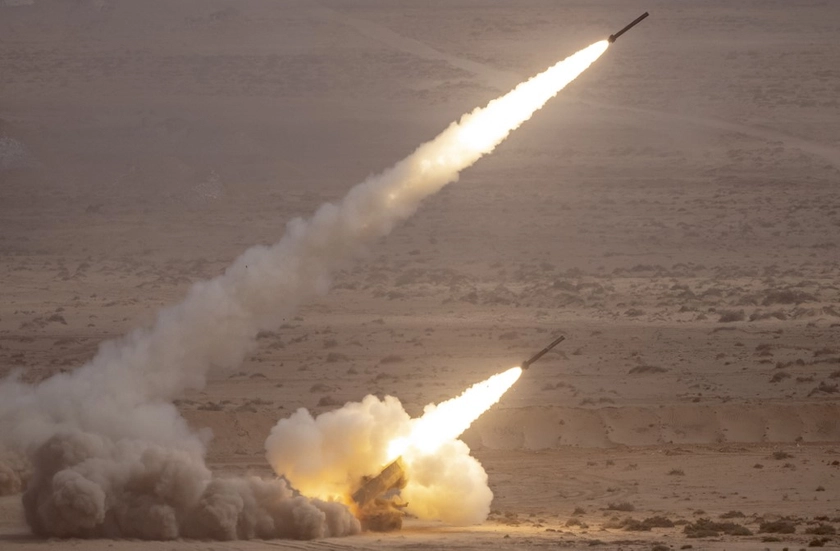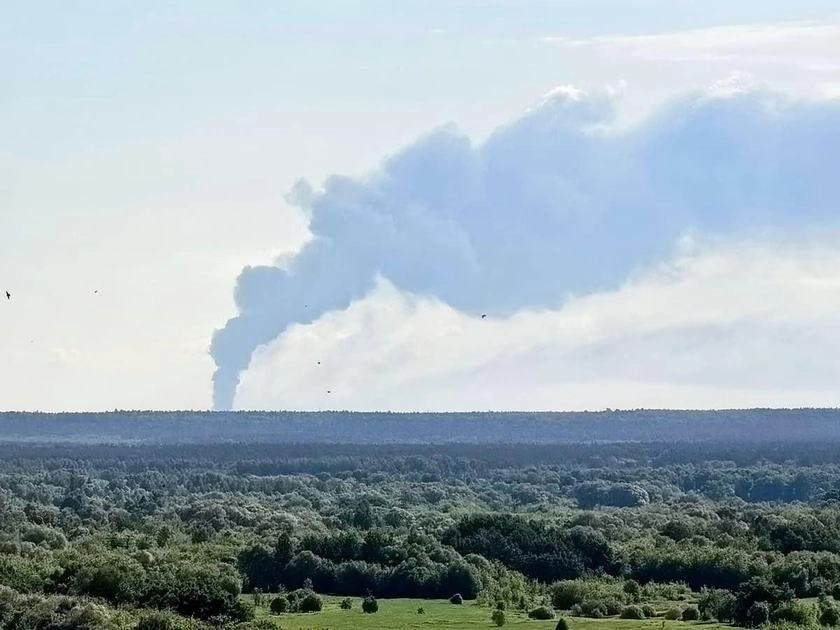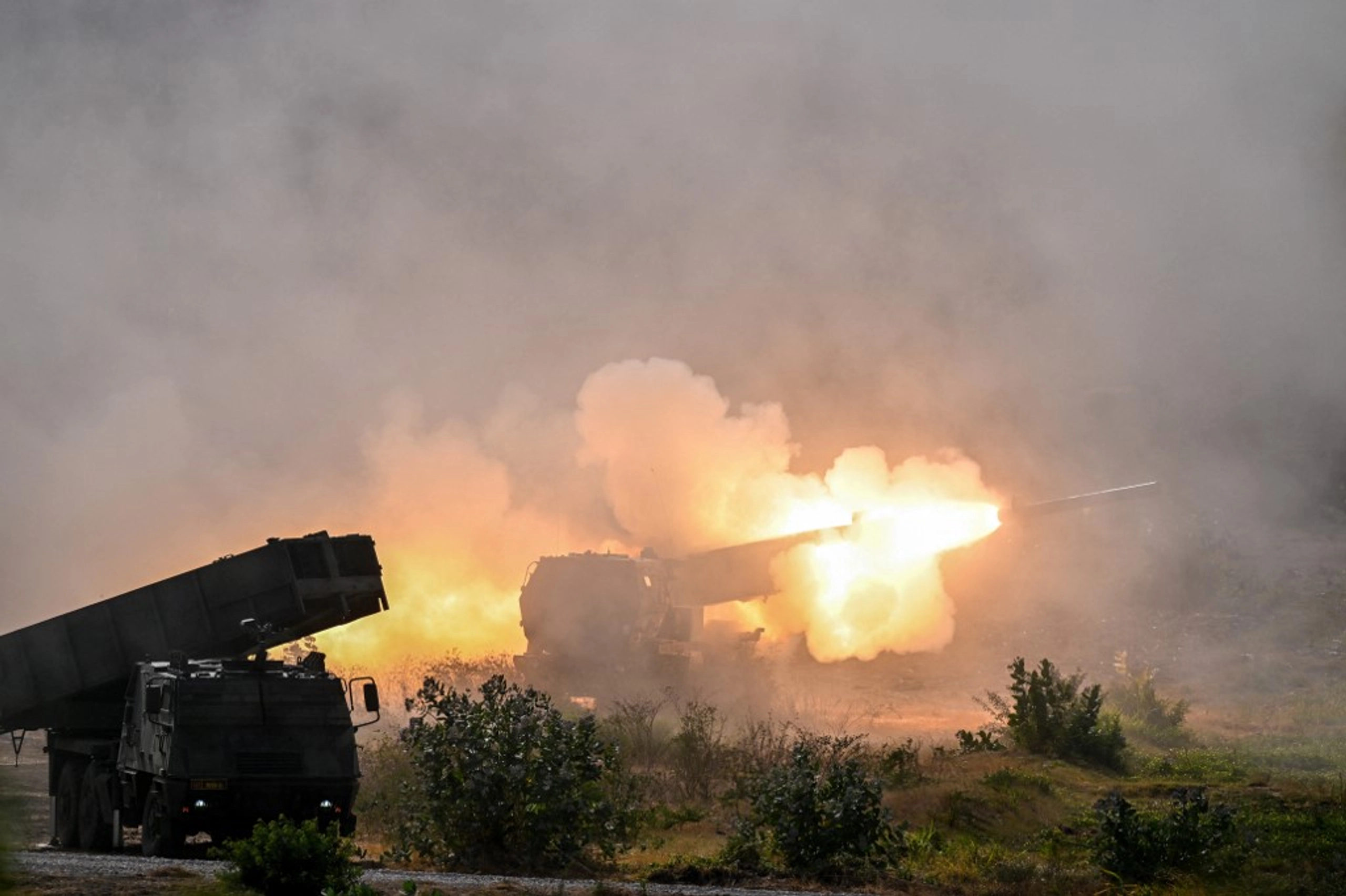
Long-range missiles closely matching the attack profile of the US-made HIMARS rocket artillery system struck and damaged a power-generating station deep inside Russia’s Belgorod region on Sunday, in a strike Moscow officials blamed on the Armed Forces of Ukraine (AFU).
Vyacheslav Gladkov, Belgorod region governor, in a Sunday evening statement, said “enemy missiles” struck a major power station in the region, causing widespread blackouts and forcing hospitals and police stations to operate on emergency generators. Delivery of water to residents was limited because power outages had shut off city water mains, and local residents should be patient as authorities worked to turn lights back on, he said.
JOIN US ON TELEGRAM
Follow our coverage of the war on the @Kyivpost_official.
Gladkov did not specify the power station hit. Explosions were first reported at about 7:30 p.m. local/Belorod time on Sunday.
Geo-located video of the strike showed at least five hits on the premises of a Belgorod electricity-generating facility called TETs-4, and fires ignited by the strikes. Explosions and flying debris punctured fuel reservoirs and damaged turbines, a fuel supply system, and an adjacent electricity substation, local news reports said.
The main source of the video, a Ukrainian-run Telegram news channel called Supernova+, identified the struck site as Belgorod city’s Luch thermo-electric power station, usually called TETs-4 by residents. Independent geo-locators confirmed the hits on the Luch facility. Audio and imagery of explosions, in the video, was similar to detonations of the US-made M31 GDLSB (Ground-Launched Small Diameter Bomb (GLSDB) artillery rocket, a precision-guided munition with a 90-kilogram (200-pound) high-explosive warhead and an advertised range of 160 kilometers (100 miles).

Ukrainian Missile Campaign Now Reaches Across Half of Russia
Ukraine operates two firing systems capable of launching the M31 and has used the munition in the past, but American deliveries in the past had been mainly an older, shorter-range version. Most Ukrainian mainstream media reported the Belgorod strike was certainly carried out by artillery rockets and likely by M31 munitions, but the use of that American weapon could not absolutely be confirmed. A Kyiv Post review of the video reached the same conclusion.
The last reported US delivery to Ukraine of the GDLSB, a weapon that sprouts glider wings and flies itself to a target using advanced precision guidance, was in March 2025. Statements by senior US officials prior to the power station strike confirmed Washington had recently green-lit long-range strikes by Ukraine with US-made weapons, but did not name systems the US might allow Ukraine to use.
Keith Kellogg, a White House special envoy to Ukraine, in Saturday comments to Fox News, said that US President Donald Trump had authorized Ukraine to attack targets in Russia using long-range US-made strike systems, but only on a case-by-case basis. He did not say what weapons Ukraine might use, but confirmed the Tomahawk cruise missile was not one of them. US Vice President JD Vance, in Sunday comments to Fox, said the White House policy towards Russia was that because of Russia’s unwillingness to accept a ceasefire in its war against Ukraine and, echoing language used by Kellogg, said that the White House believes “there should be no sanctuaries” inside Russia from Ukrainian strikes. Vance’s comments, as aired, preceded the Ukrainian strike on Belgorod by about seven hours and thirty minutes.
Ukraine’s Army General Staff (AGS) on Monday morning, following scattered news reports of a strike taking place in neighboring Bryansk region on Sunday, took credit for a parallel attack against a military electronics components plant in the village of Vishnevka, near the city of Karachev.
The facility, called Elektrodetal, was hit and damaged by a salvo of four, Ukraine-manufactured Neptune cruise missiles fired at a range of 240 kilometers (150 miles), that official statement said. Early reports from Russian social media said drones were sighted prior to the strikes that might have been carried out by HIMARS-launched M31 missiles. The AGS statement specified the weapons used were Ukrainian Neptune cruise missiles. An audio recording of the Elektrodental strike purportedly in progress, and published by Exilenova+ about two hours after the attack, registered missile engine sound and five – not four – explosions. It was not possible to confirm the authenticity of that content.
Ekektrodental specializes in electrical connectors used in aerospace, electronic warfare (EW) systems, radars, and military drones, the statement said. The Neptune is a proven Ukraine-developed anti-ship missile reconfigured by Kyiv for use against ground targets.
Local news agencies and social media reported explosions on the premises of Elektrodental taking place at between 11:30 p.m. and midnight, late on Sunday evening. Images showed burning buildings and emergency response vehicles on the scene.
You can also highlight the text and press Ctrl + Enter

Russia Hit by 660-Drone Overnight Barrage Targeting Moscow, Crimea and Key Military Sites