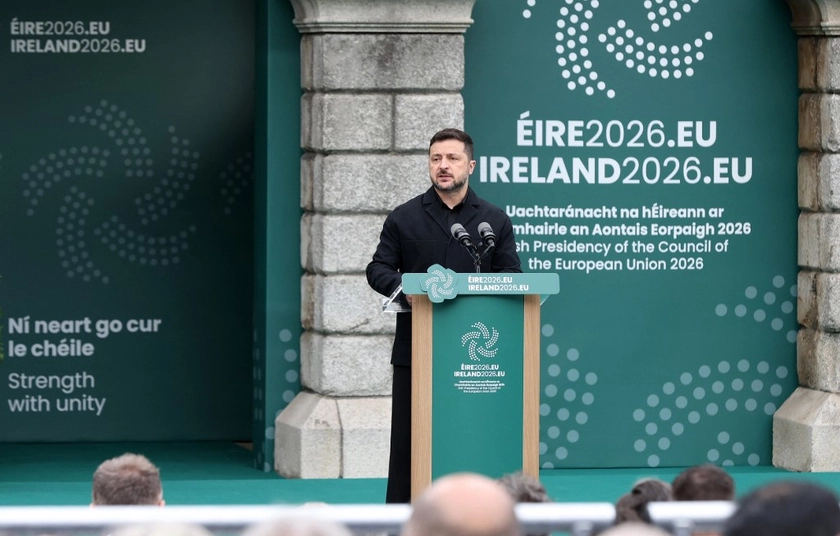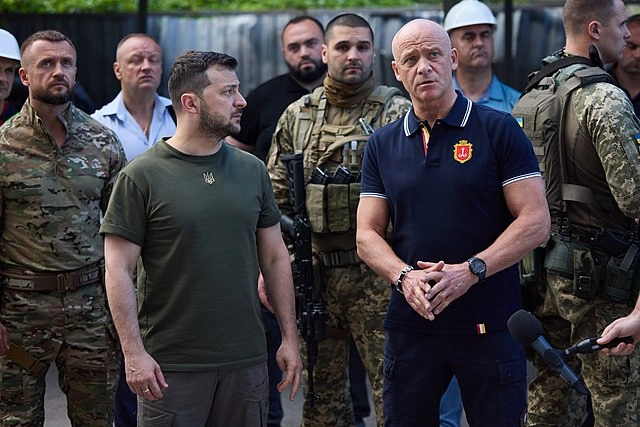
Odesa Mayor Hennadiy Trukhanov is expected to lose his Ukrainian citizenship after a presidential commission recommended revoking it, Odesa-based media outlet Dumska reported on Monday, citing sources. President Volodymyr Zelensky is set to sign the decree soon, according to the publication.
One day before the commission was supposed to meet, on Sunday, Trukhanov acknowledged that his case was under review.
JOIN US ON TELEGRAM
Follow our coverage of the war on the @Kyivpost_official.
He dismissed the move as “another provocation that has been going on since 2014,” insisting that he has never held Russian citizenship.
The Odesa mayor published a scan of what he claims is a forged passport issued on Dec. 15, 2015. Trukhanov insists that on that day he was in Odesa.
As proof, he shared a link to his social media post from Dec. 15, 2015, which included photos showing him attending an off-site meeting that day.
“This story has resurfaced again now. I wouldn’t have paid attention to it if I hadn’t learned that tomorrow, the presidential commission plans to consider revoking my Ukrainian citizenship over allegedly having Russian citizenship,” Trukhanov wrote on Telegram.
Soon after his statement, civic activist and volunteer Serhii Sternenko – a long-time critic of the mayor – published what he said were official Russian documents proving Trukhanov is a citizen of the Russian Federation.
“I’m again posting proof of Trukhanov’s Russian passport – from the application he personally filled out to Russian court rulings and Interior Ministry records. He could even be exchanged as a Russian,” Sternenko wrote on Telegram.
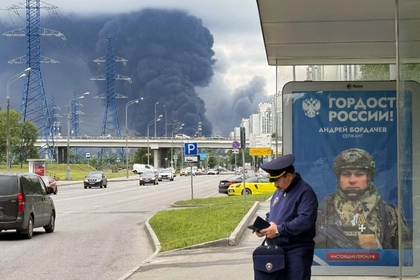
Drone Attack on Moscow Triggered Sharp Rise in Anti-War Views Across Russia
Under Ukrainian law, a mayor’s powers end once the city council formally acknowledges the loss of citizenship.
Does Trukhanov Really Have Russian Citizenship?
Allegations that Trukhanov holds Russian citizenship have followed him for more than a decade – claims he has repeatedly denied as “politically motivated lies.”
The controversy first surfaced in 2014 during his mayoral campaign, when leaked data from Russia’s Federal Migration Service allegedly showed that Trukhanov held a Russian passport issued in Dagestan and later reissued in Sergiev Posad near Moscow in 2011.
That same year, Trukhanov said he wrote to the Russian Consulate General in Odesa and to the Federal Migration Service to confirm whether he was listed as a Russian citizen. According to him, both institutions responded that he was not.
He later published a certificate from the Russian consulate supporting that claim. Ukraine’s Migration Service also confirmed that it had no record of Trukhanov giving up his Ukrainian citizenship — meaning there was no legal basis to revoke it.
In 2016, the issue resurfaced after the Panama Papers revealed that Trukhanov allegedly held Russian citizenship and controlled about 20 offshore companies through the construction group ROST, registered in the British Virgin Islands. The companies reportedly controlled more than two dozen firms in Ukraine.
Following the revelations, Ukraine’s Security Service (SBU) opened an investigation into his possible Russian citizenship but later said it could not confirm whether he held a Russian passport.
Trukhanov again denied any wrongdoing, saying he neither owned foreign companies nor possessed Russian citizenship.
In 2024, civic activist and volunteer Serhii Sternenko reignited the controversy by publishing what he said were official Russian documents proving Trukhanov’s citizenship.
Sternenko also alleged that Trukhanov opened a Russian bank account in February 2022 – shortly before Russia’s full-scale invasion of Ukraine.
You can also highlight the text and press Ctrl + Enter

Russia Hit by 660-Drone Overnight Barrage Targeting Moscow, Crimea and Key Military Sites