In a move that would be sure to anger Hungarian Prime Minister Viktor Orbán and other pro-Kremlin administrations within the European Union if it materializes, Brussels reportedly has been discussing a new model for accession under which new member states would have only limited voting rights at first.
An arrangement like that would pave the way for Ukraine’s accession to the 27-member bloc, and generally limit the powers of outliers and holdouts, raising eyebrows not just in Hungary, but also among European purists in Paris and the Hague particularly.
JOIN US ON TELEGRAM
Follow our coverage of the war on the @Kyivpost_official.
Both Budapest and Bratislava have been sticking points to date in Brussel’s agenda to sanction Moscow and arm and support Kyiv.
According to three European diplomats and one EU official who spoke to Politico on condition of anonymity, discussions are at a very early stage within the European Commission. If the concept passes committees and advisory councils in Brussels, such a move would require unanimous approval by all EU countries.
Such a move may also be more palatable to those who are skeptical of the candidacies of Ukraine and Moldova, that is, those yet unconvinced that future administrations in Kyiv and Chișinău would align with commonly held European principles, and even more concerned the two candidates, Serbia and Montenegro, which have long historic ties with Moscow.
At the same time, Europe’s parliament has been working toward sweeping institutional changes to make it more of a federation: These changes would see a reshaping of EU institutions, from overhauls to the presidential election process and to the veto-vote mechanism.
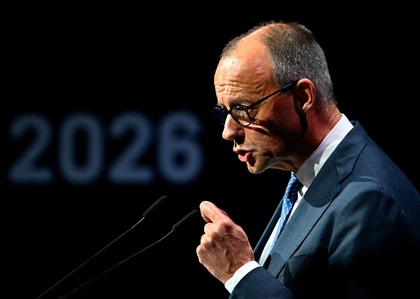
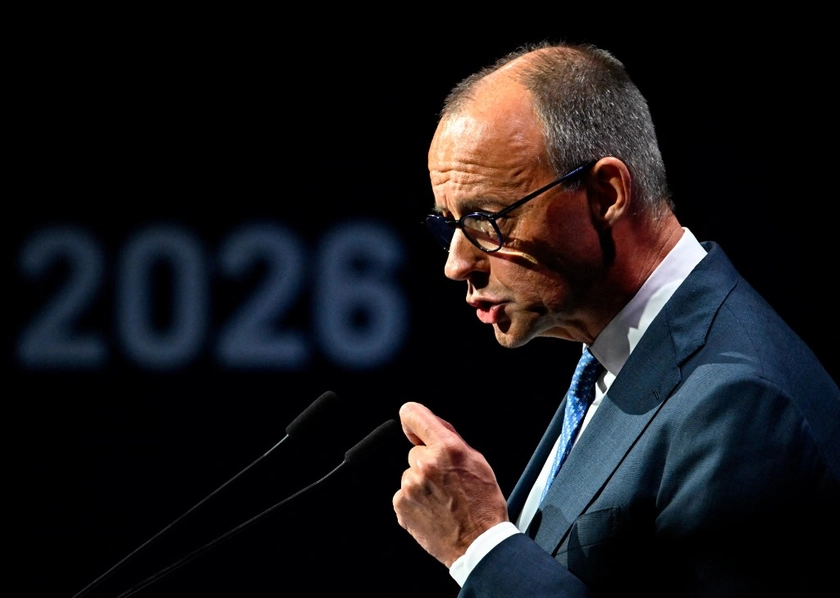
Merz Proposes EU Associate Status for Ukraine
Politico noted that the driving pro-enlargement movement includes Austria and Sweden who are looking to recapture the momentum slowed recently by Hungary and others who are additionally concerned about competition in domestic markets.
The report also reminded readers that Budapest is not the only capital to oppose the changes vocally, but also, France and the Netherlands do not want to see the concept of unanimity go away, and therefore the power of the veto, on more theoretical grounds.
President Volodymyr Zelensky foreshadowed the reported changes in Brussels earlier this month, when he remarked that, “Changing the procedure is called finding a way without Hungary.”
“Ukraine will be in the European Union, with or without Orbán, because this is the choice of the people of Ukraine,” Zelensky said. He added that he believed “the people of Hungary support Ukraine in any case.”
The EU commissioner for enlargement, Marta Kos, recently praised Ukraine’s record pace of technical preparation for membership – meeting all the required economic and legislative benchmarks – and expressed confidence that Hungary’s veto over Ukraine’s admission would soon be overcome.
You can also highlight the text and press Ctrl + Enter