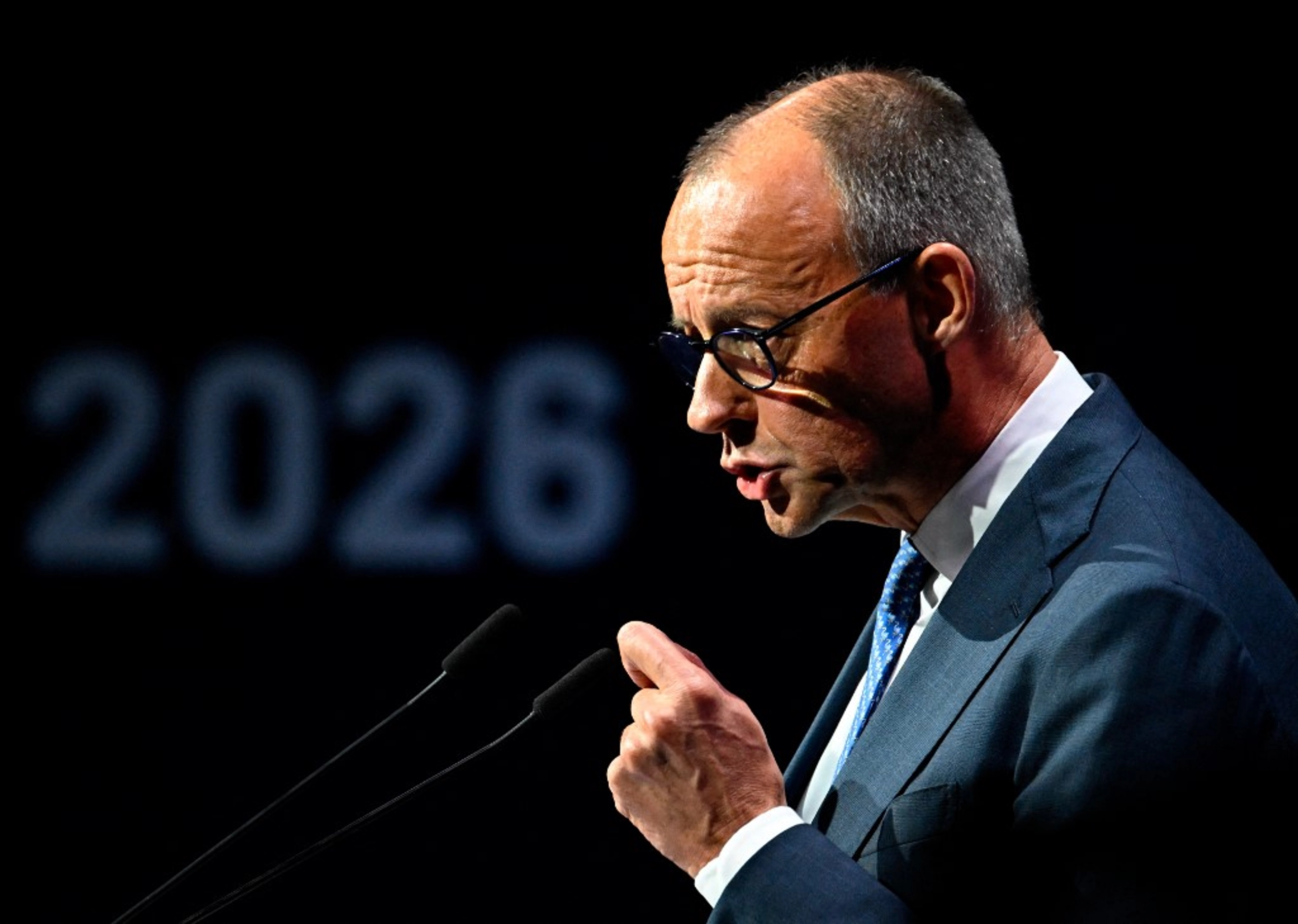
German Chancellor Friedrich Merz outlined a proposal for closer Ukrainian participation in European Union institutions before full accession, while stressing that Kyiv would still need to meet all membership criteria to join the bloc.
Speaking in the Bundestag on Thursday, June 11, ahead of next week’s EU summit, Merz said Ukraine belongs in the European Union “in the longer term” and highlighted what he described as the country’s significant reform achievements during wartime.
JOIN US ON TELEGRAM
Follow our coverage of the war on the @Kyivpost_official.
“The country has achieved remarkable reform progress,” Merz said, according to Die Welt.
Associate status would expand Ukraine’s role in Brussels
Merz proposed creating a form of associate EU membership that would give Ukraine a greater voice in European institutions before becoming a full member.
Under the idea, Ukraine would regularly participate in EU leaders’ summits and have a representative in Brussels.
“A Ukrainian commissioner, without a portfolio and voting rights for now, would be Kyiv’s face in Brussels,” Merz said.
The German chancellor also suggested allowing Ukrainian lawmakers to participate in discussions in the European Parliament without voting rights.
The proposal would stop short of granting Ukraine full membership privileges but would deepen Kyiv’s integration into EU decision-making processes.
Full membership still tied to accession requirements
While advocating closer integration, Merz emphasized that Ukraine would not receive special treatment on accession rules.

Ukraine Approves National Pantheon Law to Honor State Builders, Military Leaders and Cultural Icons
“Full membership will depend strictly on fulfilling the conditions for accession,” he said.
Ukraine formally began EU accession negotiations in June 2024 and is seeking to open all negotiating clusters as quickly as possible.
Several EU leaders have recently expressed support for accelerating Ukraine’s membership process, although some member states continue to raise concerns over enlargement.
Merz reaffirmed Germany’s support for Ukraine in its war against Russia and argued that Kyiv’s fight has implications beyond its own borders.
“Ukraine is defending not only its freedom but also our freedom,” he told lawmakers.
The chancellor said Germany would continue supporting Ukraine “for as long as necessary” while also backing diplomatic efforts to achieve a lasting peace involving Ukraine, Russia, Europe and the United States.
Ukraine formally received EU candidate status in June 2022 and opened accession talks with the bloc in June 2024.
In early May, Deputy Prime Minister for European and Euro-Atlantic Integration Taras Kachka said Ukraine could close most EU accession negotiation chapters within 12–18 months and move toward signing a membership agreement in 2027.
Kachka noted that the EU had issued Ukraine 145 requirements for opening the negotiation clusters in advance:
“Most of them concern aligning Ukrainian legislation with EU standards, as well as the day-to-day functioning of institutions. All these requirements are realistic. In the next 12–18 months, we can close most of the negotiation chapters and proceed to signing the EU accession agreement next year.”
He added that in March, Ukraine received a second package of conditions needed to complete technical negotiations across all chapters. Technical work is currently underway with the European Commission on all six clusters.
At the same time, Kachka stressed that even after a potential signing of the accession treaty, the process would not be complete, as the agreement must still be ratified by the parliaments of all EU member states as well as Ukraine, a process that could take several years.
On June 4, all EU member states approved preparations to open the first cluster of accession negotiations with Ukraine and Moldova. The move marks a major milestone on Kyiv’s path toward EU membership. Cluster 1 covers fundamental reforms, including the rule of law, democratic institutions, and fundamental rights, and must be opened before broader accession talks can proceed.
You can also highlight the text and press Ctrl + Enter