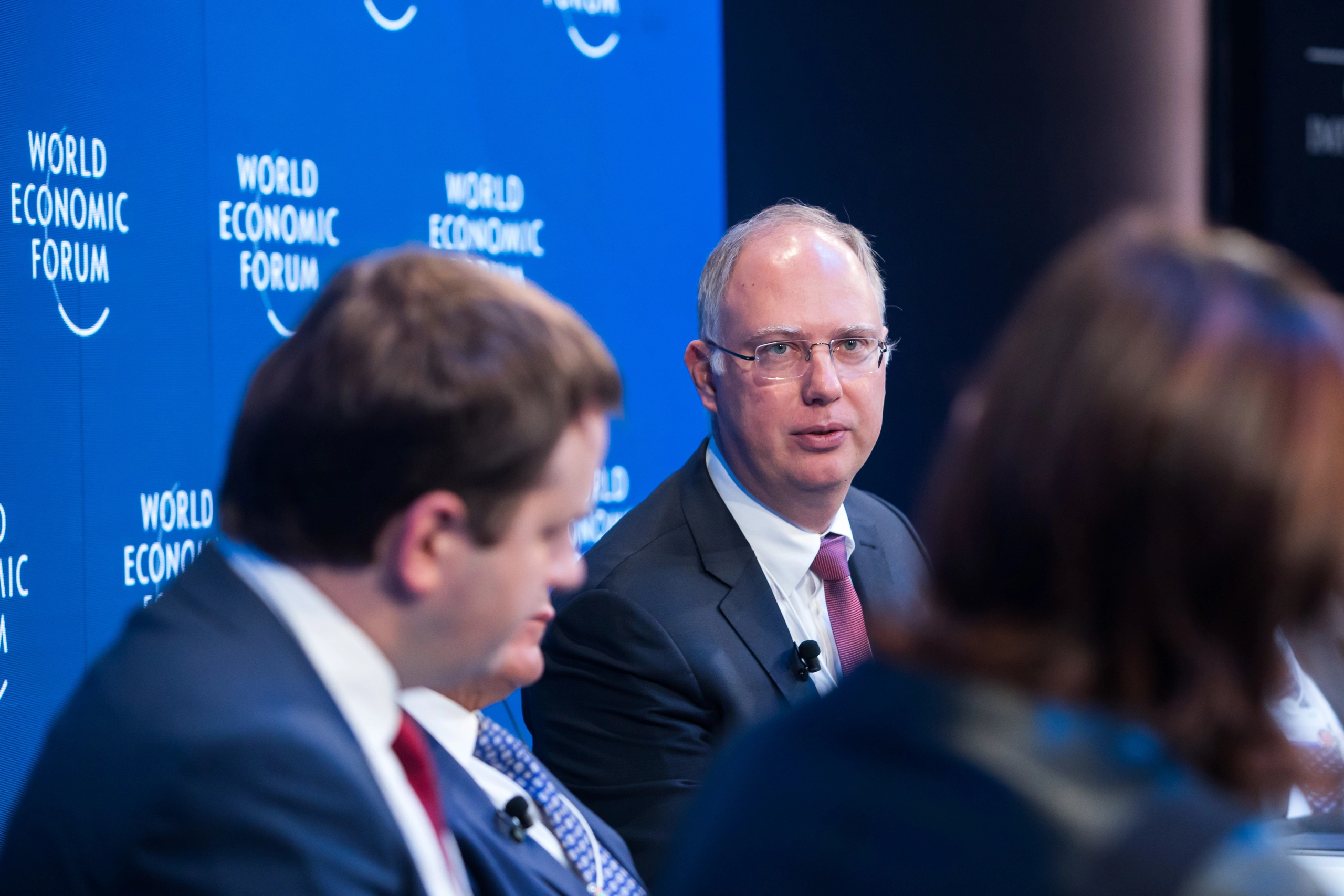
WASHINGTON DC – A noteworthy visit to Washington by Kirill Dmitriev, Russian leader Vladimir Putin’s special envoy for investment and economic cooperation, has quickly devolved into a public relations failure, marked by a rare and aggressive rebuke from a top US official.
Treasury Secretary Scott Bessent publicly dismissed the Kremlin negotiator’s claims regarding the inefficacy of new sanctions, flatly labeling him a “Russian propagandist.”
JOIN US ON TELEGRAM
Follow our coverage of the war on the @Kyivpost_official.
Dmitriev, the head of the Russian Direct Investment Fund (RDIF), arrived in the US just days after the Trump administration imposed new sanctions on Russia’s top oil and gas companies and canceled a planned summit with Putin due to Russia’s refusal to agree to a ceasefire.
Bessent blow: “What else is he going to say?”
The diplomatic tension boiled over on CBS’s Sunday show “Face the Nation,” where Secretary Bessent directly challenged Dmitriev’s assertion that the new US sanctions would have “absolutely no effect on Russia’s economy,” only leading to higher gas prices in the US.
Bessent questioned the utility of even airing the envoy’s message. “Are you really going to publish what a Russian propagandist says?” he asked, delivering a pointed warning about Moscow’s messaging strategy.
He argued that Dmitriev is incapable of honesty, asking: “What else is he going to say, that, oh, it’s going to be terrible and it’s going to bring Putin to the table?”

Russia Says Drone Attack Set Krasnodar Oil Depot Ablaze
Bessent detailed the immediate impact of the sanctions, citing that India has “done a complete halt of Russian oil purchases” and that “many of the Chinese refineries have stopped.”
Bessent dismantled the notion that the Russian economy is “immunized,” noting that Russia’s oil earnings were already down 20 percent year over year, with the new measures likely to cut them by “another 20 or 30 percent.”
“The Russian economy is a wartime economy. Growth is virtually zero. Inflation, I believe, is over 20 percent,” Bessent stated, concluding that oil is what “funds the Russian war machine, and I think we can make a substantial dent in his profits.”
Critics hail “time to call a spade a spade”
The Trump administration’s move to call out the Russian envoy’s rhetoric was immediately praised by those advocating for a harder line against the Kremlin.
A senior Republican congressional aide told Kyiv Post that Bessent calling Dmitriev a “Russian propagandist” was a “welcome move.”
The aide stressed that Moscow’s brazen lies “have strangely been allowed to fly publicly for too long” and it’s “time to call a spade a spade.”
Doug Klain, from Razom, a US-based organization that advocates for Ukrainian interests, went further, characterizing the overall trip as a failure.
He told the Kyiv Post: “It looks like Dmitriev’s visit fell flat, and rightly so. The Kremlin has plenty of pretty words for the US but it’ll take real action to end Russia’s war to change things.”
Klain added: “Pretty words and more drone strikes in Ukraine are what brought Trump’s sanctions on Russian oil, and I hope we see more of that paired with weapons to Ukraine until Russia stops fighting.”
Kremlin’s mission exposed as “maximalist demands”
Analysis from the Institute for the Study of War (ISW) confirms that Dmitriev’s latest media tour in Washington – including interviews with CNN and Fox News – was a deliberate attempt to propagate Kremlin narratives in response to the pressure of new sanctions and the canceled summit.
Despite promoting “constructive dialogue” and alluding to economic cooperation projects like a tunnel under the Bering Strait, ISW noted that Dmitriev’s core message simply “reaffirm[ed] that Russia’s maximalist demands... remain unchanged.”
Dmitriev was found to have repeated Moscow’s talking points that NATO expansion is an “existential threat” and that they must concede to Russia’s interests.
The envoy’s attempts at economic outreach were also framed by ISW as a calculated effort to use incentives to pressure them to end the war on Russia’s terms.
Dmitriev, who repeatedly claimed he only represented economic interests, also included a subtle but dark threat, stating that the “security of the whole world” was at stake and that the “complete annihilation of humanity” was close – a clear allusion to Russia’s nuclear capabilities.
Dmitriev’s visit, intended to project strength and commitment to dialogue, instead served as a stage for US officials and analysts to publicly expose the unchanging nature of the Kremlin’s war goals and its reliance on disinformation.
So far, the only confirmed, low-profile meeting the Kremlin’s envoy managed to get has been with Republican Congresswoman for Florida Anna Paulina Luna, who Dmitriev stated on social media was organizing a push for “parliamentary dialogue” between US Congress members and the Russian Duma, a claim that Republican congressional aides dismissed as “a propagandist’s lie.”
You can also highlight the text and press Ctrl + Enter