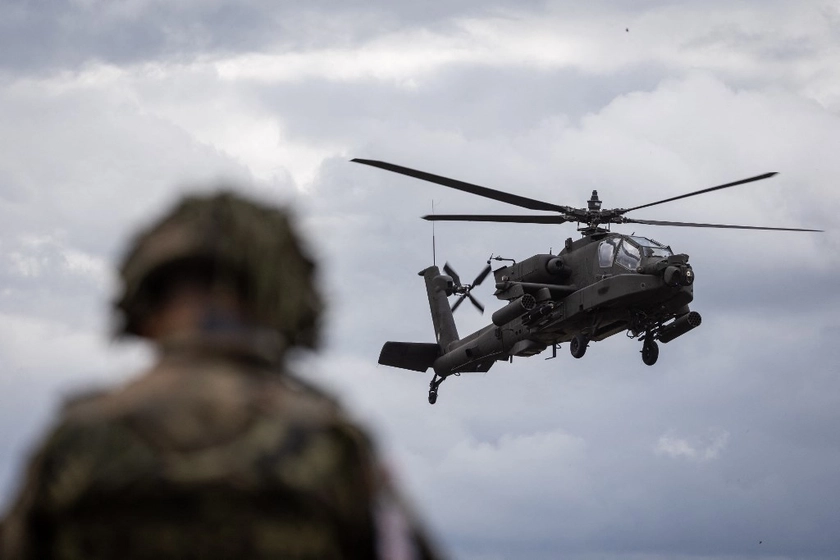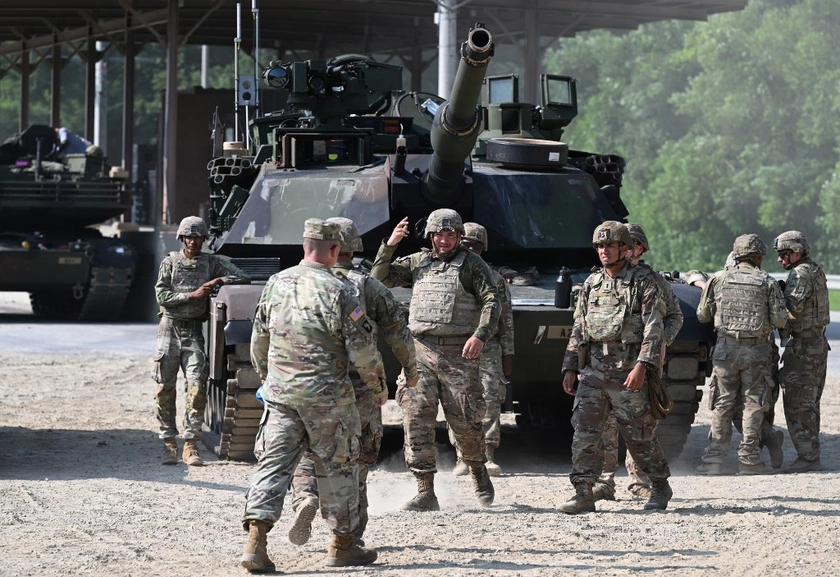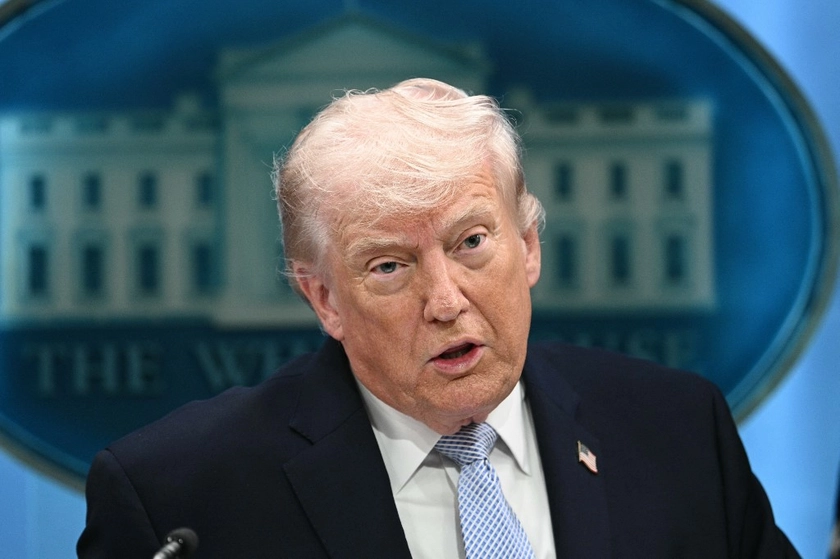
WASHINGTON, DC – The Trump administration is poised to withdraw thousands of American troops from Romania, a significant pivot that has sent ripples of concern across Europe’s eastern flank and underscored a strategic shift in Washington’s global military priorities.
According to three US and European officials who have been briefed on the matter, the administration notified Western allies earlier this week of its decision to remove troops, with a formal announcement expected in the coming days.
JOIN US ON TELEGRAM
Follow our coverage of the war on the @Kyivpost_official.
Speaking to Kyiv Post on Tuesday, the officials – all of whom requested anonymity because they are not authorized to discuss internal deliberations before an official announcement – said the troop reduction is not expected to exceed “more than a battalion.” They also insisted that the move will not “significantly impact US operations in the region.”
This decision arrives at a moment of heightened anxiety, following increasing Russian incursions into NATO airspace, including in Romania.
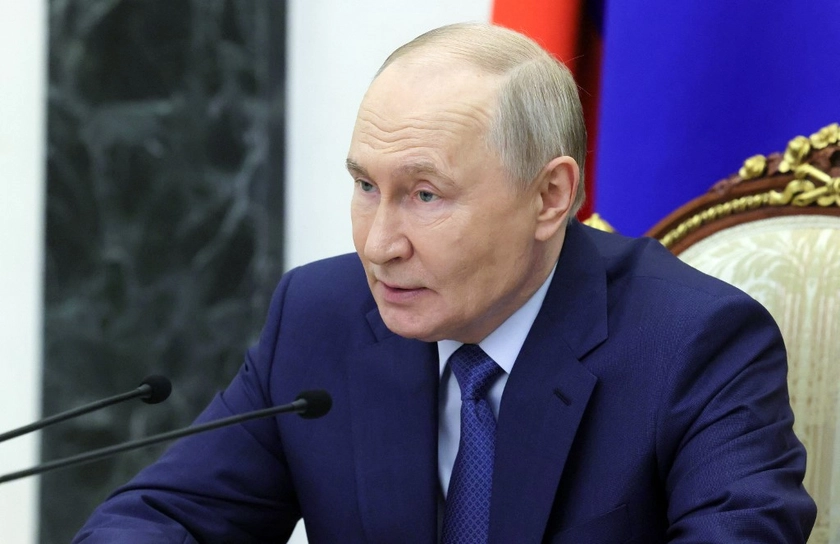
It also coincides with the US president’s apparent move to “double down” on efforts to persuade Russian President Vladimir Putin to agree to a ceasefire in Ukraine.
Western Hemisphere and Asia over Black Sea?
Internal discussions initially considered reductions in both Romania and Poland, but the final decision targeted Romania alone, the sources told Kyiv Post. This distinction highlights a complex geopolitical calculus at play.
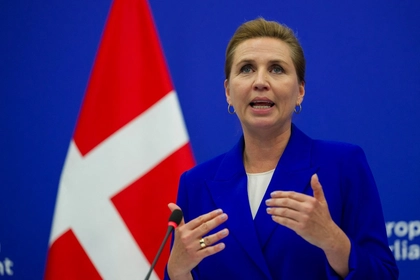
Stalwart Denmark Announces 30th Military Aid Package for Ukraine
The rationale behind the cuts is tied to a broader Pentagon push to focus resources on the Western Hemisphere and better counter China in the Pacific.
This aligns with the ongoing force posture review at the Pentagon, which is scrutinizing US European Command missions to free up resources for a shift toward the Western Hemisphere and Indo-Pacific – the focus of America’s primary strategic competition and dominance.
Yet, for a region still grappling with the fallout from Russia’s full-scale invasion of Ukraine, the timing is seen by some as precarious.
Retired US Army Col. Richard Williams, a former deputy director in NATO’s defense investment division, told Kyiv Post on Tuesday: “There is no obvious or tactical reasoning for the withdrawal of the NATO brigade from Romania.”
Key Eastern allies secured
In a major assurance to one of America’s staunchest European allies, President Trump recently met with Poland’s new president, Karol Nawrocki, and guaranteed that US troops would not be reduced in Poland.
During their meeting, Trump reportedly said the US had “never even thought” about withdrawing soldiers from the country, stressing: “We’re with Poland all the way.” The pledge has provided a measure of relief in Warsaw.
Justyna Gotkowska, deputy director at Poland’s leading government think tank, the Center for Eastern Studies (OSW), underscored the importance of the assurance, though she noted lingering concern about the broader US presence in Europe.
“Any reductions in our region will be perceived by Russia as inviting,” Gotkowska told a group of reporters during a roundtable at the Polish Embassy in Washington on Tuesday, highlighting the crucial “deterrence value” of the US military presence on the northeastern flank.
She further told Kyiv Post’s correspondent that rotational units – like those currently in Romania – are the “easiest ones to withdraw.”
Poland currently hosts up to 10,000 rotational US troops, along with the forward-deployed V Corps headquarters.
Romania’s strategic value and local reaction
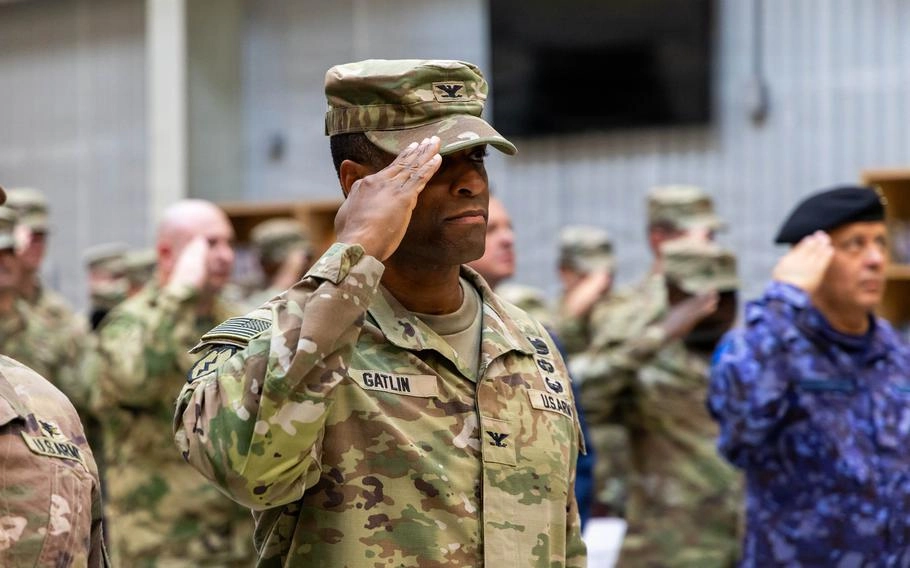
The move also came amid the US Army’s announcement – as reported by Stars and Stripes – that the 3rd Infantry Division has taken over command of the US military mission in Romania, which is aimed at fortifying NATO’s eastern flank.
The 3rd Infantry Division assumed command this week of Army operations in the Black Sea region, leading a task force of about 3,000 soldiers on a nine-month deployment.
The unit replaced the 1st Armored Division on Monday during a ceremony at Mihail Kogălniceanu (MK) Air Base, the main hub for US forces in Romania, according to a statement by the Army.
The operations cover missions across Romania, Slovakia, Hungary, and Bulgaria. During its deployment, the 1st Armored Division’s Task Force Iron “advanced US-NATO command and control integration with detailed planning of crisis response operations, eastern flank defense lines, and forward land forces expansion,” the Army said.
Bolstering troop levels and command capabilities around the Black Sea became a priority following Russia’s 2022 invasion of Ukraine.
The Pentagon’s boost in force levels included an increase in troop numbers in and around Romania. Although some Pentagon officials debated in 2023 whether to scale back these rotational forces, military leaders ultimately opted to maintain an expanded presence.
The 3rd Infantry Division’s arrival came as the Pentagon continued its force posture review – an assessment that could have implications for US European Command’s mission. Against this critical backdrop, the planned withdrawal has been met with surprise and confusion.
One former Romanian military official, speaking to Kyiv Post Tuesday afternoon, called the decision “hard to understand,” especially given that the current US military footprint in Europe – about 80,000 troops – is historically modest.
The reduction also comes despite lawmakers from both US parties backing a strong American military presence along the eastern flank after 2022, seeing it as a crucial signal to Putin.
Bigger picture: geopolitical chess
The withdrawal proposal unfolds as Russia continues to test NATO’s resolve, demonstrated by numerous air and drone incursions across the eastern flank in September.
NATO responded by launching Eastern Sentry, an enhanced vigilance activity, but the US troop cut risks sending a conflicting message.
Experts believe that reducing the US force presence could weaken American interests and influence, potentially encouraging a Russian perception of softening deterrence.
Speaking to Kyiv Post, Col. Williams expanded on this point, saying the alliance continues to view its presence as vital to stability.
He noted that the alliance has fortified its eastern flank with rotational troops in deterrence roles while building a major air base at Cincu, which is expected to become the largest in Europe.
Meanwhile, Russia has requested that forces be reduced to pre-1997 levels, which would include potential NATO drawdowns in Romania and Bulgaria.
Williams added that the recent deployment of the high-readiness 101st Airborne Division (Airmobile) to the region suggests that its rapid deployability could make a brigade available for operational use elsewhere if new requirements arise.
“There are many moving parts in play,” he said.
The decision places renewed emphasis on European allies to shoulder more of the security burden, even as Poland’s Center for Eastern Studies warns that the transition toward a more European-led NATO must be “structured” to avoid creating a vacuum that Russia could perceive as an “invitation.”
The US military remains committed to the MK base, a sentiment echoed by a former special presidential envoy for Ukraine earlier this year.
Yet the impending withdrawal of a rotational brigade marks a striking shift in US priorities, compelling allies to rethink their defense posture as Washington turns its attention both to the Western Hemisphere and to the Pacific.
You can also highlight the text and press Ctrl + Enter

OPINION: The New Line Kyiv Quietly Built Into NATO