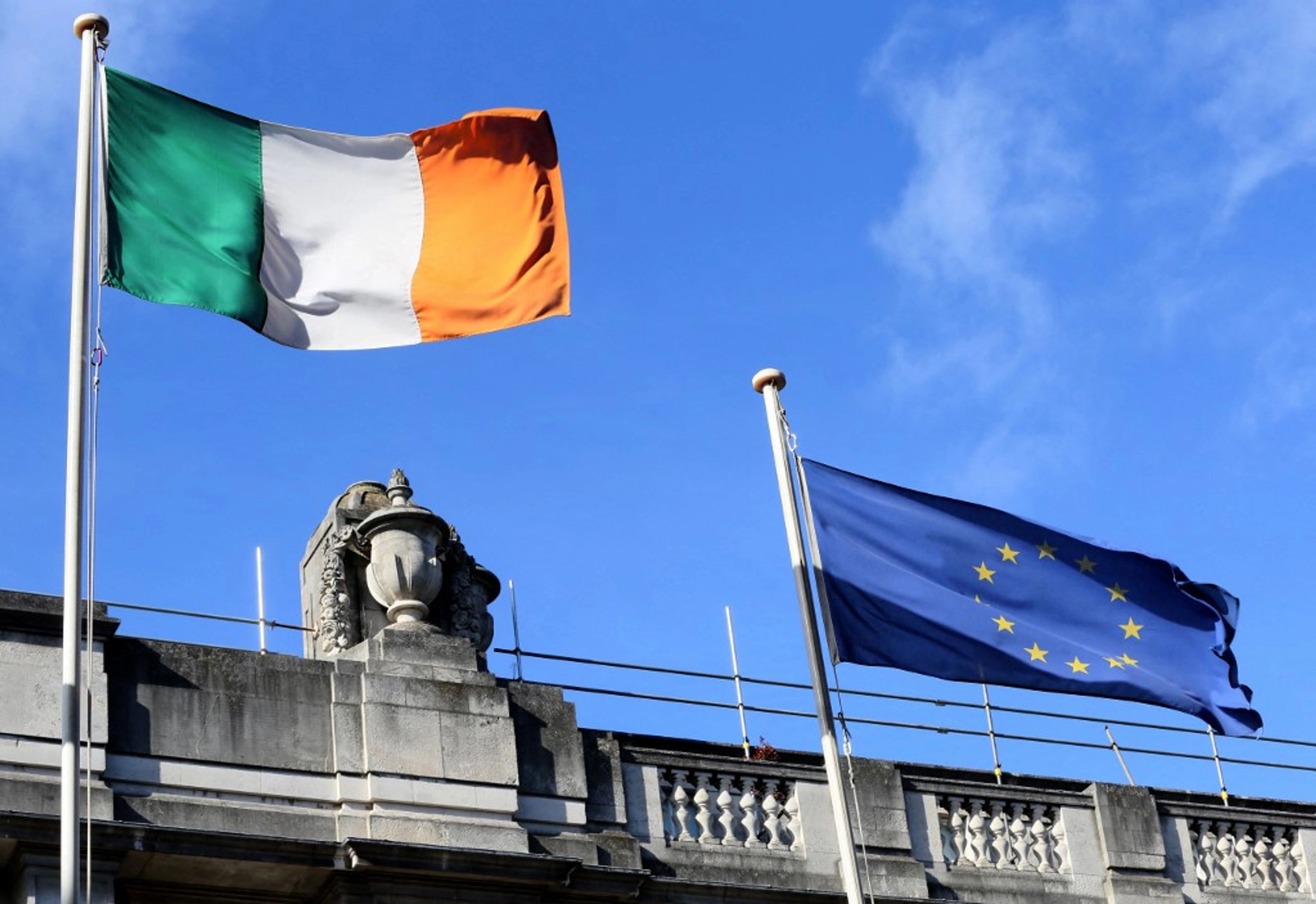
Displaced Ukrainians moving to Ireland will now be allowed to stay in state-provided accommodation for only 30 days instead of 90, and those with jobs will be required to contribute financially toward their housing, following changes agreed by an Irish Cabinet sub-committee.
According to Irish national broadcaster RTÉ, the committee was informed that if current trends continue – around 50 people arriving each day in need of accommodation – the state’s remaining capacity could be exhausted by the end of November.
JOIN US ON TELEGRAM
Follow our coverage of the war on the @Kyivpost_official.
A leaked note from the Irish Department of Justice confirmed the estimate and linked the rise in arrivals to Ukraine’s recent decision to allow men aged 18 to 24 to leave the country, easing wartime travel restrictions.
Since Russia’s full-scale invasion in February 2022, more than 120,000 people fleeing the war in Ukraine have received temporary protection in Ireland, with about 83,000 still residing in the country, according to RTÉ.
Planned rent contributions for working residents
The committee also reached an agreement in principle that people working while living in state accommodation will make weekly financial contributions toward their housing costs.
Further work will be led by Irish Justice Minister Jim O’Callaghan and Minister of State Colm Brophy before the proposal is brought to the cabinet for final approval.
O’Callaghan said he viewed the plan as “appropriate.” Draft guidelines suggest contributions between €15 ($17) and €238 ($273) per week, depending on income.
Germany’s Waning Influence Mirrors Broader EU Fragmentation
Those earning between €97 ($111) and €150 ($172) could pay €15, while those earning €340-€405 ($390-$465) would contribute about 50 percent of their accommodation costs, roughly €119 ($137) per week.
Implementation could take nine to 12 months, he said.
The proposal concerns residents of facilities operated by the International Protection Accommodation Service (IPAS), the state agency responsible for housing asylum seekers and displaced persons.
NGO warns move could push Ukrainians into homelessness
John Lannon, CEO of the refugee-support organization Doras, called the government’s decision “worrying” and “not well thought out,” warning that cutting the stay to 30 days could be “extremely counterproductive” and may push Ukrainians into homelessness.
He said 90 days was the minimum time needed for families to find their next accommodation and described the rent proposal for working IPAS residents as “extremely unfair.”
Lannon argued that asylum seekers already lack access to social benefits such as child allowance or education grants, and often live in remote areas where transport to work is costly.
Political criticism and context
Opposition figures across Ireland’s left-leaning parties condemned the move.
Matt Carthy, justice spokesperson of Ireland’s largest opposition party Sinn Féin, said the plan was a reiteration of an earlier promise made 14 months ago, calling it evidence of a “do-nothing government” that had failed to reform the IPAS system.
He said the government’s slow pace of implementation had led to “dysfunction and profiteering” within the accommodation network.
Sinéad Gibney, a member of the Irish parliament from the Social Democrats, described the move as “quite shocking” considering that, after last week’s attack on an IPAS centre in Drogheda, the government’s first discussion on the issue focused on “payments from applicants.”
Arson attack on refugee center heightens security concerns
Drogheda is a town north of Dublin in County Louth.
The Gardaí – Ireland’s national police – said the attack occurred when fireworks were thrown into the IPAS building on Georges Street, sparking a fire.
Children and an adult were rescued from the top floor, and all residents were evacuated as police opened a full arson investigation.
Gibney said there were “much bigger concerns around the security of people in International Protection,” and warned that charging residents would achieve little revenue while worsening inequality.
EU to phase out refugee support by 2027
The debate in Ireland comes as the EU prepares to wind down its temporary protection program for Ukrainians across the bloc.
According to Ukrainian lawmaker Viktoria Hryb, the European Commission has informed Kyiv that EU-wide support for people fleeing the war will end in March 2027.
Hryb said Brussels has urged the Ukrainian government to begin preparing for the return of its most vulnerable citizens.
After 2027, she added, only Ukrainians with official jobs, residence permits, or citizenship in EU member states will be allowed to remain – while others will be required to return home.
You can also highlight the text and press Ctrl + Enter