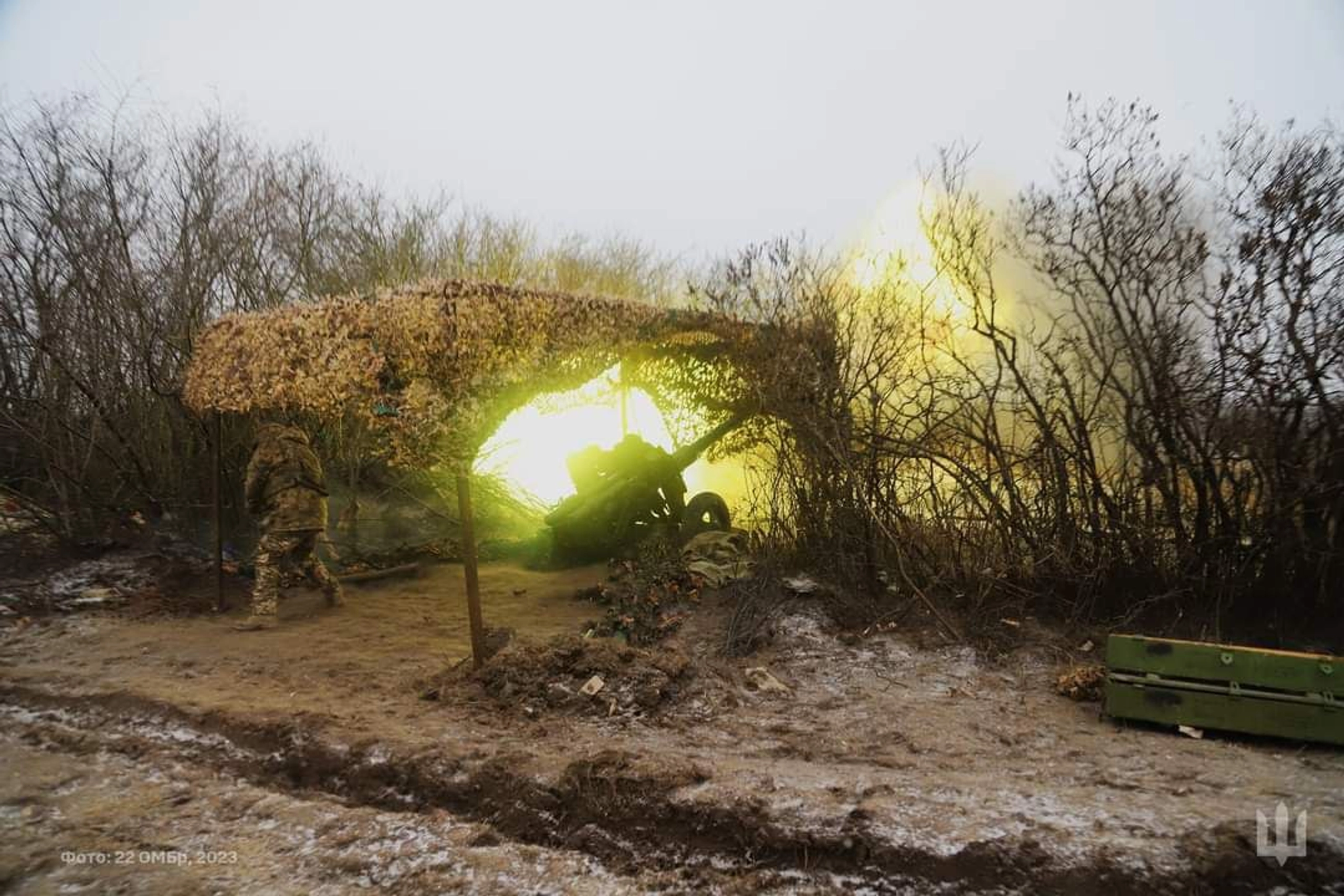
Giving into Russia’s demands to end the war in Ukraine will cost Europe twice as much as supporting Kyiv’s efforts to win the conflict, a new report drafted by Norwegian experts shows.
Taking into account political, defense, humanitarian, and economic costs from 2026-2029, experts from the Norwegian Institute of Economic Affairs and risk analysts Corisk calculated that a Russian victory will cost Europe between €1.12 and 1.63 billon, and a Russian defeat between €522-838 billion.
JOIN US ON TELEGRAM
Follow our coverage of the war on the @Kyivpost_official.
The researchers – who specialize in security policy, military doctrine, sanctions and economics – drew up the report to help focus policymakers’ minds on both scenarios.
The team studied how the two outcomes could impact Europe’s security needs and defense spending.
In both scenarios, they envisioned that Europe would need to provide the majority of support, with contributions from allies such as Canada and Japan in both scenarios.
They also make an assumption that the U.S. will end its support for Europe and Ukrainian defense, but will continue to sell weapons to both.
Scenario 1: Russian partial victory
The first scenario asks: What will be the costs for Europe and its allies, if Russia wins or succeeds in neutralizing Ukraine militarily and politically?
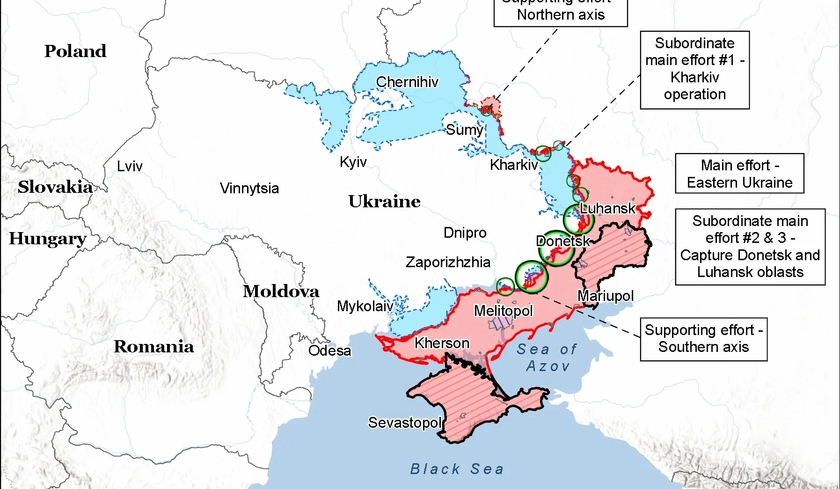
“It assumes Russia achieves decisive military victories, occupies more land westwards towards the Dnipro [River], and succeeds in pressuring Ukraine into a clearly disadvantageous peace settlement.”
Russian Defense Sector Drains Civilian Labor Market, Artificially Inflating Wages
This outcome would cost Europe between 1.5 - 2.5 % of GDP, or approximately €1.63 billion. The authors estimate €256 billion would be needed for an accelerated re-armament of the Baltics and Nordic arctic, increased support for Ukraine and up to €952 billion for additional help for refugees fleeing west.
Russia would also be able to “free-up” military resources and direct them to NATO’s borders with the Baltics and Nordics as well as Belarus and Moldova. This could “lead to confrontations that threaten Europe as we know it,” the report says.
They estimate that if Russia is allowed to win a partial victory, between six and 11 million refugees will attempt to migrate to Europe, costing up to €275 billion per year.
“In a worst case scenario, Ukraine will become a so-called ‘failed state’,” the authors say.
Scenario 2: Ukrainian partial victory
The second scenario asks: “What are the costs of enabling Ukraine to resist Russian attacks and regain the opportunity for limited counteroffensive?”
“This entails that the Armed Forces of Ukraine manages to halt further Russian expansion, as well as achieving better air defence coverage throughout Ukraine. As a result of Ukrainian military successes, Russia changes it calculus and seeks to end hostilities.”
This scenario would cost European countries 0.9% of their GDP, or a maximum of €838 billion, over the next four years, the researchers calculated.
“i.e. about half of the cost that will be incurred under the alternative of a Russian victory. Confiscation of frozen Russian assets will almost cut in half this cost,” the report said.
Additionally, in the event of a partial Ukrainian victory, the researchers believe up to 1.5 million people will return to their homeland.
“We argue that the second scenario may change the Russian cost-benefit calculus, and thereby offer the most realistic path to negotiations that can end the war,” the authors conclude.
US out of touch
The researchers said there is an “urgent need” for Europe to take “initiative and ownership” of the diplomatic efforts to end the war. It also needs to come up with its own plan that does not involve the U.S. or rely on its leadership, they say.
To support their claim, they highlight the U.S.’ 28-point proposal to end the war that was drawn up with Russian input and was leaked to the media last week.
It shows that President Donald Trump and his administration are “out of touch with the real issues at stake” and “misreads” what is needed to “secure a stable and safe Ukraine and Europe,” the report’s authors say.
Europe’s plan should focus on “increased military and economic pressure on Moscow,” the researchers said.
They do not see any reason to trust Vladimir Putin, writing: “Russia’s leadership has never during the entire war displayed any gesture of good faith, willingness to compromise, or genuine willingness to negotiate.”
You can also highlight the text and press Ctrl + Enter

Zelensky Reveals Intercepted Intel From Putin’s Desk