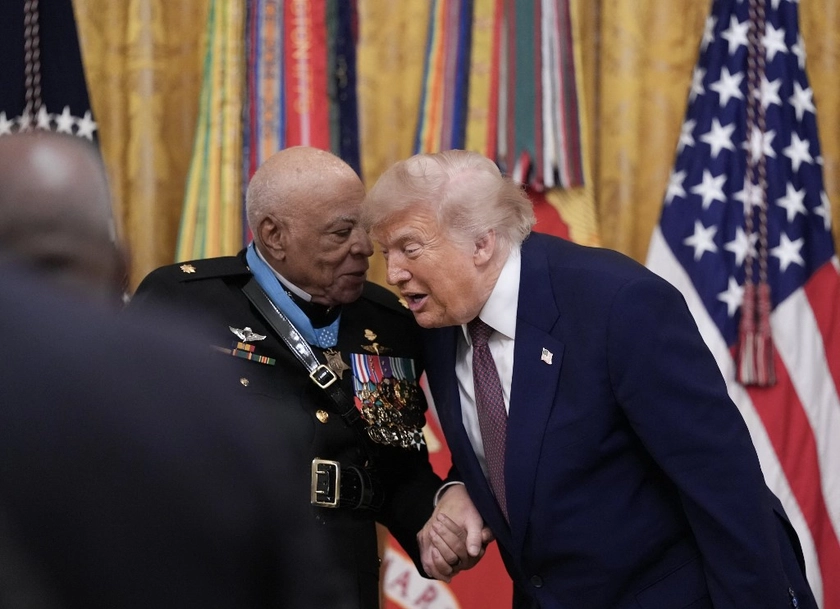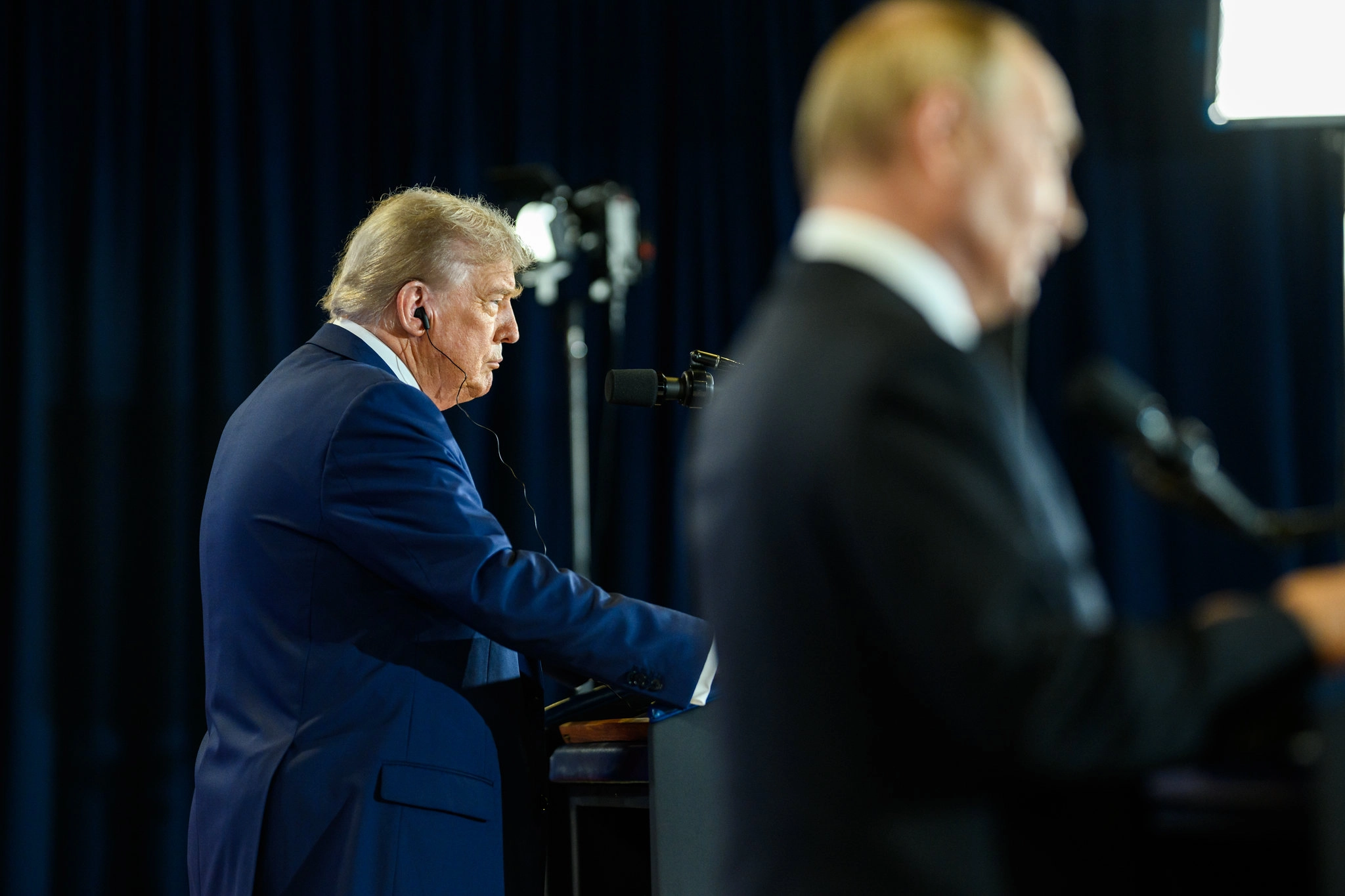
WASHINGTON DC – President Donald Trump on Wednesday acknowledged that the US still lacks a clear path toward brokering peace in Ukraine, even after what he described as “reasonably good” talks between Russian President Vladimir Putin and two of his top envoys in Moscow.
Special envoy Steve Witkoff and senior adviser Jared Kushner, dispatched to the Kremlin this week for a rare hours-long meeting with Putin, are expected to meet Ukraine’s national security chief Rustem Umerov in Florida on Thursday.
JOIN US ON TELEGRAM
Follow our coverage of the war on the @Kyivpost_official.
The back-to-back diplomacy is part of a rapidly evolving US attempt to shape a settlement to the nearly four-year-old war – but one that is increasingly unsettling NATO allies.
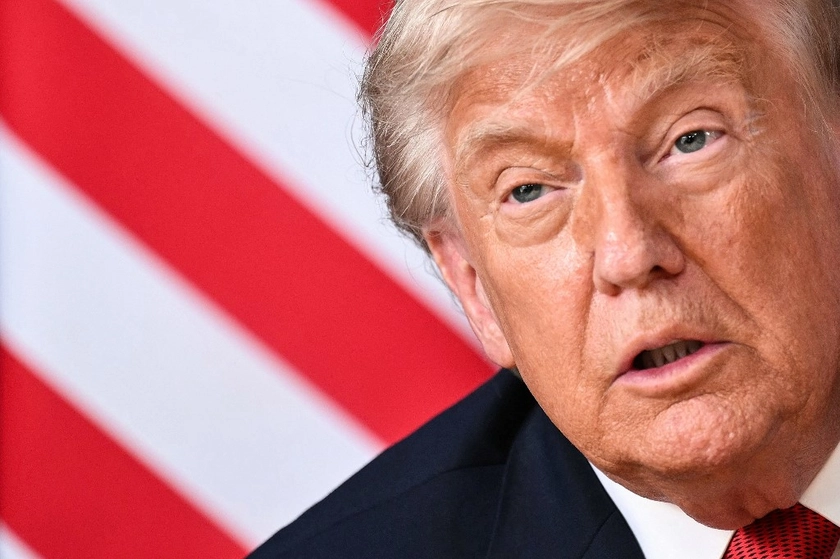
Speaking to reporters in the Oval Office, Trump insisted that Putin “would like to make a deal,” but repeatedly hedged on whether any real progress had been made.
“What comes out of that meeting, I can’t tell you because it does take two to tango,” Trump told reporters.
“Ukraine, I think we have something pretty well worked out with them, they’re very satisfied,” he concluded.
Kremlin’s hard line – and the diplomatic choreography
The Moscow meeting, which stretched late into Tuesday night after Putin made Witkoff and Kushner wait three hours – a signature Kremlin power play – produced no major breakthrough.
US officials nevertheless characterized the discussions as “productive” and said both sides engaged in a “thorough” review of possible parameters for future talks.
Germany and France Demand Stricter Measures Against Russian Shadow Fleet
Putin, for his part, accused European governments of trying to sabotage peace efforts by backing proposals “absolutely unacceptable” to Moscow. He also warned that Russia was prepared for a confrontation with Europe “if Europe starts one.”
A senior US official told Kyiv Post on Wednesday the American team briefed Trump immediately upon returning and relayed their impression that Putin does want an off-ramp.
“Their impression was very strongly that he’d like to make a deal,” Trump reiterated Wednesday, adding, “We’ll see what happens.”
Another official added that while Witkoff and Kushner had considered stopping in Brussels for a discussion with Ukrainian President Volodymyr Zelensky, the timing “did not work out.”
European unease: ‘Washington is drifting toward Moscow’s framing’
Across European capitals, concern continues to grow that Trump’s shuttle diplomacy risks tilting the process toward Russian preferences, while sidelining Kyiv and fracturing transatlantic unity.
Several senior European diplomats, speaking on background to Kyiv Post, expressed frustration with what they see as an increasingly US-Russia bilateral approach.
“There is palpable anxiety that Washington is drifting toward Moscow’s framing of the conflict,” said a Western European diplomat working on Ukraine, adding, “Even if unintentionally, these back-channel talks marginalize NATO and the EU.”
Another Central European diplomat warned: “Every time US envoys return from Moscow talking about Putin wanting peace, the Kremlin reads that as a sign the pressure campaign is working.”
A Nordic diplomat was more blunt: “Europe is carrying the cost of this war – militarily, economically, politically. If the US cuts side deals without us, the alliance will feel the shockwaves overnight.”
NATO on edge – and increasingly strained
At a NATO foreign ministers’ gathering this week, US Deputy Secretary Christopher Landau provoked immediate hallway chatter when he urged Europe to “take more responsibility for its own defense” and warned that NATO unity could be weakened if American defense firms face barriers in Europe’s procurement markets.
According to diplomats present, Landau left the meeting shortly after delivering his statement. His remarks contrasted sharply with the tone of most allies, who stressed continued military support for Ukraine and increased pressure on Russia.
NATO Secretary-General Mark Rutte told ministers that partners must maintain – not scale back – military aid to Kyiv. He is expected to urge allies to locate additional NASAMS munitions for Ukraine in the coming days, sources told Kyiv Post.
At a separate NATO-Ukraine Council session, Ukrainian Foreign Minister Andriy Sybiha insisted Kyiv would not accept unilateral withdrawals or ambiguous security guarantees.
“Russia is not winning,” Sybiha highlighted, according to one diplomat in the room.
Kyiv’s calculus: cautious, but compelled to engage
Umerov’s decision to travel to Miami for talks with the US envoys underscores Ukraine’s dilemma – wary of Trump’s overtures toward Moscow yet eager to avoid being cut out of a process Washington appears determined to control.
Notably, Secretary of State Marco Rubio will not take part in today’s Miami talks.
A senior European official close to Kyiv expressed resignation: “The Ukrainians understand they can’t ignore the Americans – especially this White House. But they are very nervous about what commitments are being shaped behind closed doors.”
Witkoff and Kushner’s meeting with Umerov is the next major waypoint in a process that has so far unfolded mostly out of public view.
Trump’s repeated insistence that “we’ll see what happens” captures the uncertainty – and the risk – surrounding a diplomatic track that could recast the entire Western approach to the war.
As one senior EU diplomat summed it up: “Everyone wants the war to end. The question is whether this pathway preserves European security – or rewrites it on Moscow’s terms.”
You can also highlight the text and press Ctrl + Enter