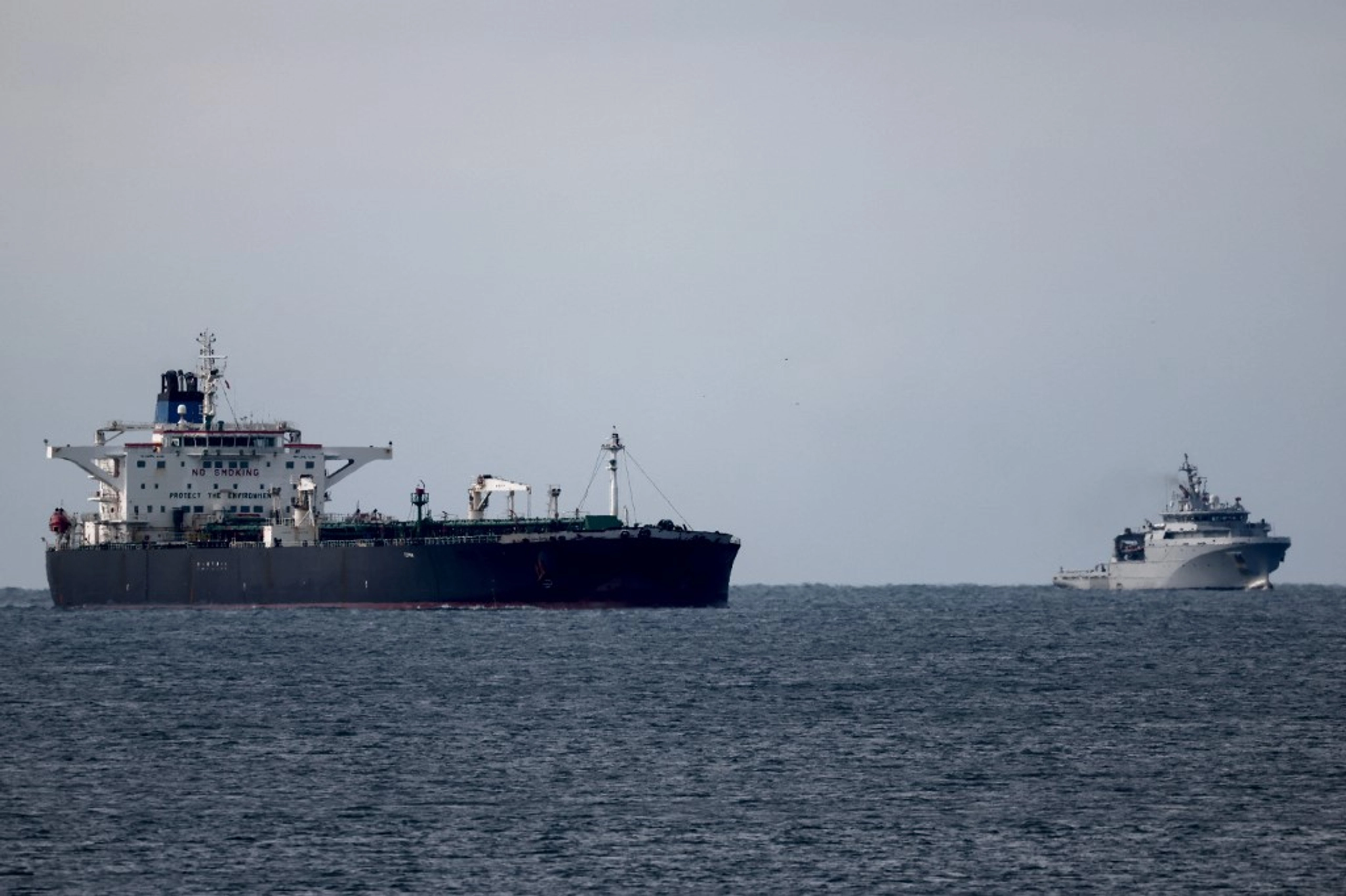
Members of the German and French parliaments have introduced a joint initiative calling for enhanced countermeasures against the vessels comprising the Russian “shadow fleet”, DW reported.
The draft document is scheduled for adoption during a meeting of the Franco-German Parliamentary Assembly (DFPV) on June 22. The text demands increased oversight and the detention of vessels found violating existing legal frameworks. Furthermore, the initiative calls for additional diplomatic efforts directed at the countries under whose flags these vessels operate.
JOIN US ON TELEGRAM
Follow our coverage of the war on the @Kyivpost_official.
Within Germany, the demands addressed to the respective governments have garnered support from lawmakers representing the Christian Democratic Union/Christian Social Union (CDU/CSU) bloc, the Social Democratic Party of Germany (SPD), and the Green Party.
The draft document outlines that the shadow fleet represents geopolitical, security, and environmental hazards. The parliamentarians note that many of the tankers utilized are aging, inadequately maintained, and fail to meet international maritime standards. The document also suggests that certain vessels are utilized for espionage or sabotage operations.
Jürgen Hardt, a foreign policy expert for the CDU/CSU faction in the Bundestag, stated that the Russian shadow fleet undermines the effectiveness of international sanctions and poses a threat to European security and critical infrastructure, necessitating a joint response.
Zelensky Urges Belarus to Prove Anti-War Stance
Anton Hofreiter, Green Party politician and chairman of the Bundestag’s EU Affairs Committee, added that the operations of the shadow fleet secure continued revenue for the Russian state budget to finance the war against Ukraine, while simultaneously presenting a security risk.
EU extends Russia sanctions
The Franco-German initiative coincides with ongoing efforts at the EU level to solidify and expand sanctions against Russia. On June 19, EU leaders agreed during a summit in Brussels to renew the bloc’s sectoral economic restrictions targeting key areas of the Russian economy for an additional year.
This marks the first instance of the EU extending the sanctions package for a 12-month period; previously, the measures required unanimous renewal by all member states every six months. The annual extension is intended to provide increased predictability for implementing entities.
The EU is also currently preparing a new sanctions package aimed at curbing the circumvention of existing restrictions. The upcoming measures are expected to target companies in China, the United Arab Emirates, Turkey, and Azerbaijan that are accused of supplying drone components, military-related chemicals, and logistical assistance to the Russian shadow fleet.
You can also highlight the text and press Ctrl + Enter