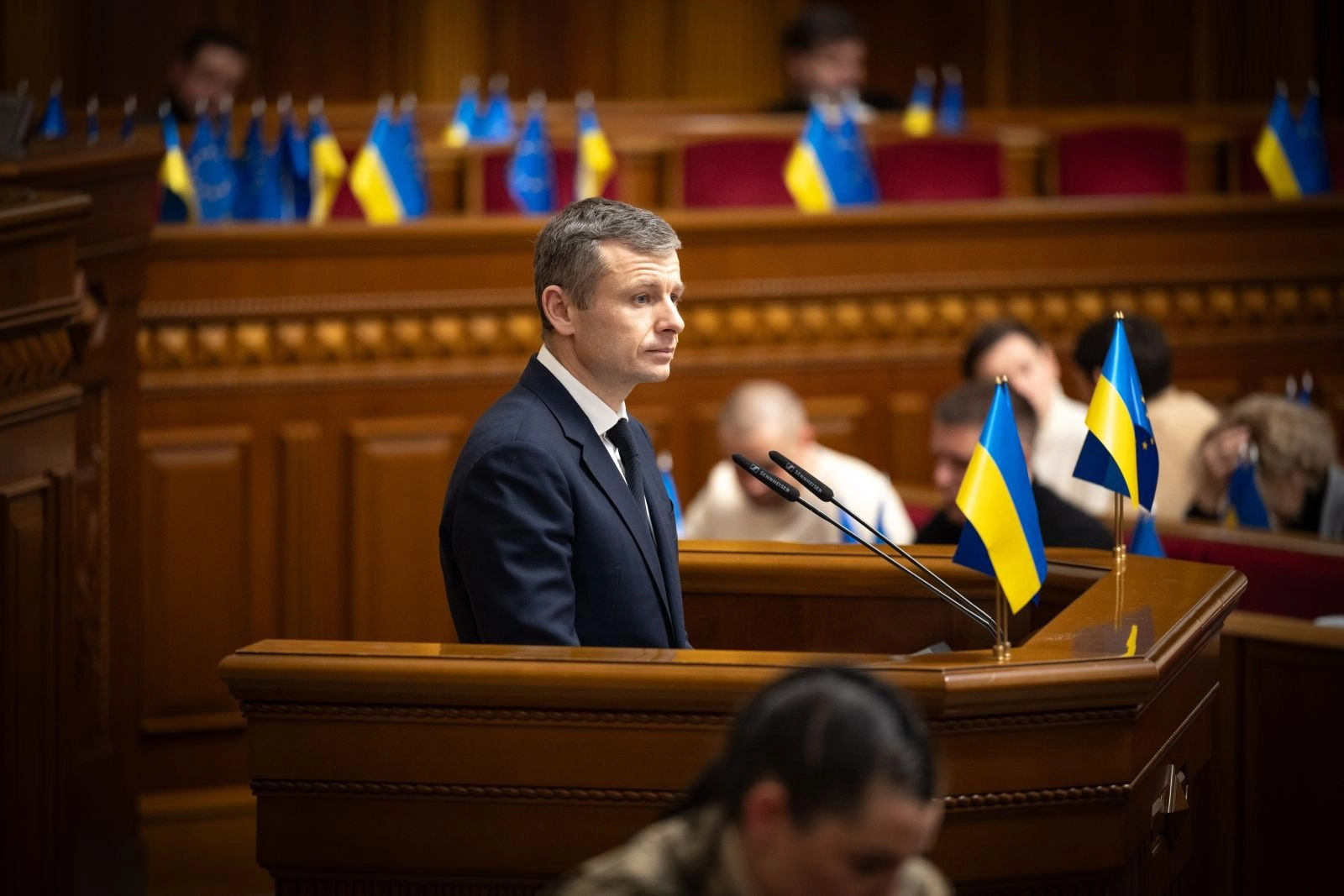
Ukraine’s legislature, the Verkhovna Rada, has approved the 2026 state budget, locking in record wartime spending of Hr.4.8 trillion ($113.8 billion) with defense and security taking the largest share and external partners expected to cover almost half of overall needs.
Such design of the budget is the only way for Ukraine to manage its finances as Russia’s full-scale invasion reaches its fourth anniversary, and Russia continues devastating attacks on land, air and sea in Ukraine.
JOIN US ON TELEGRAM
Follow our coverage of the war on the @Kyivpost_official.
The law was passed in the final review on Dec. 3, the so-called “second reading and as a whole” in the Verkhovna Rada, Ukraine Finance Ministry reported.
Now Ukraine’s president should sign it for the 2026 budget to enter into force.
The new budget sets out the government’s spending priorities for another year of full-scale war, from the military and veteran services to social protection, education, healthcare and support for the economy.
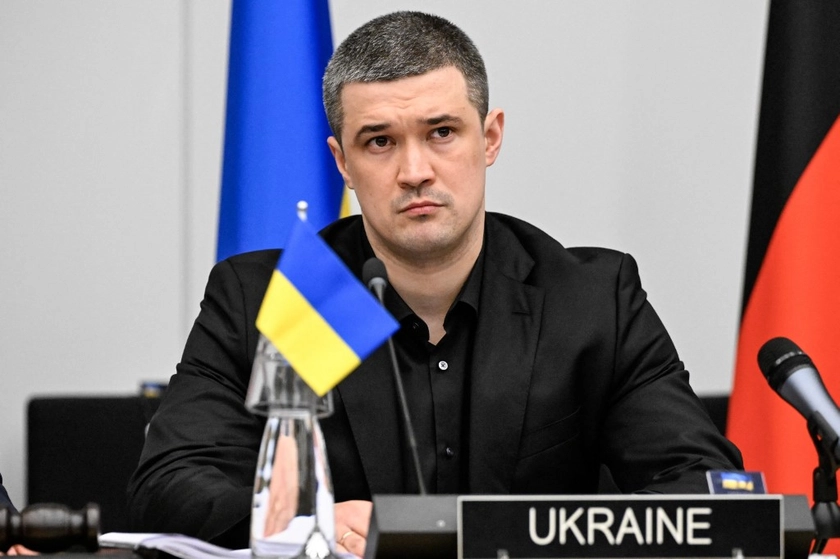
Finance Minister Serhiy Marchenko called it the fifth budget adopted under full-scale invasion and said all available resources “are directed to the main thing – the defense and defense capability of Ukraine,” while the state continues to pay state salaries, especially the largest portion to the military, and basic social payments.
Kyiv Post outlines the key figures of Ukraine’s next year budget. However, the figures in dollars might differ from the actual sums to be spent during 2026.
State Department Veteran Warns Against US Troop Pullback From Europe Amid Russian Threat
Ukraine’s Ministry of Finance forecast a more depreciated hryvnia compared to the current official exchange rate of the National Bank of Ukraine (NBU) – Hr.45 for 1 dollar in the forecast compared to Ukraine’s National Bank official exchange rate – Hr.42.1838 per $1 as of Dec. 5.
Kyiv Post reestimated the sums in dollars according to the NBU’s official exchange rate, not using the forecast figures.
Ukraine’s budget revenues, deficit and external support
After revisions between the first and second readings, planned state budget revenues were increased by Hr.27.8 billion ($659 million) to almost Hr.3 trillion ($71.1 billion).
The budget’s general fund – cash Ukraine stocks in one wallet without tying the spending to specific purposes – is set at Hr.2.6 trillion ($61.6 billion).
The special fund – the revenues from specific sources in Ukraine’s economy – will bring in Hr.293.7 billion ($7.0 billion).
According to the Finance Ministry, 2026 revenues are expected to exceed those of 2025 by Hr.402 billion ($9.5 billion), largely on the back of higher tax receipts.
The need for financial aid from Ukraine’s partners in 2026 is estimated at Hr.2.079 trillion ($49.3 billion). The government plans to draw on resources from the World Bank, the European Union, the UK, the International Monetary Fund (IMF) and G7 countries to close the gap.
Part of this gap is already covered by the Extraordinary Revenue Acceleration program, the so-called ERA Loan, backed by profits of Russian assets. Another source is the European Union’s Ukraine Facility program for recovery, and International Monetary Fund’s financing.
Out of the total need of almost $50 billion in foreign financing, there is still the sum Ukraine’s partners haven’t covered – from $12.7 billion estimated by Ukraine central bank to $18.1 billion estimated by the Finance Ministry.
State borrowing is projected at Hr.2.5 trillion ($59.3 billion), of which Ukraine will borrow:
- Hr.2.1 trillion ($49.8 billion) externally
- and Hr.419.6 billion ($9.95 billion) from the domestic market.
Debt repayments in 2026 are set at Hr.656.8 billion ($15.6 billion), including Hr.132.4 billion ($3.1 billion) on external debt and Hr.524.4 billion ($12.4 billion) on domestic obligations.
The payments turned out to be much less due to the Finance Ministry’s successful renegotiation of $20 billion of Eurobonds and $3.3 billion of GDP warrants.
Privatization of state assets is expected to bring in Hr.2 billion ($47.4 million), while changes in cash balances will contribute Hr.7.2 billion ($171 million).
But after all debt repayments, Ukraine’s finances are set at Hr.1.9 trillion ($45.0 billion).
Russia’s war against Ukraine pushes the country toward record defense spending
Total spending and loans from the 2026 state budget will reach Hr.4.8 trillion ($113.8 billion), Hr.121.2 billion ($2.87 billion) higher compared to 2025.
The general fund – the spending not tied to specific purposes – accounts for Hr.4.4 trillion ($104.3 billion), with Hr.421.8 billion ($10.0 billion) allocated to the special fund, where the spending is focused on specific projects.
Defense and security remain the clear priority, as Russia drags its full-scale invasion and deadly attacks on civilians into 2026, not showing the will to end the war.
The Verkhovna Rada approved Hr.2.8 trillion ($66.4 billion) for the defense sector – about 27.2% of projected GDP.
Of this, Finance Ministry will allocate almost Hr.2.5 trillion ($59.3 billion) to a set of spending goals for the military, including:
- Almost Hr.1.3 trillion ($30.8 billion) for salaries and related payments
- Hr.709.8 billion ($16.8 billion) for weapons and military equipment
- A reserve of Hr.139 billion ($3.3 billion) for unforeseen defense needs
An additional Hr.281.7 billion ($6.7 billion) will be financed through the special fund, while Hr.30 billion ($711 million) is set aside in the form of state guarantees.
Veterans, social protection and demographic policies
Spending on veteran policy will reach Hr.18.9 billion ($448 million), an increase of Hr.6.3 billion ($149 million) compared to 2025.
Key items include:
- housing compensation for veterans with disabilities
- spending for Ukraine’s National Military Memorial Cemetery
- the Ukrainian Veterans Fund
- state’s support of sports and education
- new projects such as vehicle refitting
- palliative care and rehabilitation for people who have lost their vision
Total social protection spending is planned at Hr.468.5 billion ($11.1 billion), higher by Hr.47.6 billion ($1.13 billion) from this year. This includes annual pension indexation scheduled from March 1, 2026, social payments to vulnerable groups, including for internally displaced persons (IDPs), subsidies and support for people with disabilities.
A separate block of support for families with children totals Hr.24.5 billion ($581 million).
As a part of new demographic measures in Ukraine to combat decreasing population, the government launched prenatal support of Hr.7,000 ($166) per month for 2.3 months, replacing a previous benefit of Hr.757 ($18).
The government’s family-support package includes:
- postpartum assistance during a child’s first year of life
- boosted one-time birth payments and monthly infant-care support
- an expanded “YeYasla” program providing two years of aid for working parents of toddlers
- and a school-age support initiative offering a starter package for first-grade students.
Support for people who were forced to leave their homes due to the war totals Hr.72.6 billion ($1.72 billion). This includes assistance for housing, utilities, rent subsidies, financial aid to reconstruct the accommodation after Russia’s strike, employment programs, mortgage interest rate and utilities compensation for IDPs.
How much Ukraine spends on education, science and healthcare
Education spending will rise to Hr.278.7 billion ($6.6 billion), an increase by Hr.79.8 billion ($1.89 billion) compared with 2025. The key item is Hr.195.3 billion ($4.63 billion) for salaries of teachers and academic staff, incorporating a 30% pay rise from Jan. 1, 2026.
The government has also been tasked with designing a new pay system for educators to take effect from September 2026.
Other education spending includes Hr.14.4 billion ($341million) for free school meals, Hr.6.6 billion ($156 million) to double academic scholarships from September, and Hr.17 billion ($403 million) for investment projects such as upgrading school canteens, shelters and buying school buses.
Science funding is set at Hr.20.1 billion ($476 million), with priority given to competitive research financing and defense-related R&D centers.
Healthcare spending will reach Hr.258.6 billion ($6.13 billion). The medical guarantees program will receive Hr.191.6 billion ($4.54 billion), including:
- Hr.141.9 billion ($3.36 billion) for treatment, rehabilitation, cardiac surgery, oncology and other services.
- Hr.41 billion ($971 million) to raise salaries for primary and emergency care doctors to around Hr.35,000 ($830).
- Hr.8.7 billion ($206 million) for free medicines, including for cardiovascular disease and diabetes.
Another Hr.15.2 billion ($361 million) is earmarked for centralized medicine procurement, while Hr.10 billion ($237 million) will fund a new health screening program for people over 40 through targeted transfers of Hr.2,000 ($47) to 5 million Ukrainians.
Public investment projects in healthcare, including maternity, rehabilitation and psychiatric care, will receive Hr.19.1 billion ($423 million).
Budget spending for Ukraine’s economy support
To support economic recovery, the budget allocates Hr.51.8 billion ($123 million). This covers:
- Hr.18 billion ($427 million) for the “5-7-9” concessional loan program
- Hr.17.1 billion ($405 million) for the “yeOselya” mortgage program
- Hr.7.4 billion ($175 million) for the innovation fund
- Hr.4.9 billion ($116 million) for business support programs
The agriculture sector is allocated Hr.14.1 billion ($334 million), higher by Hr.4.5 billion ($107 million) from 2025. The majority of the aid will support farmers – including per-hectare subsidies in front-line regions and crop insurance – and Hr.2 billion ($474 million) is earmarked for demining agricultural land.
Transfers to local budgets will total Hr.283.9 billion ($6.73 billion). Since Ukraine is a large country, not all financing remains in Kyiv, as the government reallocates part of it back to regions.
Public investment projects will be financed at Hr.111.5 billion ($2.64 billion). The largest shares go to:
- transport infrastructure – Hr.41.2 billion ($976 million)
- healthcare – Hr.19.1 billion ($453 million)
- education and science – Hr.17 billion ($403 million)
- and energy – Hr.13.6 billion ($322 million)
The adoption of the 2026 state budget follows the first-reading approval in October, when lawmakers submitted more than 3,300 amendments worth some Hr.7 trillion ($166 billion) and the Budget Committee pushed to prioritize defense, education and demining while keeping the deficit within IMF parameters.
After the final vote in the Verkhovna Rada, the budget law is now sent to President Volodymyr Zelensky for signature. Once signed and officially published, it will enter into force and provide the legal basis for financing government programs and obligations in the new fiscal year.
You can also highlight the text and press Ctrl + Enter

Fuel Rationing Spreads to Moscow and St. Petersburg
Russia’s War Machine Is Burning at Home