WASHINGTON DC – The Trump administration dealt a striking blow to Europe’s tech agenda Tuesday, barring a former EU commissioner and four civil society figures from entering the US in a move that transforms a policy dispute over online regulation into a full-blown transatlantic confrontation.
The visa restrictions, aimed at individuals linked to the EU’s Digital Services Act and digital hate-prevention campaigns, signal that Washington is willing to escalate beyond diplomatic warnings to enforce its vision of free speech – even at the risk of inflaming tensions with Brussels.
JOIN US ON TELEGRAM
Follow our coverage of the war on the @Kyivpost_official.
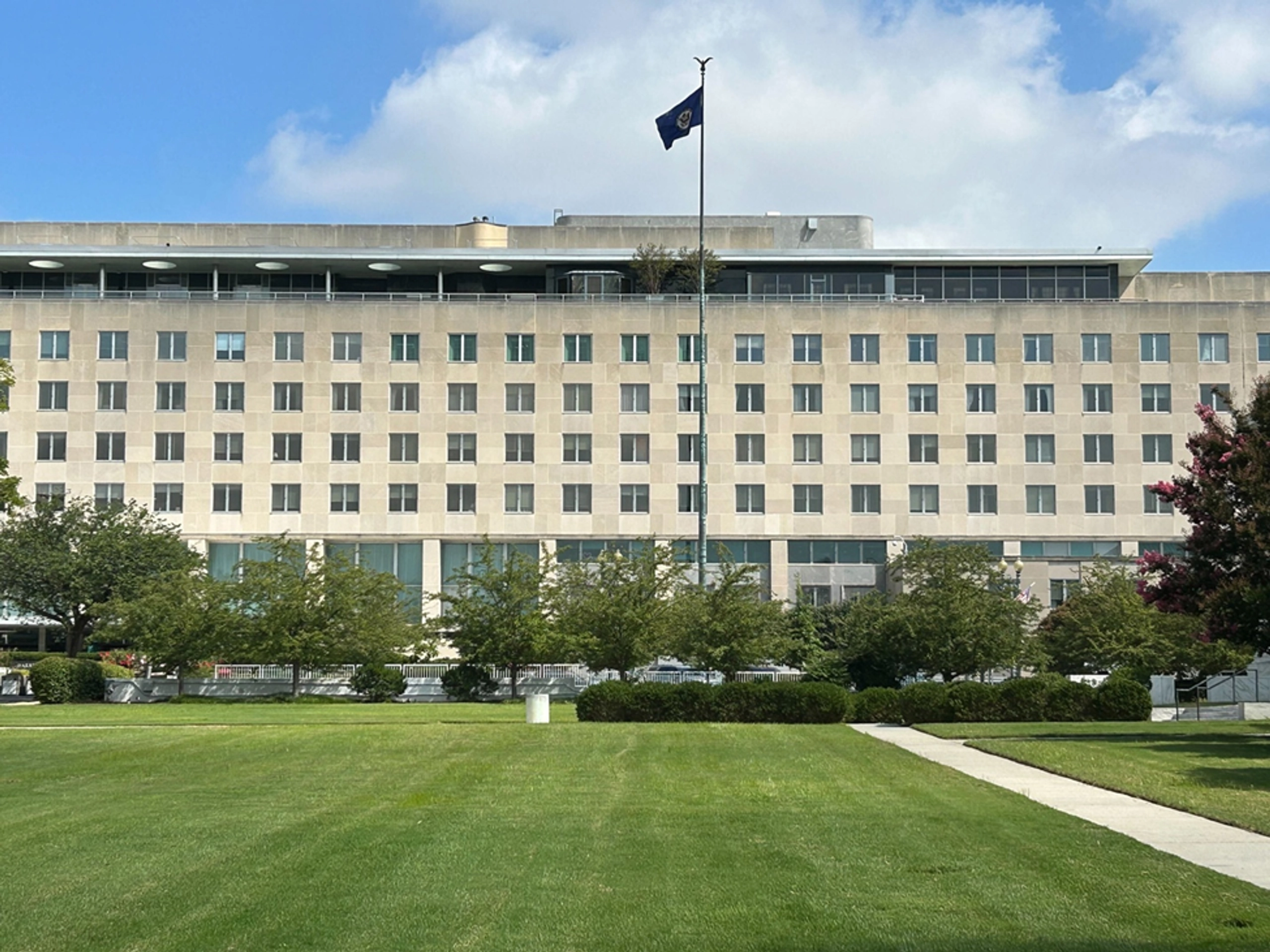
The State Department said it would deny visas to Thierry Breton, the former European commissioner who oversaw the bloc’s tech agenda, alongside four figures linked to campaigns against online hate and disinformation.
The action lands amid rising friction between the Trump administration and Brussels, which Washington accuses of using regulation to police speech far beyond Europe’s borders.
The decision follows the release of US President Donald Trump’s new National Security Strategy, which warned that European governments are censoring free speech and suppressing political dissent – language that has rattled capitals across the continent and sharpened transatlantic fault lines.
“This is no longer a technical disagreement over platform rules,” a senior Western diplomat familiar with the discussions told Kyiv Post Tuesday afternoon, adding, “Washington sees this as a sovereignty issue dressed up as speech policy – and it’s willing to use blunt instruments to make that point.”

Infantry Up Close, More and Better Bombardment, Helping America ‘Win’
Who’s affected
Besides Breton, the visa bans target Anna-Lena von Hodenberg and Josephine Ballon, leaders of the German NGO HateAid; Imran Ahmed, the British CEO of the US-based Center for Countering Digital Hate; and Clare Melford, co-founder of the Global Disinformation Index.
US Secretary of State Marco Rubio framed the move as a strike against what he called the “global censorship-industrial complex.”
“The State Department is taking decisive action against five individuals who have led organized efforts to coerce American platforms to censor, demonetize, and suppress American viewpoints they oppose,” Rubio said in a statement.
“These radical activists and weaponized NGOs have advanced censorship crackdowns by foreign states – in each case targeting American speakers and American companies,” he added.
Rubio warned that the administration “stands ready and willing to expand today’s list if other foreign actors do not reverse course,” signaling that additional figures could face visa denials or removal proceedings under US immigration law.
The State Department did not initially name those affected. Their identities were later confirmed by Sarah Rogers, the undersecretary of state for public diplomacy, who accused the group of “fomenting censorship of American speech.”
The DSA in the crosshairs
At the center of the dispute is the EU’s Digital Services Act (DSA), the bloc’s landmark law imposing content-moderation and transparency obligations on major online platforms.
Rogers described Breton as the “mastermind” of the legislation, while the State Department said HateAid operates as a “trusted flagger” under the law.
In recent months, Trump administration officials have instructed US diplomats to actively build opposition to the DSA, arguing that it stifles free expression and imposes disproportionate compliance costs on American technology companies.
Europe hits back
Breton decried the visa ban as a “witch hunt.”
“Is McCarthy’s witch hunt back?” he wrote on X, adding, “To our American friends: Censorship isn’t where you think it is.”
The Global Disinformation Index called the US action “immoral, unlawful, and un-American,” describing it as “an authoritarian attack on free speech and an egregious act of government censorship.”
Most Europeans do not require visas to travel to the US under the Visa Waiver Program, but they must still obtain advance authorization through a Department of Homeland Security screening system.
At least some of the five individuals have likely been flagged within that system, according to a US official who spoke on condition of anonymity.
French Foreign Minister Jean-Noël Barrot condemned the visa restrictions in unusually blunt terms, framing them as an attack on Europe’s democratic autonomy:
“France strongly condemns the visa restriction imposed by the US on Thierry Breton, former minister and European commissioner, and four other European figures,” Barrot said in a social media post.
“The peoples of Europe are free and sovereign and cannot let the rules governing their digital space be imposed by others upon them,” he emphasized.
For now, Brussels is weighing its response. But the message from Washington is unmistakable: the fight over Europe’s tech rules has moved beyond regulatory skirmishes and into the realm of diplomatic punishment.
What began as a debate over content moderation has metastasized into a test of transatlantic authority, with Washington asserting the power to punish European regulators and NGOs it believes threaten American free speech.
For Brussels, the question is no longer just legal or technical: it is whether Europe can defend its digital sovereignty without provoking a diplomatic clash that could redefine the rules of the online world.
You can also highlight the text and press Ctrl + Enter
Russia Hit by 660-Drone Overnight Barrage Targeting Moscow, Crimea and Key Military Sites