PARIS, France – World leaders and top military officials are converging on the French capital Tuesday under growing doubt that a Western-backed peace plan for Ukraine can move beyond political symbolism and impose real costs on Moscow – or whether it risks becoming yet another diplomatic exercise overtaken by events on the battlefield.
The meeting, convened under the banner of the “Coalition of the Willing,” comes as Russian missiles continue to strike Ukrainian cities and as analysts warn that any agreement lacking enforcement mechanisms is unlikely to deter the Kremlin.
JOIN US ON TELEGRAM
Follow our coverage of the war on the @Kyivpost_official.
The central question hanging over Paris: Can Western unity translate into consequences Russia actually fears?
Ukrainian officials say the framework under discussion is “90 percent” complete. But that final 10 percent – security guarantees, US buy-in and clear penalties for Russian violations – may ultimately determine whether the plan survives contact with reality.
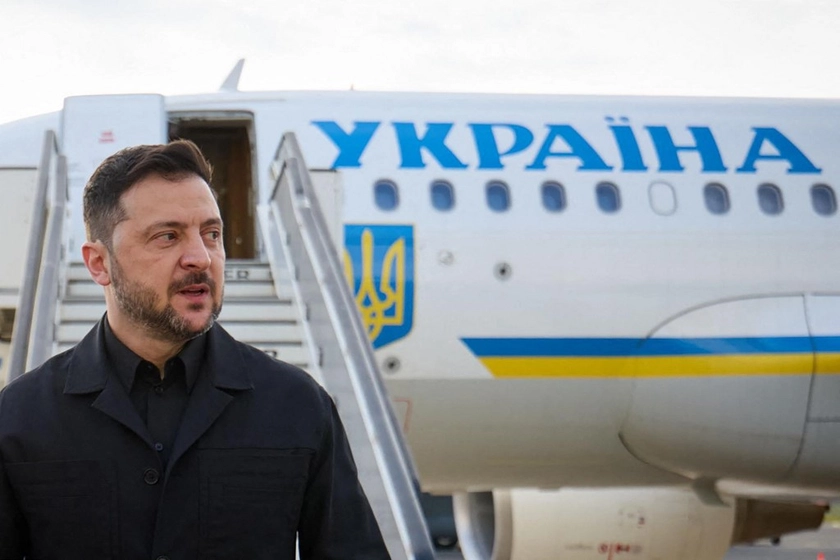
“This week, we will be working with our European and American partners to ensure that Ukraine has the assistance it needs,” President Volodymyr Zelensky said Monday.
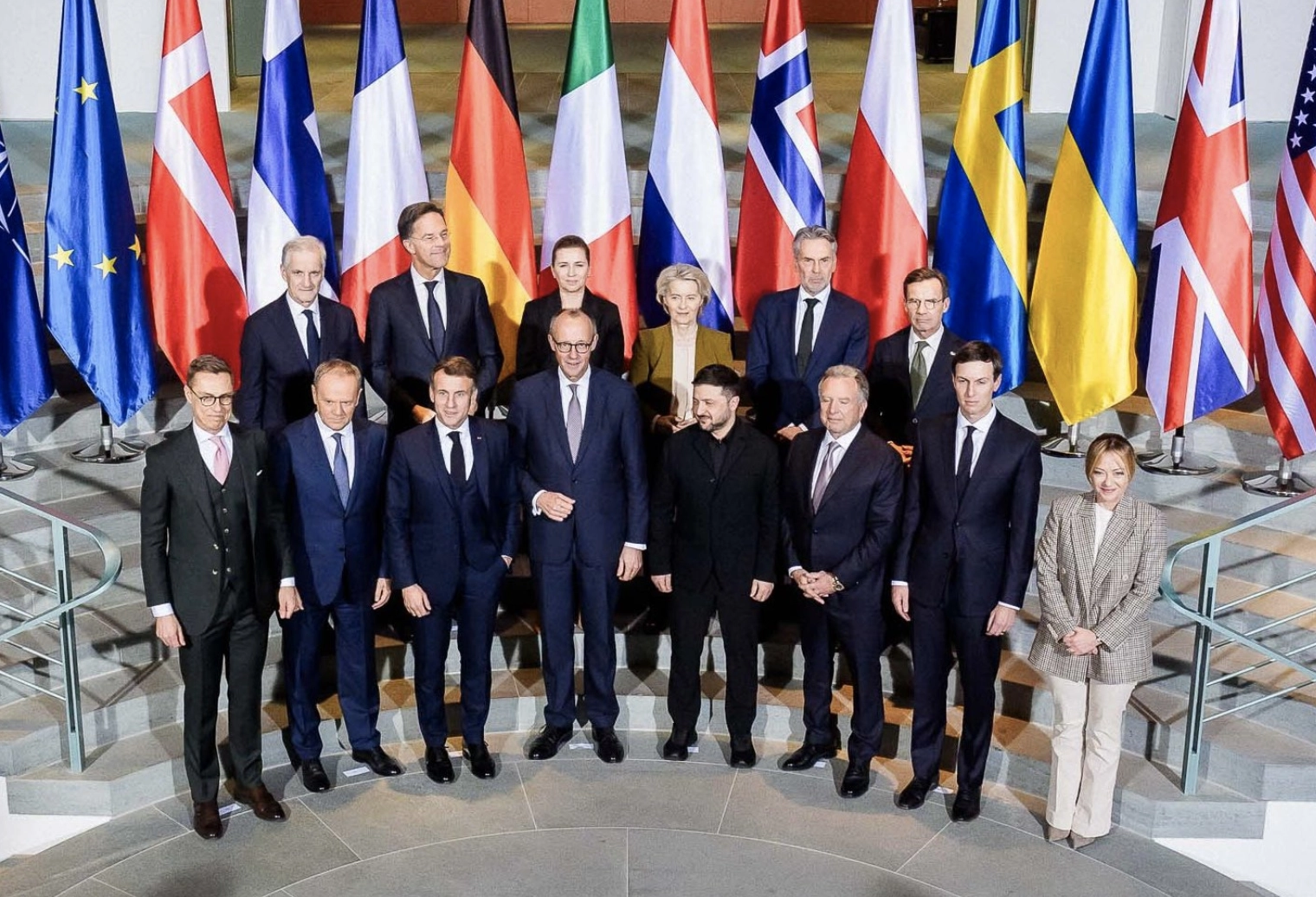
His remarks came as advisers from 15 countries – including France, Germany and the UK, alongside NATO and EU representatives – continued preparatory talks launched in Kyiv over the weekend.
Washington steps back into the frame
For European diplomats, the most closely watched variable is the renewed – if unconventional – US presence.
EU Opens 1st Negotiation Cluster for Ukraine, Moldova, Zelensky: ‘Progress Cannot Be Stopped’
US special envoy Steve Witkoff and President Donald Trump’s son-in-law Jared Kushner are attending the Paris meeting. Secretary of State Marco Rubio will not attend; US officials cited “obvious reasons” tied to the crisis in Venezuela.
French officials are portraying the moment as a diplomatic recovery operation that has finally borne fruit.
“We never resigned ourselves to the US abandoning Ukraine,” a senior Elysée official told reporters Monday, adding, “We have succeeded in this exercise of re-convergence between Ukraine, Europe and America.”
Privately, however, Western officials are more cautious. “This is about seeing whether Trump’s envoys are prepared to turn political signals into binding commitments,” one senior diplomat told Kyiv Post in Paris. “Everyone understands that credibility is the currency here.”
That skepticism runs especially deep among those tasked with designing the security architecture.
“The Americans are talking about a deal, but we are talking about a deterrent,” a senior Western official said ahead of the summit.
Five pillars, high stakes
According to French officials, leaders will focus on a tightly defined agenda aimed at translating political alignment into operational commitments.
At the top of the list: sustaining military assistance to Ukraine and establishing credible mechanisms to monitor any potential ceasefire – a tacit acknowledgment that past agreements collapsed under weak oversight and minimal enforcement.
The talks also extend beyond an initial truce. Leaders are expected to address the possible deployment of a postwar multinational reassurance force, pre-agreed automatic responses to Russian violations, and long-term defense cooperation designed to anchor Ukraine more firmly within the Western security architecture.
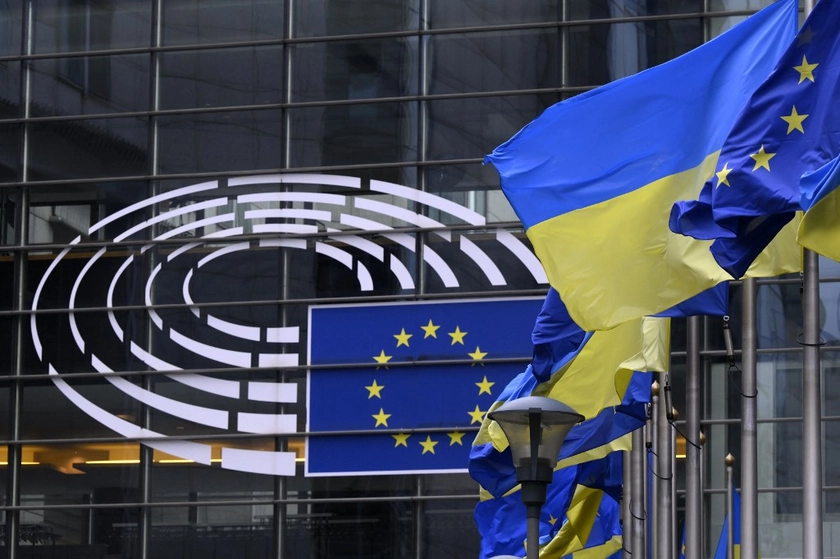
Roughly 27 leaders are attending, alongside NATO Secretary-General Mark Rutte and NATO’s Supreme Allied Commander Europe, Gen. Alexus Grynkewich. European Commission President Ursula von der Leyen is also present, with Brussels underscoring that EU membership itself remains “one very clear security guarantee” – regardless of what the coalition ultimately decides.
Adding urgency, Poland’s defense minister, Władysław Kosiniak-Kamysz, confirmed a separate closed-door meeting of army chiefs to drill into the military foundations of any guarantees discussed in Paris.
Unity isn’t enough
Outside the negotiating rooms, analysts warn that even a unified Western position may fall short of changing Moscow’s calculus.
Doug Klain of Razom, a US-based organization supporting Ukraine, told Kyiv Post that the summit risks resolving procedural questions while sidestepping the central test of enforcement.
“If Europe and the US fully agree on a joint framework for peace – what happens next?” Klain said.
“The Russians have shown no interest in stopping. Do we finally see real sanctions and new military assistance? Or more attempts at asking the Russians nicely to stop killing people?” he asked.
A senior NATO official, speaking on condition of anonymity, was more blunt: “A framework without automatic consequences is not a peace plan. Moscow will test it on day one.”
Missiles overshadow diplomacy
Any sense of diplomatic momentum is being undercut by events on the ground.
Russian strikes overnight killed at least two people near Kyiv, including one at a private medical facility that caught fire, forcing doctors to evacuate patients as the attack unfolded.
Prime minister Yuliia Svyrydenko said medics were forced to move the wounded “under fire,” while regional officials reported additional civilian casualties and evacuations in freezing conditions.
“This is terror bombing timed for diplomatic moments,” said Yuriy Boyechko, CEO of Hope For Ukraine.
“Putin is exploiting perceived windows of distraction, using civilian suffering as leverage,” he told Kyiv Post.
Western officials privately agree. “The message from Moscow is that delay costs lives,” one senior EU official said. “That message is very much present in Paris.”
Tightening timeframe
For Paris, the summit is an effort to reassert European leadership and bind Washington more firmly to a shared strategy as pressure mounts for tangible results.
For Kyiv, it is about converting sympathy into enforceable guarantees.
For Washington, it is an early test of whether President Trump’s envoys are willing to move beyond rhetoric to concrete commitments.
Whether the talks yield a breakthrough or merely a temporary alignment, officials concede the window is closing.
As one senior Western official put it: “Peace isn’t blocked by a lack of ideas – it’s blocked by a lack of consequences. We’ll soon know whether the West is ready to change that.”
For now, the French capital remains a city of high hopes and low expectations, where the fine print of a peace deal is being drafted in the shadow of a war that refuses to follow the script.
You can also highlight the text and press Ctrl + Enter