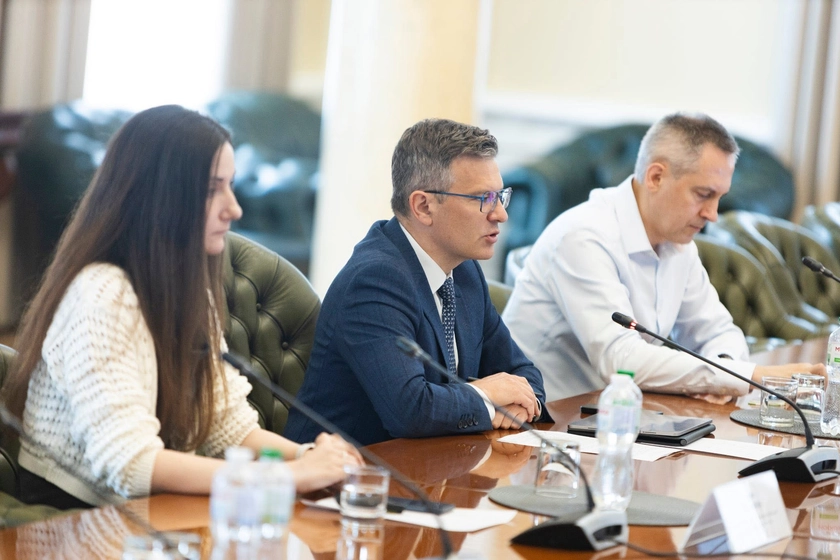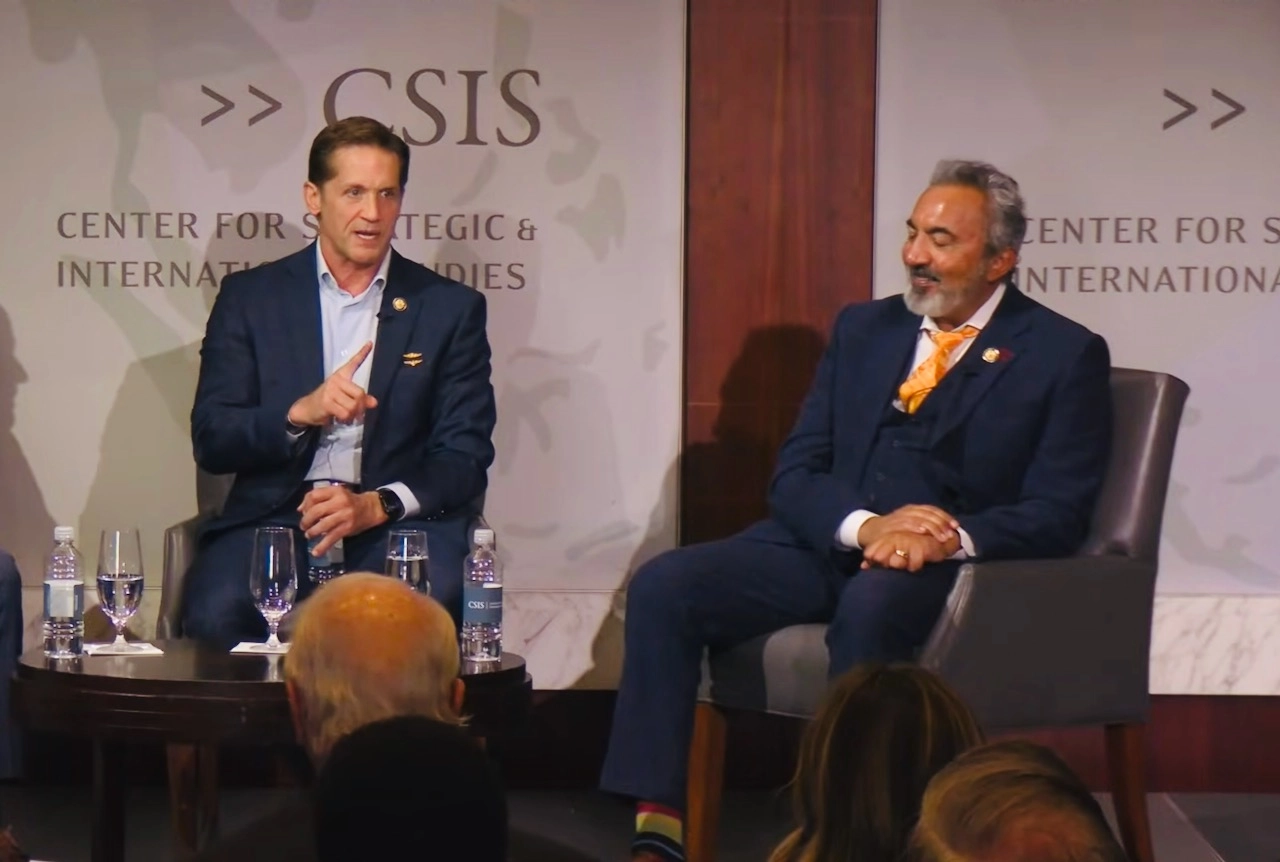
WASHINGTON, DC – In a blunt wake-up call to New Delhi, US Representatives Rich McCormick (R‑GA) and Ami Bera (D‑CA) – two leading congressional voices on the Washington-New Delhi relationship – urged India on Monday to recalibrate its long‑standing ties with Russia, framing the country as a key arbiter in the future of global security.
“For too long, Russia has leveraged its historical relationships to evade consequences,” McCormick said during a panel at CSIS, a Washington-based think tank.
JOIN US ON TELEGRAM
Follow our coverage of the war on the @Kyivpost_official.
“Europe has 10 times the economy of Russia. We have $50 trillion. We should be crushing Russia – not militarily, but economically. India can play a decisive role here,” he said.
Bera, the longest-serving Indian American in Congress, echoed the sentiment, emphasizing that India’s historical connections with Moscow uniquely position it to influence the trajectory of the war in Ukraine – and the postwar order.
“This is India’s moment to test its global diplomatic chops,” Bera said. “The real question is: once this conflict is over, do you forgive all the sins of Putin and let him back in?”
Economic leverage India wields
McCormick highlighted the stark imbalance between India’s burgeoning economy and Russia’s stagnating GDP, noting that India is Russia’s largest consumer of goods.
“They can literally set the boundaries for Russia themselves,” he said, framing India’s choices as capable of reshaping the geopolitical landscape without US troops on the ground.
Russian Troops Forced to Walk 30 km After Ukraine Hits Logistics, Minister Says
The message to India is clear: Washington views its economic power not as ancillary but as pivotal to enforcing accountability in Moscow.
US lawmakers signaled that New Delhi’s energy and trade decisions could tilt the scales in ways that bolster global stability.
That message comes amid escalating tension between the US and India over New Delhi’s continued economic engagement with Moscow.
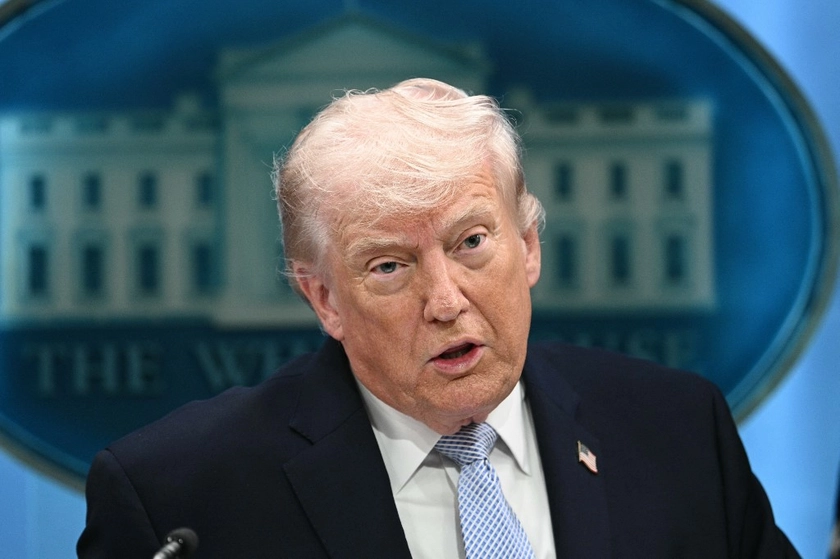
President Donald Trump has doubled tariffs on Indian goods to as high as 50 percent – including punitive duties tied explicitly to New Delhi’s purchase of Russian oil – in an effort to deter what Washington calls indirect support for Russia’s war effort in Ukraine.
Last week, Trump allowed a bipartisan Russia sanctions bill to advance in Congress that would give his administration leverage against countries continuing to buy discounted Russian oil – with China and India squarely in the crosshairs.
New Delhi has protested such measures as “unfair, unjustified and unreasonable,” arguing that its energy imports are driven by market realities and the imperative of energy security, and underscoring the limits of Washington’s ability to dictate sovereign choices.
Those punitive trade measures and the threat of broader sanctions have at times strained US-India ties, complicating cooperation on trade, technology, and defense – areas both capitals identify as critical pillars of their strategic partnership.
Beyond Russia: Shaping the 21st-century architecture
The conversation at CSIS went beyond Russia. Both lawmakers underscored the importance of deepening US-India cooperation in defense, technology, and trade, particularly as China asserts itself in the Indo-Pacific.
Bera pointed to India’s entrepreneurial spirit and its emerging defense production capabilities as assets that could accelerate the nation’s alignment with Western partners.
“India wants the best products and to be independent as a defense contractor,” Bera said. “Our technologies have to keep pace to match their ambitions.”
McCormick stressed that a pragmatic, long-term approach is key. “Sometimes we have to sacrifice for the relationship,” he said, adding, “It’s not about getting everything we want; it’s about building a future that keeps bad actors in check.”
Turning point in diplomacy
The remarks highlight a shift in US strategy: lawmakers are no longer content with broad platitudes and generic appeals to democracy.
Instead, they are sending a clear, calculated signal that India’s choices on Russia will carry consequences far beyond bilateral relations.
For Washington, India is not merely a partner – it is a potential linchpin in shaping the postwar order in Europe and the Indo-Pacific alike.
By pressing New Delhi to act, US lawmakers are effectively redefining the contours of 21st-century diplomacy, emphasizing that economic power, strategic alignment, and technological advancement are inseparable from global influence.
How New Delhi wields its influence could determine not only the fate of Russia, but the very architecture of a world order in which democracy, trade, and stability are at stake.
You can also highlight the text and press Ctrl + Enter

OPINION: The New Line Kyiv Quietly Built Into NATO