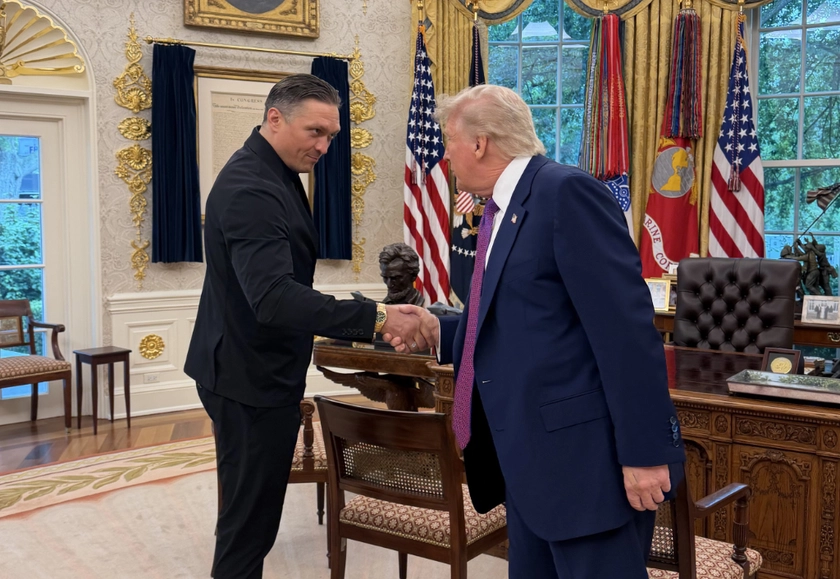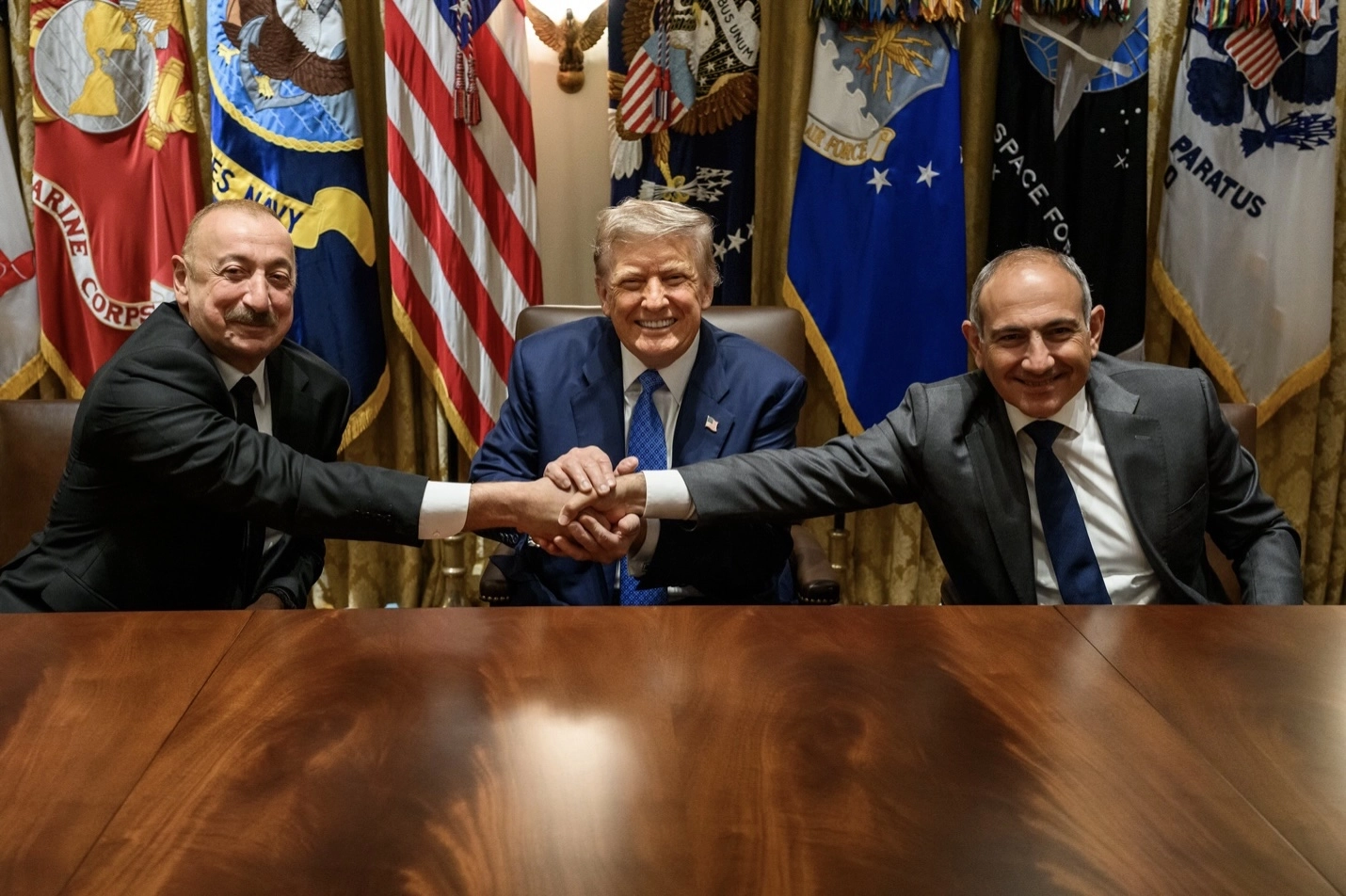
WASHINGTON DC – The White House may have staged handshakes last summer, but behind the smiles, Washington has been quietly crafting a South Caucasus plan that turns diplomacy into steel, roads, and real leverage – a blueprint for reshaping the region.
On Tuesday, US Secretary of State Marco Rubio and Armenian Foreign Minister Ararat Mirzoyan unveiled the Implementation Framework for the Trump Route for International Peace and Prosperity (TRIPP).
JOIN US ON TELEGRAM
Follow our coverage of the war on the @Kyivpost_official.
The dense but consequential document translates last August’s White House peace commitments into something far more tangible: rail, roads, revenue streams, and a US-backed transit artery cutting through Armenian territory.
From declaration to dirt-and-steel
The framework operationalizes the Aug. 8, 2025, Armenia-Azerbaijan-US Joint Declaration, laying out how unimpeded, multimodal transit would connect Azerbaijan to its Nakhchivan exclave while fully preserving Armenian sovereignty, jurisdiction, and border control.
In practical terms, TRIPP would insert Armenia into the Trans-Caspian “Middle Corridor,” linking Central Asia and the Caspian to Europe – and doing so with American capital, oversight, and commercial stakes built in.
A US-controlled development company, Armenian regulatory authority, and explicit guarantees on territorial integrity form the project’s backbone.
That architecture matters. For Washington, TRIPP expands trade routes and supply chains.
US-Iran Peace Treaty Closes on ‘24-Hour’ Deadline, Mediator Pakistan Says
For Yerevan, it offers investment, jobs, and leverage.
And for the region, it reframes connectivity as a peace mechanism rather than a zero-sum concession.
“Quiet progress” – and what’s missing
Richard Kauzlarich, former US ambassador to Azerbaijan, calls the framework “good news for all concerned about peace in the South Caucasus,” precisely because it moves beyond aspiration to implementation.
Speaking to Kyiv Post on Tuesday, he noted that while the agreement is formally bilateral between Washington and Yerevan, it necessarily creates a transport link between Nakhchivan and the rest of Azerbaijan, suggesting behind-the-scenes engagement with Baku.
Just as striking, Kauzlarich says, is who doesn’t appear in the document.
“Neither Russia nor Iran is mentioned,” he observed – a notable omission given Tehran’s instability and escalating US-Russia tensions.
In Kauzlarich’s view, TRIPP signals a long-term US role on the ground, improves prospects for Türkiye-Armenia normalization, and quietly shifts the regional balance.
It also revives an old Washington debate.
Kauzlarich argues the administration should now work with Congress to repeal Section 907 of the Freedom Support Act, which restricts US assistance to Azerbaijan – a step that would better align US law with the new connectivity reality.
Why timing matters
For Andrew D’Anieri of the Atlantic Council’s Eurasia Center, the framework’s significance is hard to overstate – especially now.
Speaking to Kyiv Post, he describes TRIPP as “probably the most unambiguously positive foreign policy achievement of the second Trump administration,” precisely because it squares competing imperatives: connecting Azerbaijan to Nakhchivan while explicitly safeguarding Armenian sovereignty, strengthening the Middle Corridor, and giving US companies and the US government a financial stake in success.
Just as important, D’Anieri argues, is what TRIPP does geopolitically.
By expanding infrastructure and economic options for both Armenia and Azerbaijan, it reduces their vulnerability to pressure from Moscow and Tehran – leverage those capitals have long wielded through chokepoints and dependency.
Elections, security – and Russian spoilers
That shift comes at a sensitive moment for Armenia. Parliamentary elections loom, and Russia has shown little hesitation in using political interference to protect its influence in the post-Soviet space.
D’Anieri expects Moscow to try to undermine TRIPP, potentially by influencing Armenia’s vote.
But he also sees the agreement as a counterweight: deeper US engagement, real economic upside, and visible connectivity gains could strengthen Prime Minister Nikol Pashinyan’s hand at the ballot box.
Next steps will be critical. D’Anieri points to accelerating Türkiye-Armenia normalization, in coordination with Washington, as the fastest way to unlock TRIPP’s full trade potential – and possibly inject momentum into a still-incomplete Armenia-Azerbaijan peace deal.
More than a road
TRIPP is not a treaty and imposes no binding legal obligations.
But it is something rarer in the South Caucasus: a detailed, financed, sovereignty-conscious plan that ties peace to profit and embeds the US directly into the region’s economic future.
In a part of the world where influence is usually exerted through troops, pipelines, or ultimatums, the Trump administration is betting on something else entirely – steel rails, customs software, and a trade route that quietly redraws the map.
Whether it endures may hinge less on steel and software than on politics – especially in Yerevan’s election year, and in Moscow, where Washington’s quiet expansion into the South Caucasus is unlikely to go unnoticed.
You can also highlight the text and press Ctrl + Enter