The European Commission presented a package of legislative proposals designed to secure €90 billion ($105 billion) in financial support for Ukraine in 2026 and 2027, advancing December’s political agreement by EU leaders.
The loan, agreed by the European Council in December, is intended to cover Ukraine’s budgetary and military financing needs as the war with Russia approaches its fifth year and longer-term funding arrangements remain uncertain.
JOIN US ON TELEGRAM
Follow our coverage of the war on the @Kyivpost_official.
The EU Commission published the statements on its website on Jan. 14, according to which roughly two thirds of the support – about €60 billion ($70 billion) – would be directed toward military assistance, with the remaining €30 billion ($35 billion) allocated as general budget support to help maintain essential state functions and public services.
The loan would be raised through common EU borrowing on capital markets and guaranteed by the so-called “headroom” of the EU budget, following the model used for earlier assistance instruments such as the Ukraine Facility and Macro-Financial Assistance programs.
Brussels reiterated that Ukraine would only begin repaying the loan once Russia compensates Kyiv for the damage caused by its full-scale invasion. Until then, Russian sovereign assets immobilized in the EU would remain frozen, with the bloc reserving the right – in line with EU and international law – to use proceeds linked to those assets to service the debt if necessary.
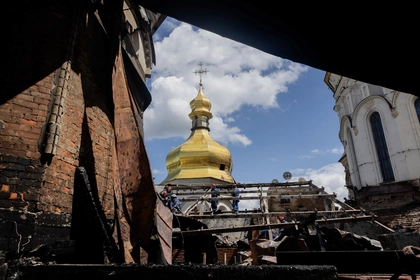
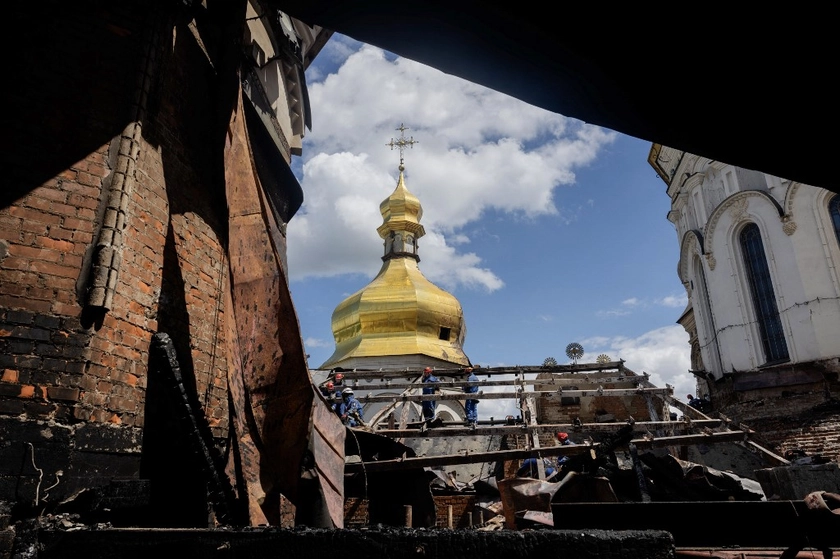
Strike on Kyiv Lavra Is Like Bombing Notre-Dame, French FM Says
How the €90B Ukraine Support Loan is structured
The Commission’s proposal consists of three legislative elements:
- a regulation establishing the Ukraine Support Loan under Article 212 of the Treaty on the Functioning of the European Union (TFEU);
- amendments to the Ukraine Facility to enable the delivery of budgetary assistance based on the same 212 article;
- changes to the EU’s Multiannual Financial Framework to allow the loan to be covered by unused budgetary margins (based on art. 312 TFEU).
The decision relies on the EU’s enhanced cooperation mechanism, allowing a group of member states to move forward when unanimity across the bloc cannot be achieved within a reasonable timeframe.
The Commission wrote that the structure would help Ukraine sustain its defense capabilities while also supporting closer integration with Europe’s defense industrial base.
How EU Lawmakers Will Advance Financing for Ukraine
The legislative proposals now move to the European Parliament and the Council of the EU. The Commission said swift adoption is essential if it is to begin disbursing funds in the second quarter of 2026, in line with the timetable agreed by EU leaders.
Once approved, Brussels will adopt implementing decisions and work with Ukrainian authorities to finalize the technical arrangements for the first disbursements. As with previous EU support packages, the assistance will be tied to conditionality requirements, including reforms aimed at strengthening the rule of law and fighting corruption.
The Commission said the €90 billion ($105 billion) package would cover around two thirds of Ukraine’s overall financing needs for 2026–27, based on International Monetary Fund assessments, underscoring the continued importance of coordinated support from G7 partners under initiatives such as the Extraordinary Revenue Acceleration loans program.
Mapped: €290B in Immobilized Russian Assets Across EU, G7 Jurisdictions
The total value of immobilized Russian sovereign assets worldwide stands at around €290 billion ($339 billion), with the bulk held in a small number of EU and G7 jurisdictions.
Ukraine’s central bank, the National Bank of Ukraine, published the total estimations of Russian assets across various jurisdictions, with the data based on the European Parliamentary Research Service.
Belgium accounts for the largest share, holding roughly €180 billion ($210.6 billion) in frozen Russian assets, primarily through the Brussels-based clearing house Euroclear, which acts as custodian for a large portion of Russia’s central bank reserves.
Beyond Belgium, the Ukrainian central bank’s assessment shows that Japan and the United Kingdom hold the next-largest portions of frozen Russian assets, followed by France and Canada. These holdings reflect measures adopted by G7 countries in coordination with the European Union following Russia’s full-scale invasion of Ukraine.
Smaller volumes of immobilized assets are spread across several other jurisdictions, including Luxembourg, Switzerland, the United States, and Germany, according to the National Bank of Ukraine.
Why the EU Reparations Loan stalled and replaced with €90 billion loan
The €90 billion ($105 billion) loan is widely seen in Brussels as a bridge solution while work continues on a separate reparations-based mechanism linked directly to frozen Russian assets.
That proposal, backed by immobilized Russian central bank reserves, has stalled amid political resistance and legal concerns raised by several member states, including Belgium, Hungary, Slovakia, and the Czech Republic.
Earlier, Belgian Prime Minister Bart De Wever has warned that converting frozen assets into long-term financing could expose financial intermediaries such as Euroclear to litigation and create risks for market stability.
IMF officials have also urged caution, flagging potential implications for the international monetary system and the need for a “legal underpinning” for the loan.
On the contrary, Kyiv School of Economics wrote Russia has no viable legal avenues to challenge such a scheme, while Ukraine’s central bank has argued that full confiscation of Russian assets would not undermine the euro’s role as a global currency.
EU Council President António Costa said in December that leaders had mandated the Commission to continue work on the reparations loan in parallel with the interim financing solution.
You can also highlight the text and press Ctrl + Enter