Kyiv’s long-running bombardment campaign by kamikaze drone against Russia has expanded from attacks focusing largely on oil and gas industry facilities to a target list including civilian power grid and heating infrastructure, military bases and ammunition depots, and individual Russian units that launch drones or missiles at Ukrainian homes and businesses, Kyiv Post review of attack data found.
The pace of Ukrainian drone attacks against Russia is accelerating as well and in January and February Ukrainian drones carried out “more than” 240 attacks against major targets in Russia or in occupied Ukrainian territory, a Wednesday statement by Ukraine’s Unmanned Systems Forces (USF) claimed.
JOIN US ON TELEGRAM
Follow our coverage of the war on the @Kyivpost_official.
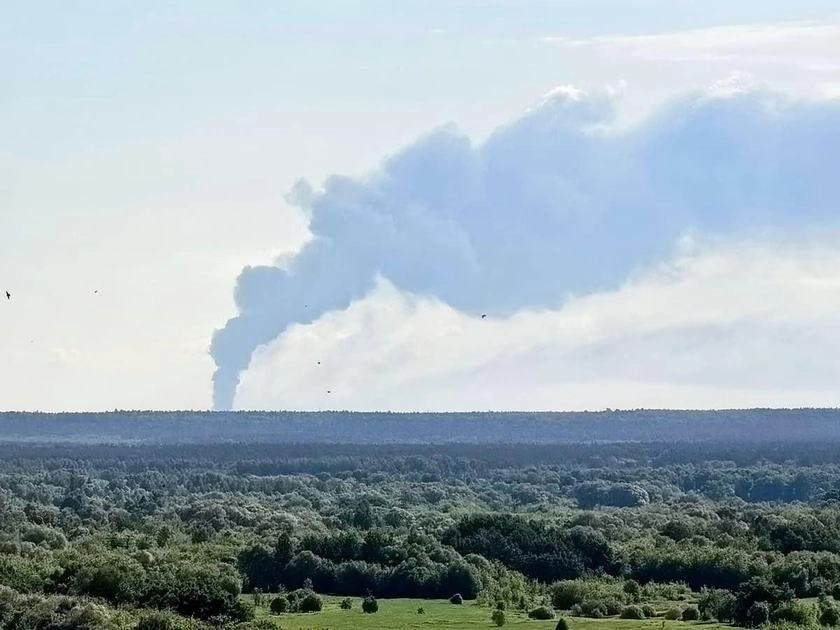
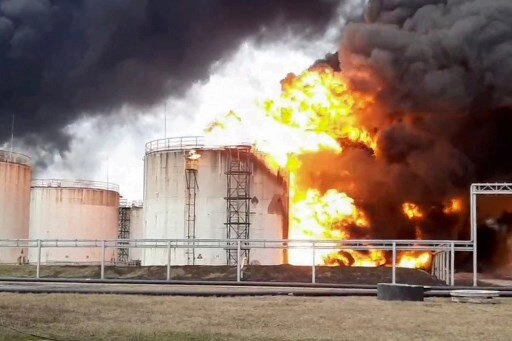
Russian energy industry facilities like oil refineries, off-shore drilling rigs, crude oil pumping stations and fuel reservoirs were heavily targeted by Ukrainian long-range attack drones in 2025, with around four out of five attacks targeting that sector from July to December in between 120-150 separate air raids, Kyiv Post review of USF published materials and attack video showed.
The pace of those attacks was on average at least two targets hit daily. Typical attack range was 500 to 800 kilometers from probable Ukrainian drone launch sites.
Among facilities most seriously damaged was a Rosneft-operated refinery hit near the western city Ryazan that was hit at least seven times by Ukrainian drones in 2025. Explosions targeting hard-to-repair cracking towers put about 300,000 bpd of Russian crude oil processing capacity off line for months.
Kasparov: Ukrainian Flag in Sevastopol Is the Shock Russia Needs to Accept Empire Is Dead
Ukrainian drone attacks hitting a Lukoil-operated refinery in August and September, and a Lukoil-operated off-shore oil-processing platform in the Caspian Sea in December, helped reduce total Russian national oil-processing capacity medium- to long-term by 20 to 25 percent, the Bloomberg news agency reported late December.
In January 2026, the sixth full month of the Ukrainian bombardment campaign USF attacks continued at a two to four attacks a day pace, but targeting visibly widened to attacks on a wide range of targets beyond Russian energy industry facilities.
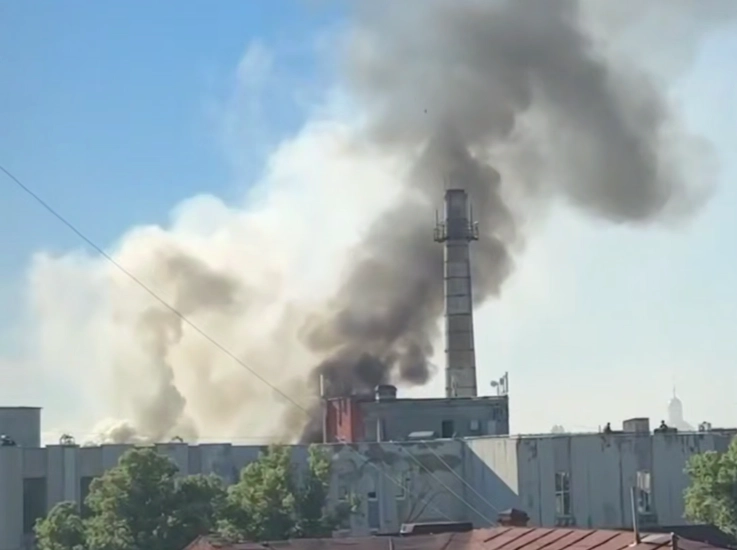
Most visibly, power generation capacity and civilian heating structure in the western Russian city of Belgorod has been repeatedly hit and heavily damaged.
According to Russian official estimates, engagements of Ukrainian drones violating Russian Federation airspace over the Belgorod region in early 2026 had increased four-fold over 2025, with strike packages reaching 100-150 attacking UAVs in a single night.
The Ukrainian drone swarms have hit, repeatedly, Belgorod power plants, substations, transmission lines, heating plants, fuel depots and air defense units and systems defending them. By mid-February rolling and at times total blackouts were common across Belgorod city. About one quarter of the city’s residential buildings would need to be evacuated, because heating infrastructure was too badly damaged to repair before Spring, Governor Vyacheslav Gladkov said in a Feb. 8 statement.
Ukrainian drones hit two substations serving the Belgorod city power grid overnight Wednesday-Thursday, triggered a new round of city-wide blackouts. The latest damage shut down electricity deliveries to most of Belgorod region, Gladkov said in a Thursday statement. In area, Belgorod’s territory is comparable to Belgium’s or Israel’s. About 1.5 million people live in the region.
President Volodymyr Zelensky in a Feb. 8 evening video address said that Ukraine considers Russia’s power grid “a legitimate target” and criticized the Kremlin for bombarding Ukrainian cities with drone and missiles.
Russian attacks in late 2025 and early 2026 have heavily targeted the Ukrainian capital have caused blackouts and shut down heating in some Kyiv districts.
In contrast with Belgorod repairs have been continuous and Ukrainian authorities have not issued evacuation orders.
Ukrainian drones hit the city of Bryansk on Feb. 9, targeting power grid infrastructure there.
Russian military systems and production facilities, once uncommon features in Ukrainian target lists, are being attacked more frequently in 2026 as well.
An elite USF long-range special mission unit, the 1st Separate Center has, according to AFU (Ukrainian Armed Forces) sources, led drone attacks against Russian air defense installations.
Attack video published by USF information platforms and geo-located to Ukraine’s occupied Crimea region showed night-time drone approaches and probable hits on Russian Pantsir-S1 anti-aircraft missile batteries near the cities Kerch and Hvardiiske, and a medium-range S-300VM (NATO: SA-20 “Gargoyle”) launcher near the city of Mariupol.
Those attacks aiming to shut down sector air defenses took place in mid-February and preceded likely the single biggest Ukrainian drone raid of the war so far: a 200+ aircraft attack hitting Russian Air Force aircraft and ground facilities at the Kacha and Belbek air bases, and a Russian surface-to-surface missiles storage site near the village of Pasechnoe, all in occupied Crimea.
Kyiv Post review of attack video and open reports found strong evidence of drone successes hitting those locations and damaging Russian equipment. It was not possible in all cases to determine whether the strike was carried out by USF drones or by drones launched by HUR, Ukraine’s military intelligence agency, whose operators sometimes fly high-priority missions overlapping USF target zones.
The commander of Ukraine’s USF forces, Major Robert “Madyar” Brovdi, in a Wednesday statement published on his personal Telegram feed said that his troops since the start of February had kicked off attacks targeting Russian drone operators and launch platforms, and that in one wave of attacks 44 Russian drone launch points and related targets had been hit in a 24-hour period, destroying or damaging 121 Russian long-range drones.
It was not possible to confirm that Brovdi claim independently.
You can also highlight the text and press Ctrl + Enter

Russia Hit by 660-Drone Overnight Barrage Targeting Moscow, Crimea and Key Military Sites