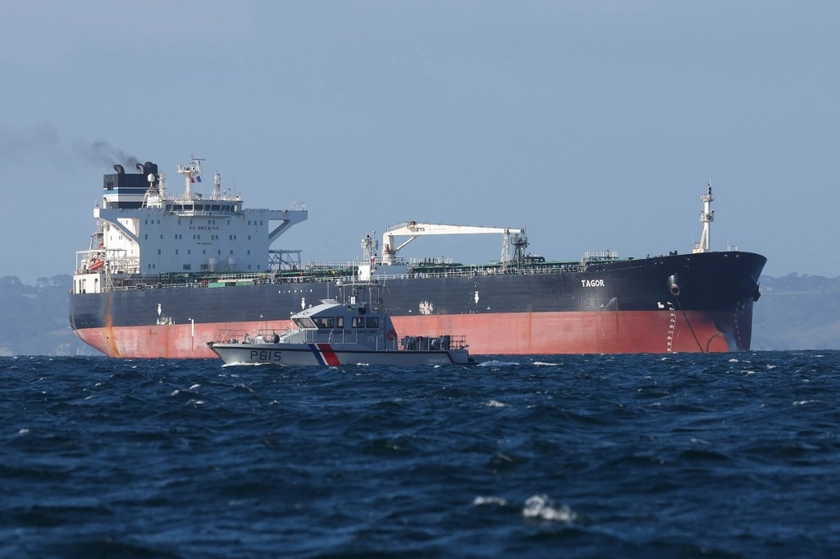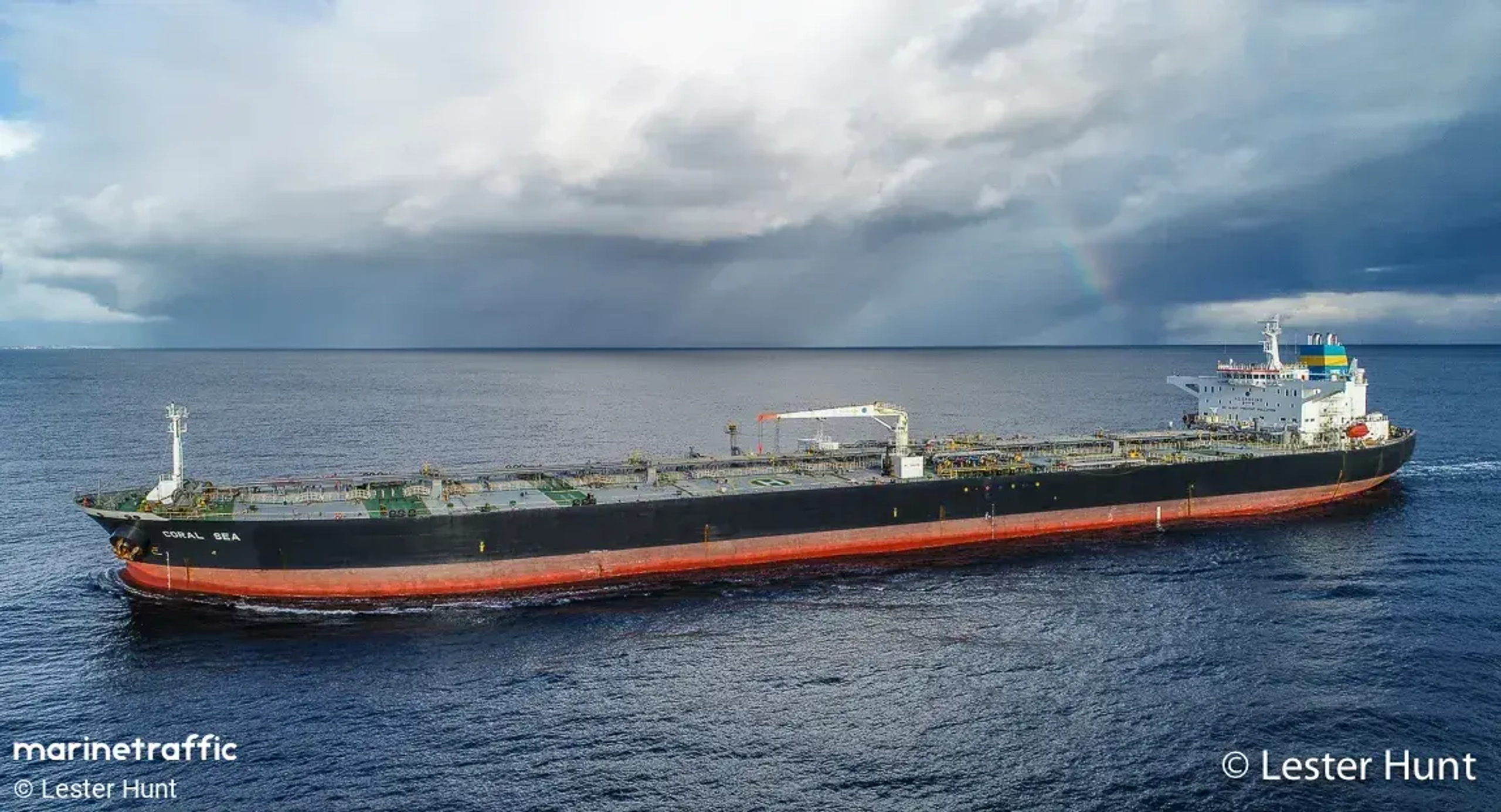
Three tankers carrying Russian oil changed course and headed to India after initially signaling destinations in Southeast Asia, according to tanker-tracking data cited by Bloomberg.
The vessels are carrying a combined 2.16 million barrels of oil. One tanker, Odune, arrived Wednesday at Paradip Port on India’s east coast. Another, Matari, is expected to reach Vadinar Port on Thursday, located on India’s west coast.
JOIN US ON TELEGRAM
Follow our coverage of the war on the @Kyivpost_official.
A third tanker, Indri, was in the Arabian Sea and had listed Singapore as its destination before turning north toward India this week.
India sharply reduced imports of Russian oil since late last year. While purchases reached up to 2 million barrels per day last summer, imports fell to about 1.1 million barrels per day in February.
Traders and analysts had expected imports to decline further to between 400,000 and 600,000 barrels per day over the coming months, but disruptions to shipping through the Strait of Hormuz are affecting global supply routes.
Saudi Arabia became India’s largest oil supplier this year, while India also increased purchases from other Middle Eastern producers after US sanctions targeted Rosneft and Lukoil.
All three tankers recently redirected to India are under sanctions imposed by the European Union and the United Kingdom.
On Saturday the US and Israel unleashed a massive air bombardment campaign against Iran, primarily targeting Iran’s national leadership and major Iranian military capabilities.

Lavrov Demands Russian Language Rights as Core Condition for Peace
Some of the strikes sought to kill top-level Iranian officials, most others attempted to smash major Iranian weapons like warships, weapons stores and long-range missile launchers.
The overall allied objective was to degrade the Iranian ability to resist militarily. An immediate, shorter-term objective was to establish total air dominance over Iran so that it would be easier for more massed strikes to hit whatever was still in one piece in later attacks, so that all resistance might be quickly crushed.
Cruise missile, ballistic missile, bomb, and rocket strikes delivered by hundreds of aircraft and launchers hit all over Iran, without a declaration of war, almost simultaneously.
New weapons were deployed as part of a planned overwhelming attack, like bombs designed to penetrate hundreds of meters into underground bunkers, anti-missile lasers, the latest version of US Precision Strike Missile (PrSM) (a very accurate ballistic missile), and Israel’s Black Sparrow munition (a very accurate hypersonic missile dropped from a bomber).
You can also highlight the text and press Ctrl + Enter