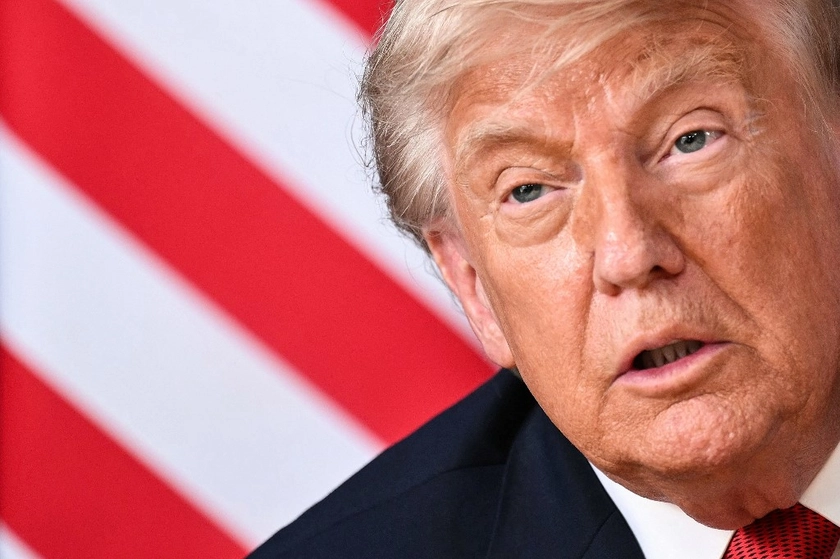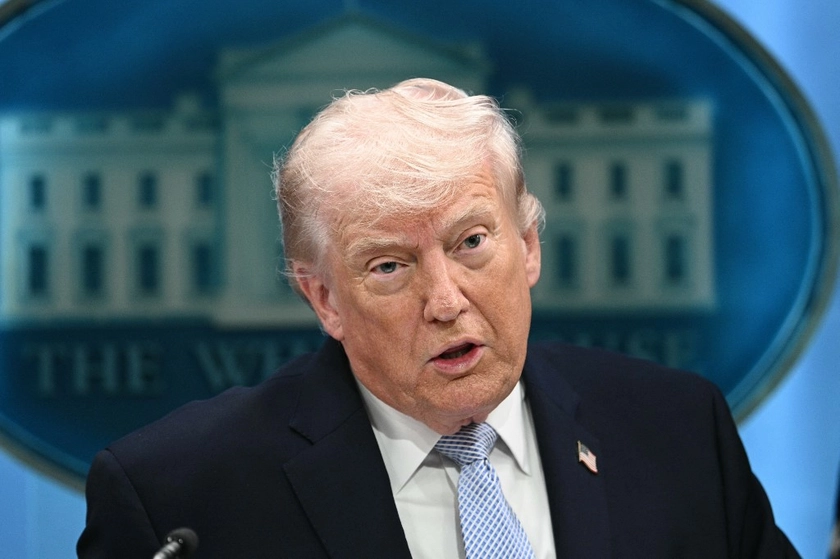
US President Donald Trump issued a series of aggressive warnings to Tehran on Sunday, April 19, ahead of a high-stakes round of negotiations set to begin in Islamabad, Pakistan, on Monday evening.
In a post on Truth Social, Trump accused Iran of a “total violation” of the current ceasefire following attacks on French and British vessels in the Strait of Hormuz. He claimed that Iran’s decision to close the waterway is inadvertently benefiting the US economy by redirecting shipping to Texas, Louisiana, and Alaska, while costing Tehran $500 million daily.
JOIN US ON TELEGRAM
Follow our coverage of the war on the @Kyivpost_official.
Trump warned that if a final agreement is not reached, the US will “knock out every single power plant and every single bridge” in Iran. “NO MORE MR. NICE GUY!” the US president wrote, adding that it would be his “honor” to end the “Iran killing machine.”
The ultimatum was met with defiance from Tehran. Iranian President Masoud Pezeshkian, speaking at the Ministry of Sports, asserted that Trump has no authority to control his nation’s nuclear program, Sky News reported.
“What kind of person is he to deprive a nation of its legitimate rights?” Pezeshkian asked, referring to the “nuclear rights” of the Iranian people. While the Iranian president expressed a desire to end the conflict with “full dignity” before the ceasefire expires on Wednesday, April 22, he remained firm against US pressure.
Trump Hints at Scrapping ‘Anchorage Understandings’ on Donbas at G7 Summit
This escalation in rhetoric occurs as the two nations remain deadlocked over the terms of a proposed “great deal.” The core of the negotiation involves unfreezing $20 billion in Iranian assets in exchange for the transfer of Tehran’s enriched uranium to the US.
However, deep divisions persist: Washington is pushing for a 20-year moratorium on enrichment, while Tehran seeks a five-year term and has repeatedly stated it will not transfer its nuclear stockpile abroad.
With the Wednesday deadline approaching, the upcoming Islamabad talks represent a final diplomatic effort to prevent a return to full-scale hostilities. Trump’s threats suggest that the “Board of Peace” diplomacy is shifting toward a posture of total military pressure, while Iran’s leadership continues to frame its resistance as a strategic defense of national sovereignty.
You can also highlight the text and press Ctrl + Enter