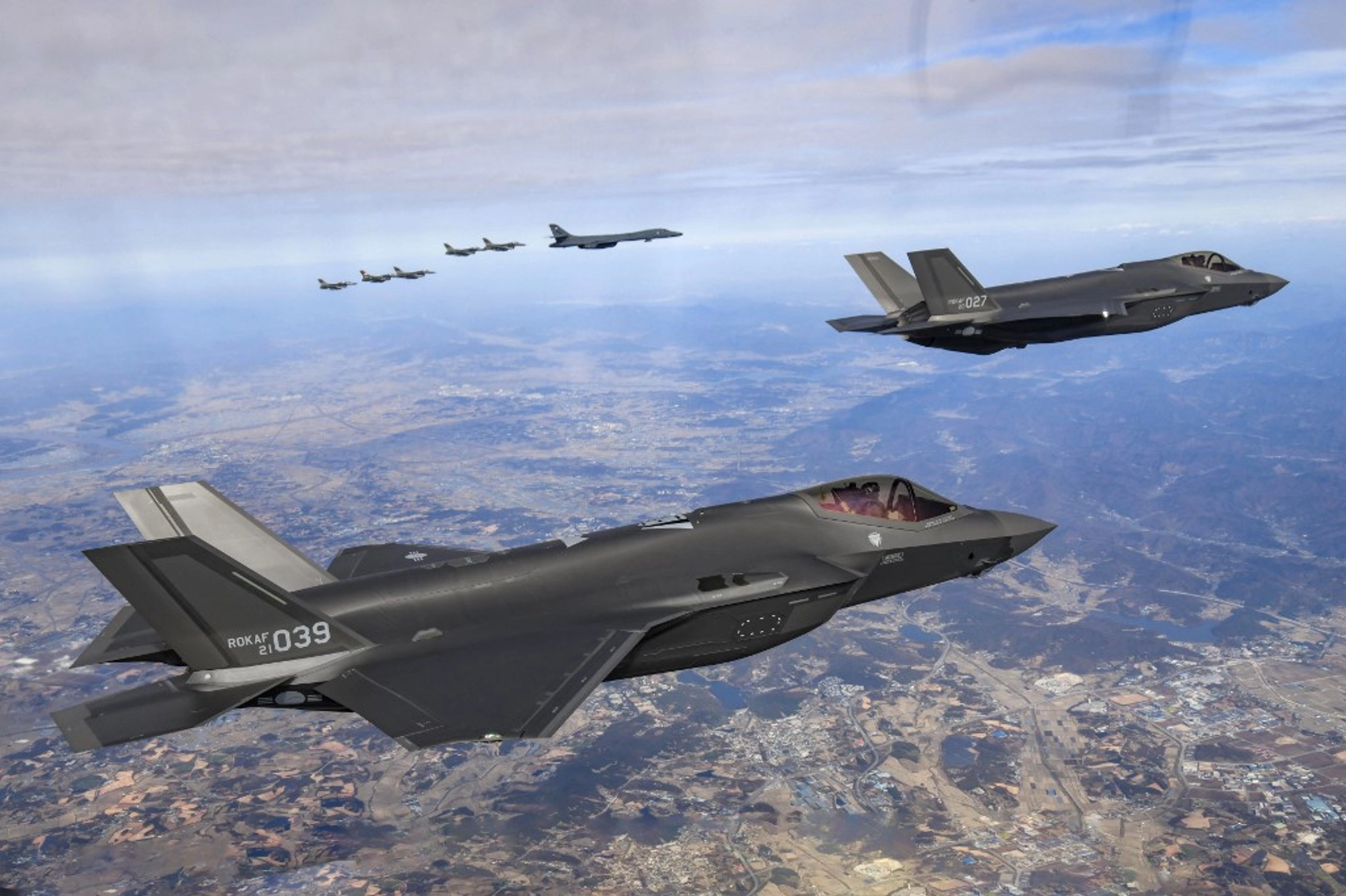
Norway confirmed two of its F-35 Lightning II fighters were launched to intercept a Russian Il-38 maritime patrol aircraft on the evening of April 13.
Local outlet Harstad Tidende, citing the Norwegian military, said the jets were scrambled within minutes from the Evenes Air Station as part of NATO’s routine Quick Reaction Alert (QRA) mission when the Russian aircraft was detected approaching its airspace.
JOIN US ON TELEGRAM
Follow our coverage of the war on the @Kyivpost_official.
The outlet said the goal was to “identify and document the aircraft,” adding that civilian flights in the area were placed in a holding pattern during the mission.
The QRA forms part of NATO’s Air Policing initiative, where QRA interceptors would “escort the intercepted aircraft to a nearby airfield to land or back out of NATO airspace” after identification, according to NATO’s website.
These are routine encounters that have been ongoing from at least the 1950s, where military aircraft, whether a formation of fighters or, as in this case, airborne intelligence, surveillance, and reconnaissance (ISR) platforms enter into another nations’ air defense identification zone (ADIZ), which is a buffer zone annotated on aeronautical charts and intended to preclude an unwanted military confrontation in peacetime situations.
There are even internationally established visual communications signals that military pilots can use to direct intercepted aircraft without use of two-way radio communications; or instructions may be broadcast on standard frequencies, agreed upon internationally and published in each nation’s flight information handbook.

Russia Says It Downed 419 Ukrainian Drones Overnight, Including 56 Bound for Moscow
The Royal Norwegian Air Force, also called the Luftforsvaret, confirmed the incident on Friday in an Instagram update.
It said the Luftforsvaret is required to launch interceptors within 15 minutes as part of its NATO obligations, adding that it has carried out 19 QRA missions and identified 28 aircraft thus far in 2026.
In addition to the Il-38, the Luftforsvaret also said it had intercepted a Russian Tupolev Tu-142 “this week,” though it did not specify when the other Russian plane was intercepted.
The Il-38 (NATO: “May”) is an “anti-submarine warfare aircraft” designed to “search for and destroy submarines, independently or in conjunction with anti-submarine ships, for maritime reconnaissance, search and rescue operations, and minelaying,” according to the Kyiv Research Institute of Hydraulic Instruments, which operates under Ukraine’s state-owned arms conglomerate UkrOboronProm.
The plane took its maiden flight in September 1961 and continues to be operated despite serial production having ended in the 1970s, the institute said.
In December 2025, Kyiv disabled an Il-38 in occupied Crimea in its preparatory operations ahead of an unprecedented “Sub Sea Baby” underwater drone strike that disabled a Russian submarine.
The Tu-142 (NATO: “Bear F”) is another of Russia’s maritime reconnaissance and anti-submarine aircraft. The plane, designed and built under the USSR, is an offshoot of the Tu-95 (NATO: “Bear”) turboprop strategic bombers commonly used to launch missiles in major airstrikes against Ukraine.
In September 2024, Japan protested Russia’s airspace violations over territorial waters north of Hokkaido after an Il-38 flew over the area, while another incident involving a Tu-142 earlier that month flew over disputed territories but did not officially violate Japanese airspace.
You can also highlight the text and press Ctrl + Enter


Russia Hit by 660-Drone Overnight Barrage Targeting Moscow, Crimea and Key Military Sites