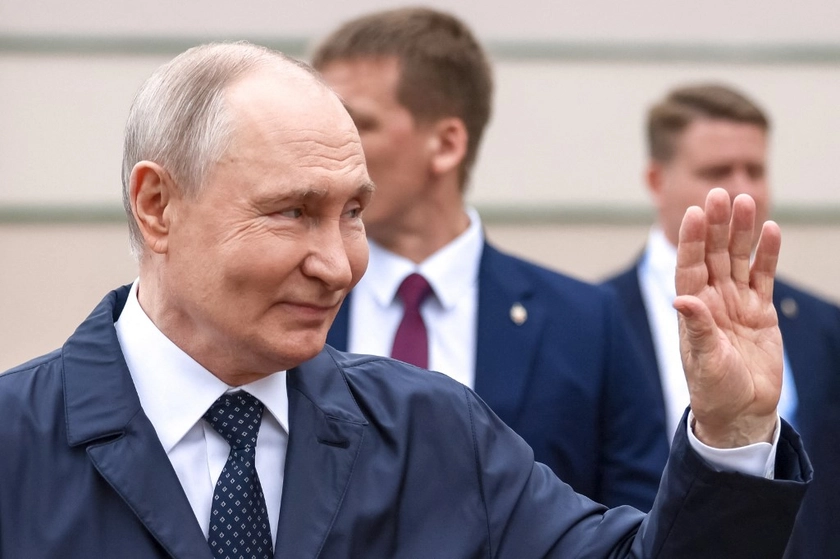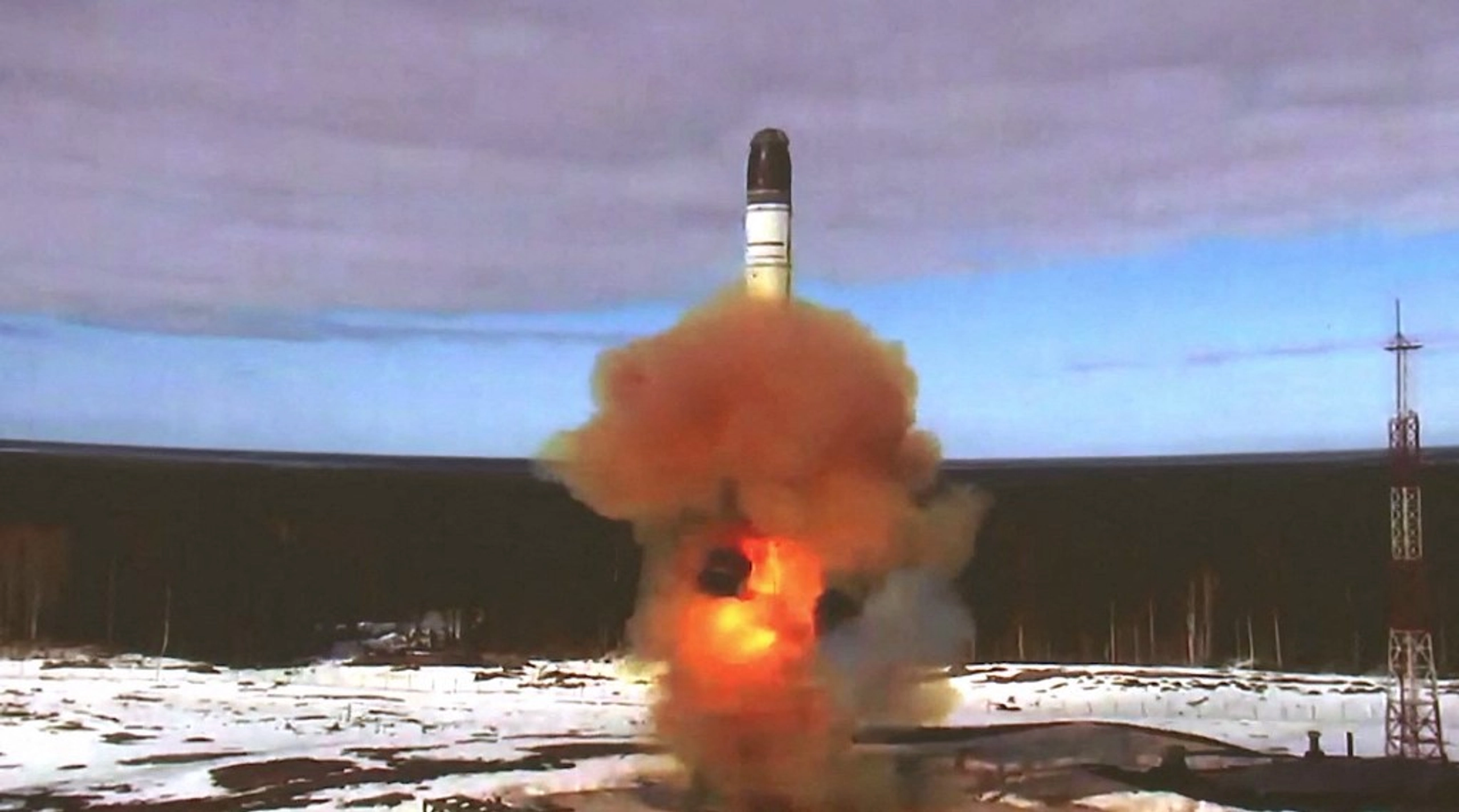
Russian President Vladimir Putin said Moscow had successfully tested its Sarmat intercontinental ballistic missile on Monday, reviving a troubled nuclear weapons program marred by repeated failures, explosions, and years of missed deployment deadlines.
Putin was informed of the launch during a video call with Strategic Missile Forces commander Sergei Karakayev, who said the test confirmed the missile’s design and technological reliability.
JOIN US ON TELEGRAM
Follow our coverage of the war on the @Kyivpost_official.
“The launch was successful,” Karakayev told Putin, according to Kremlin footage released Tuesday.
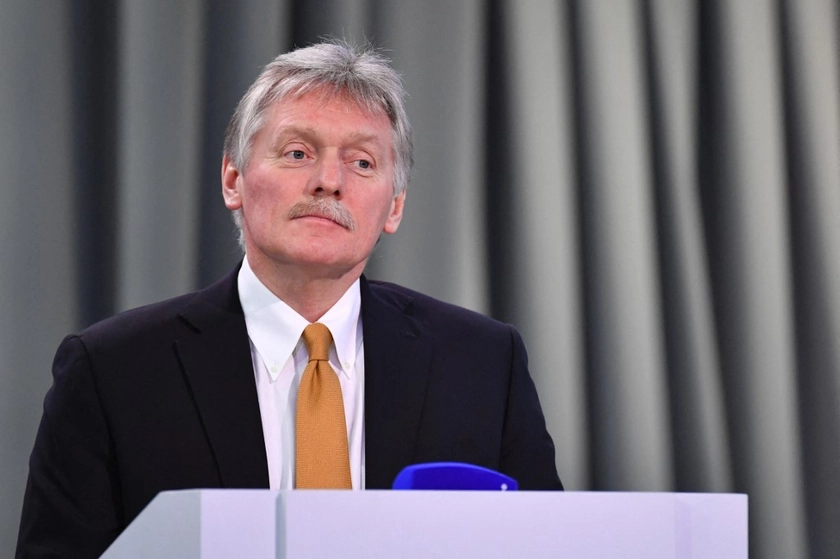
Putin again described the Sarmat as “the most powerful missile system in the world,” claiming it can travel more than 35,000 kilometers. Kremlin spokesman Dmitry Peskov said Russia notified the United States and other countries ahead of the launch.
The Sarmat – designed to replace the aging Soviet-era Voevoda missiles, known in NATO as “Satan” – has become one of Russia’s most delayed strategic weapons projects.
The Kremlin originally promised the missile would enter service in 2020, but deployment has repeatedly slipped. Putin and senior Russian officials have spent years insisting the system was close to operational readiness despite mounting technical setbacks.
Russia first claimed a successful Sarmat test shortly after launching its full-scale invasion of Ukraine in 2022, with Putin claiming the weapon would strengthen Russia’s nuclear deterrent and force Moscow’s enemies to “think twice.”
Zelensky: Russia Shifts Donetsk Capture Deadlines – Now at 15 Attempts
In early 2024, Putin claimed the first serial-produced Sarmat missiles had already been delivered to Russian forces. Yet by October 2025, he publicly admitted the missile was still not on combat duty.
Several other tests ended in failure.
In September 2024, a Sarmat missile exploded inside a launch silo during testing at the Plesetsk Cosmodrome. Another launch in November 2025 reportedly failed after the missile remained airborne for about a minute before crashing.
The latest test also comes days after Russian authorities arrested Alexander Gavrilov, head of the Krasmash defense plant that manufactures the missiles, on embezzlement charges.
You can also highlight the text and press Ctrl + Enter