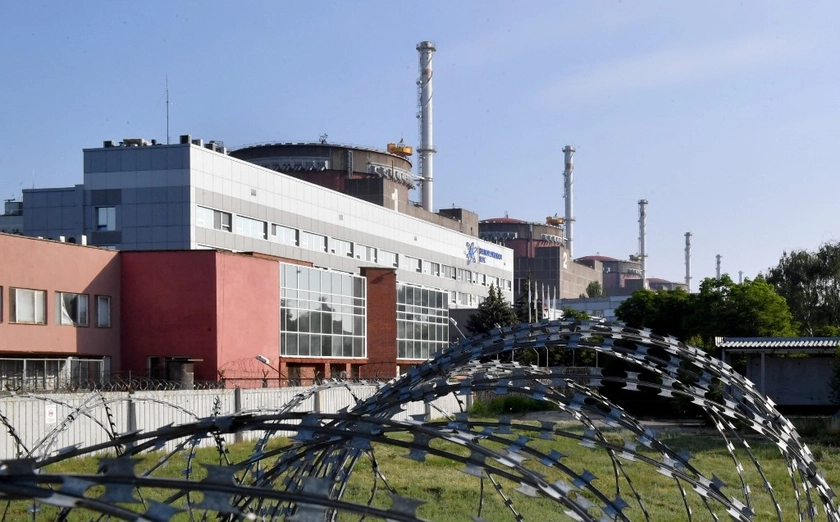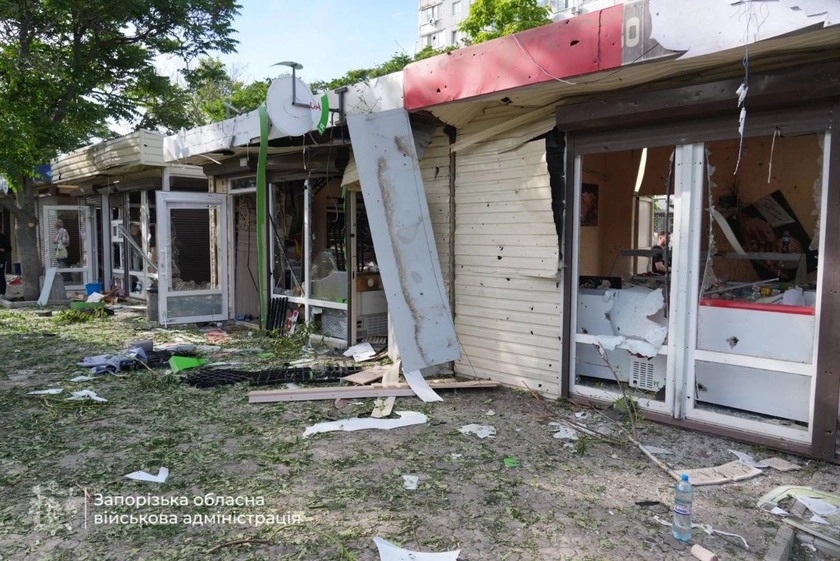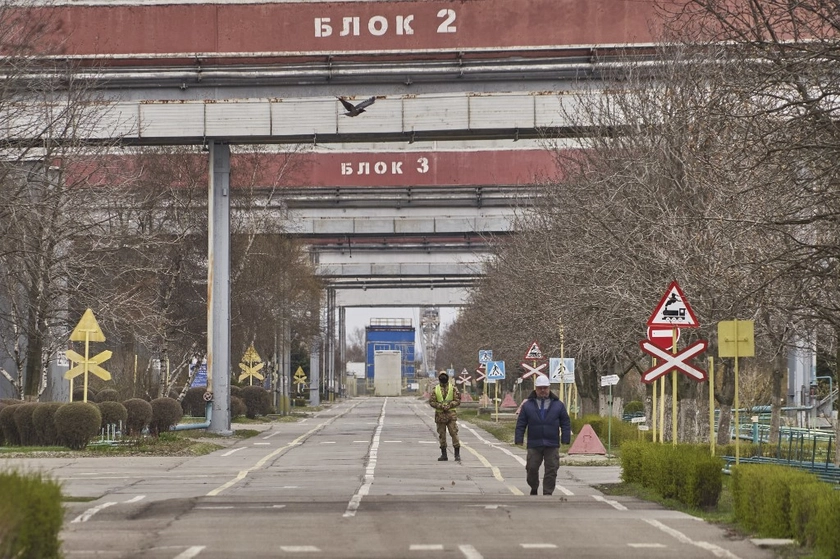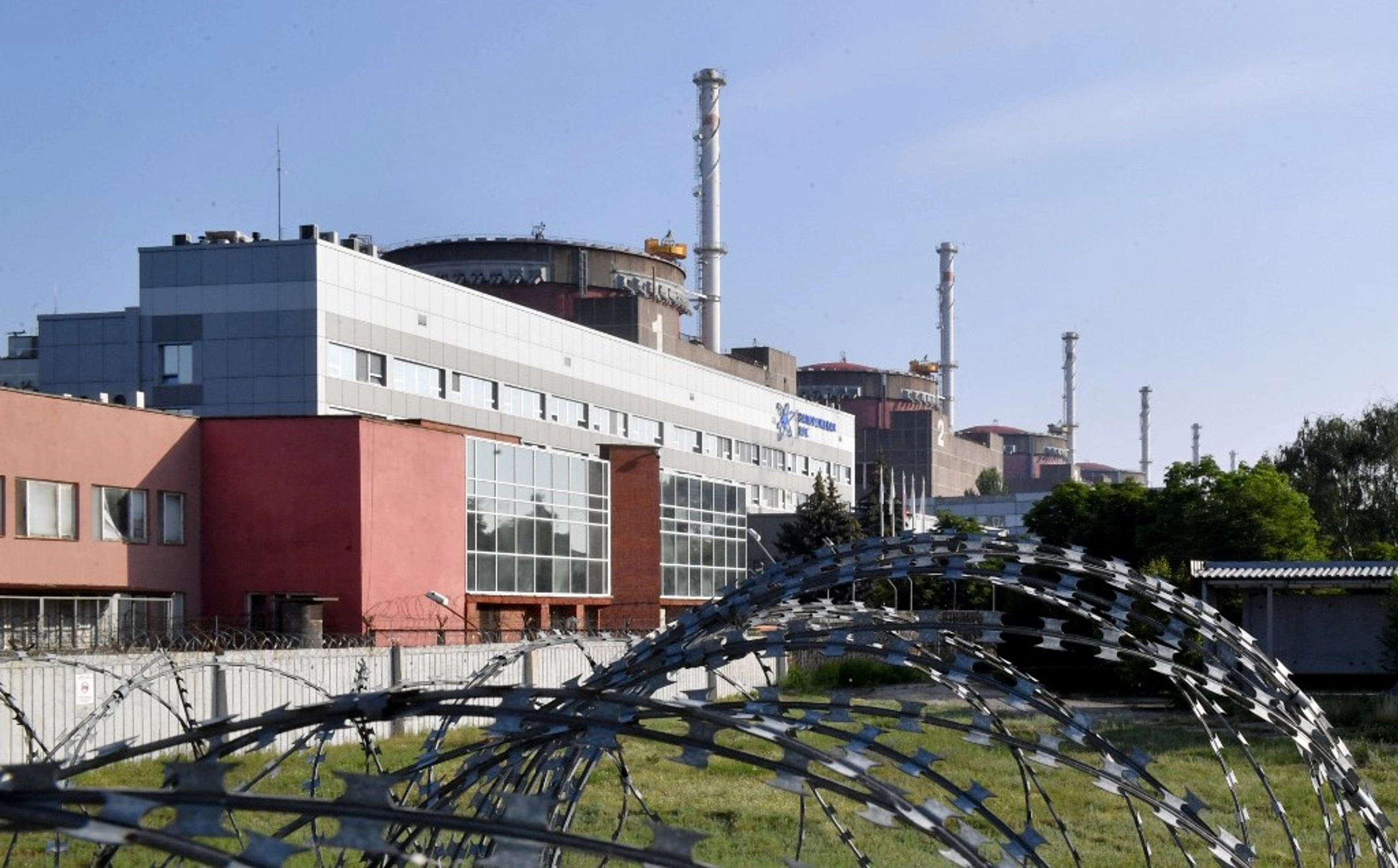
The Armed Forces of Ukraine (AFU) have issued a comprehensive rebuttal rejecting claims propagated by Russian occupation resources regarding an alleged Ukrainian drone strike against the infrastructure of the occupied Zaporizhzhia Nuclear Power Plant (ZNPP).
The official denial was issued by the Southern Defense Forces on Saturday, May 30. Ukrainian military commanders characterized the Kremlin’s narrative as a coordinated informational provocation aimed at discrediting Ukraine on the global stage.
JOIN US ON TELEGRAM
Follow our coverage of the war on the @Kyivpost_official.
Kyiv dismantles the Kremlin’s narrative
Russian occupation authorities claimed that a Ukrainian unmanned aerial vehicle (UAV) successfully struck Power Unit No. 6 at the nuclear facility. However, the Southern Defense Forces noted that Moscow’s claims fail to withstand basic factual verification. The ZNPP is located approximately 50 kilometers from the active land front line, and Nikopol – the nearest Ukrainian-controlled city – is situated at least 10 kilometers away on the opposite side of the former Kakhovka Reservoir.
The AFU clarified that its forces do not possess fiber-optic-guided drones with the extended operational range required to reach the plant, nor do they operate UAVs carrying the 5-6 kg shaped-charge warheads necessary to puncture the structural hole claimed by the Russian side.
Russian forces have deployed a multi-layered smoke protection screen entirely surrounding the ZNPP, making it physically impossible for an external aerial apparatus to fly through the perimeter undetected.
Zelensky: Russia Shifts Donetsk Capture Deadlines – Now at 15 Attempts
Ukrainian defense officials noted that the timing of the accusation follows a well-established propaganda pattern: whenever Russian forces suffer severe losses on the front line, Moscow invents loud, sensationalist claims against Ukraine to shift the focus of the international community. To maintain this narrative, the aggressor state has intentionally refused to provide high-quality photographic or video evidence documenting the alleged impacts.
Nuclear terrorism and international law
The AFU emphasized that its personnel operate in strict compliance with Article 56 of Additional Protocol I to the Geneva Conventions, which explicitly forbids military strikes against nuclear electrical generating stations. Military logs confirm that no active hostilities were conducted and no weapons systems were deployed in that specific frontline sector during the timeframe of the alleged incident.
In contrast, the Southern Defense Forces highlighted that it is Russia that has systematically engaged in nuclear terrorism since seizing the ZNPP by force in March 2022.
Moscow has transformed a civilian nuclear asset into an active piece of frontline military infrastructure. Russian forces regularly violate safety standards by placing heavy offensive weaponry, electronic warfare (EW) systems, and military personnel within the internationally mandated 5-kilometer exclusion zone.
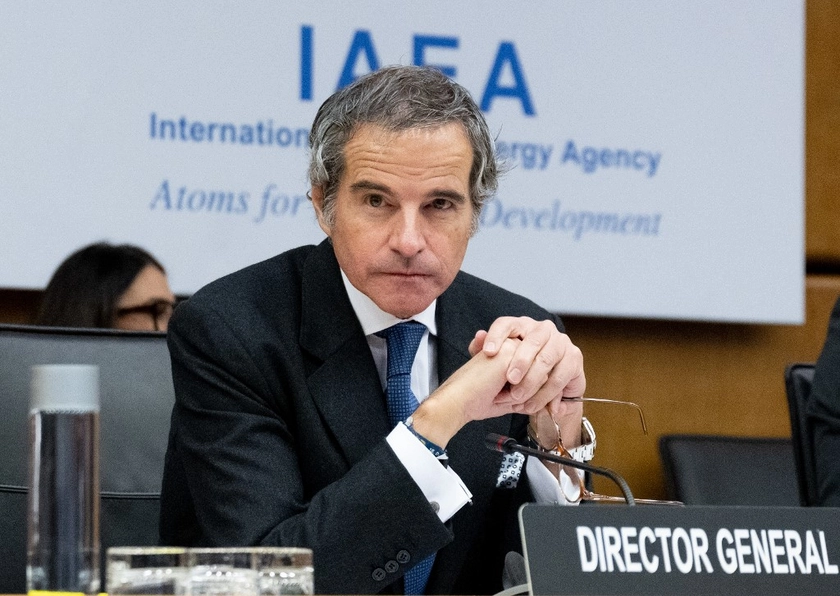
The tension surrounding the nuclear facility unfolds alongside deep structural vulnerabilities at the plant. International Atomic Energy Agency (IAEA) Director General Rafael Mariano Grossi recently confirmed that the ZNPP suffered its longest total communications blackout since the beginning of the full-scale invasion, with internet and landline telephone connections completely failing for 12 hours during external shelling.
The IAEA continues to warn that constant combat-induced power disruptions, unstable external grid connections, and dwindling diesel fuel supplies for emergency reactor cooling present an existential threat to the facility – risks that Ukraine maintains are entirely driven by Russia’s ongoing illegal military occupation.
You can also highlight the text and press Ctrl + Enter