The US military is overhauling its approach to unmanned aerial combat, shifting its primary focus away from highly customized, niche platforms toward rapidly mass-producible and endlessly adaptive technologies, European Pravda reported.
The defense pipeline update was delivered by US Defense Secretary Pete Hegseth during press briefings at the Shangri-La Dialogue security summit in Singapore. Hegseth detailed how the fast-moving technical innovations observed daily on the battlefields of Ukraine are directly dictating future US procurement and manufacturing methodologies.
JOIN US ON TELEGRAM
Follow our coverage of the war on the @Kyivpost_official.
Scaling over sophistication
According to Hegseth, the true revelation gleaned from observing high-intensity European combat operations is that standalone technical sophistication is easily neutralized without the industrial capacity to mass-produce and continuously re-engineer systems on short notice.
Unmanned tech has become an absolute priority for the Pentagon, which is trying to strike a balance between high-end autonomous systems and the cheap, mass-scale attrition assets that have defined the current war.
“The budget of President Trump for 2027 provides 56 billion dollars of investment in ensuring superiority in the field of drones and further study of Ukraine’s experience on the battlefield,” Hegseth announced to reporters. “It is not a matter of having the most advanced systems, but of the ability to scale them, scale them quickly, adapting week by week – that is exactly how quickly drone technology adapts.”
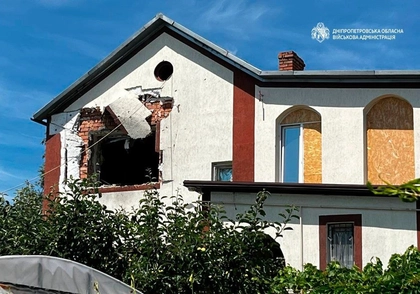
6 Killed, 35 Wounded in Drone, Missile Barrage on Dnipropetrovsk Region
By prioritizing flexible assembly lines over static designs, the US defense establishment intends to build automated combat systems capable of shifting software frequencies and structural designs seamlessly, replicating the agile engineering cycles developed by Ukrainian frontline units.
A mutually beneficial strategic alliance
This massive financial pivot represents a highly reciprocal defense loop between Washington and Kyiv. While the US is absorbing immense amounts of raw tactical data regarding asymmetric warfare to secure its own global dominance, top officials emphasize that US support channels remain steadfast.
The high-profile assurances come at a time of visible change in the wider transatlantic security architecture. Former US Ambassador to Ukraine Steven Pifer recently pointed out that Washington’s apparent step-back from active peace-talk mediation has inadvertently pushed European allies to aggressively expand their own defense procurement pipelines, responding to pressure from the White House to elevate defense spending targets toward an unprecedented 5% of individual member GDP.
To stabilize the transition and preserve standard NATO deterrents, the Pentagon has repeatedly sought to calm allied concerns. Hegseth praised the exceptional combat efficiency of the Armed Forces of Ukraine and stated that maintaining Ukraine’s capacity to repel aggression remains a key Washington objective, even as Europe assumes greater material responsibility.
“Where we can help Ukraine, we have,” Hegseth summarized during his remarks in Singapore. “Where we can enable Europe to do more, we have... So, we want them to be able to defend, and we’ll find a way to make sure we can help them.”
You can also highlight the text and press Ctrl + Enter