The EU is exploring emergency interventions to its maritime trade restrictions, moving to temporarily freeze the price cap on Russian crude oil to prevent global energy market disruptions from handing an unintended financial windfall to the Kremlin, Bloomberg reported.
Middle East energy crisis is triggering an automatic loophole
Last year, the EU established a dynamic, automatic mechanism designed to continuously squeeze Russian oil revenues. The rule mandates that every six months, the price cap must be recalculated and legally set exactly 15% below the prevailing average market price of Russia’s benchmark Urals crude.
JOIN US ON TELEGRAM
Follow our coverage of the war on the @Kyivpost_official.
The current price ceiling is fixed at $44.10 per barrel, with the next formal adjustment scheduled for late summer. Under this restriction, European maritime firms are legally barred from providing vital logistics, shipping, or insurance services for any vessel carrying Russian oil sold above the threshold.
However, the war in Iran and the physical closure of the strategic Strait of Hormuz have induced severe instability across global energy networks, causing international crude prices to skyrocket.
Given that the market price of Russian oil has climbed alongside global trends, the EU’s automatic formula is poised to trigger an unintended consequence. Diplomatic sources speaking on the condition of anonymity revealed that during the next scheduled recalculation in July, the formula would force the EU price cap to rise sharply to at least $65 per barrel.
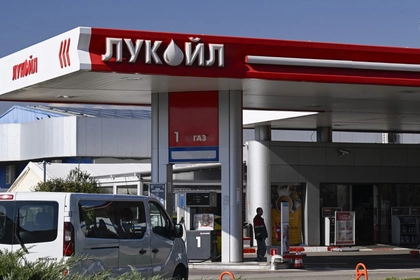
Russian Region Deploys Police at Gas Stations As Fuel Crisis Deepens
This automatic hike would not only loosen the economic vice on Moscow but would actually surpass the original $60 baseline established jointly with the G7.
Drafting options for the 21st sanctions package
To prevent this loophole from opening, EU planners are evaluating three distinct countermeasures to lock down the price ceiling. First, they are considering a total cap freeze, which would freeze the price threshold entirely at its current level of $44.10 per barrel, completely overriding market-driven formula.
Another option under evaluation is a dynamic suspension, which would temporarily suspend the automatic biannual escalation mechanism until the end of the year, citing the exceptional and volatile circumstances in the Middle East. Finally, the EU is looking at a G7 hard ceiling, an approach that would limit any potential automatic market increase to a strict maximum of $60 per barrel, ensuring the EU remains perfectly aligned with broader G7 baselines.
This intervention is being designed as a core component of the EU’s upcoming 21st sanctions package since Russia launched its 2022 full-scale invasion of Ukraine. EU member state ambassadors were formally briefed on the proposals last week, and Brussels intends to finalize and officially unveil the entire package of new restrictions in early June.
Ukraine synchronizes blacklist controls
As Europe debates its maritime energy rules, Ukraine is moving rapidly to ensure its domestic legal architecture matches the West’s evolving defensive restrictions. President Volodymyr Zelensky recently signed Executive Decrees No. 447/2026 and No. 448/2026, officially aligning Ukraine’s national sanctions matrix with the parameters of the EU’s prior 20th sanctions package.
The presidential orders introduce sweeping economic blocks across multiple continents, targeting 120 individuals and organizations. While many entities were already restricted, the updates add 16 Russian nationals and 31 external corporate entities to the blacklist, focusing heavily on third-party logistics firms helping the Kremlin bypass Western trade blocks.
The restrictions target shell corporations in the United Arab Emirates (UAE), Kyrgyzstan, Kazakhstan, and Uzbekistan that are caught funneling precision machine tools, chemical compounds, and dual-use aerospace hardware to Russian buyers in a clandestine manner.
Furthermore, Ukraine’s updated blacklist targets corporate defense entities like LLC Atlant Aero – a prominent aerospace manufacturer fabricating specialized hulls for military unmanned aerial vehicles (UAVs) – and LLC Irz-Zvyazok, which supplies critical transmission micro-components used in long-range attack drones and ballistic missiles.
By blacklisting these technical developers alongside primary oil and raw material extraction conglomerates in Belarus and Russia, Kyiv is working to paralyze the Kremlin’s defense supply chains. The EU’s upcoming June push to freeze the Urals price cap represents the macroeconomic half of this shared strategy, ensuring that even as global oil prices spike, the Kremlin cannot convert market volatility into frontline ammunition.
You can also highlight the text and press Ctrl + Enter

OPINION: In High-Stakes Bluff, Putin Holds a Losing Hand
Hungary Blocks Ukraine, Moldova’s EU Membership Talks
EU Investigates von der Leyen Over Zelensky Chat