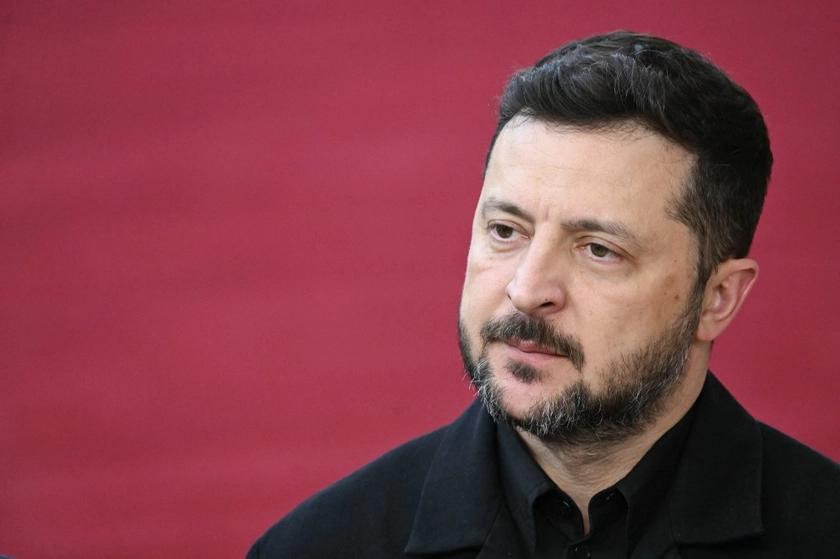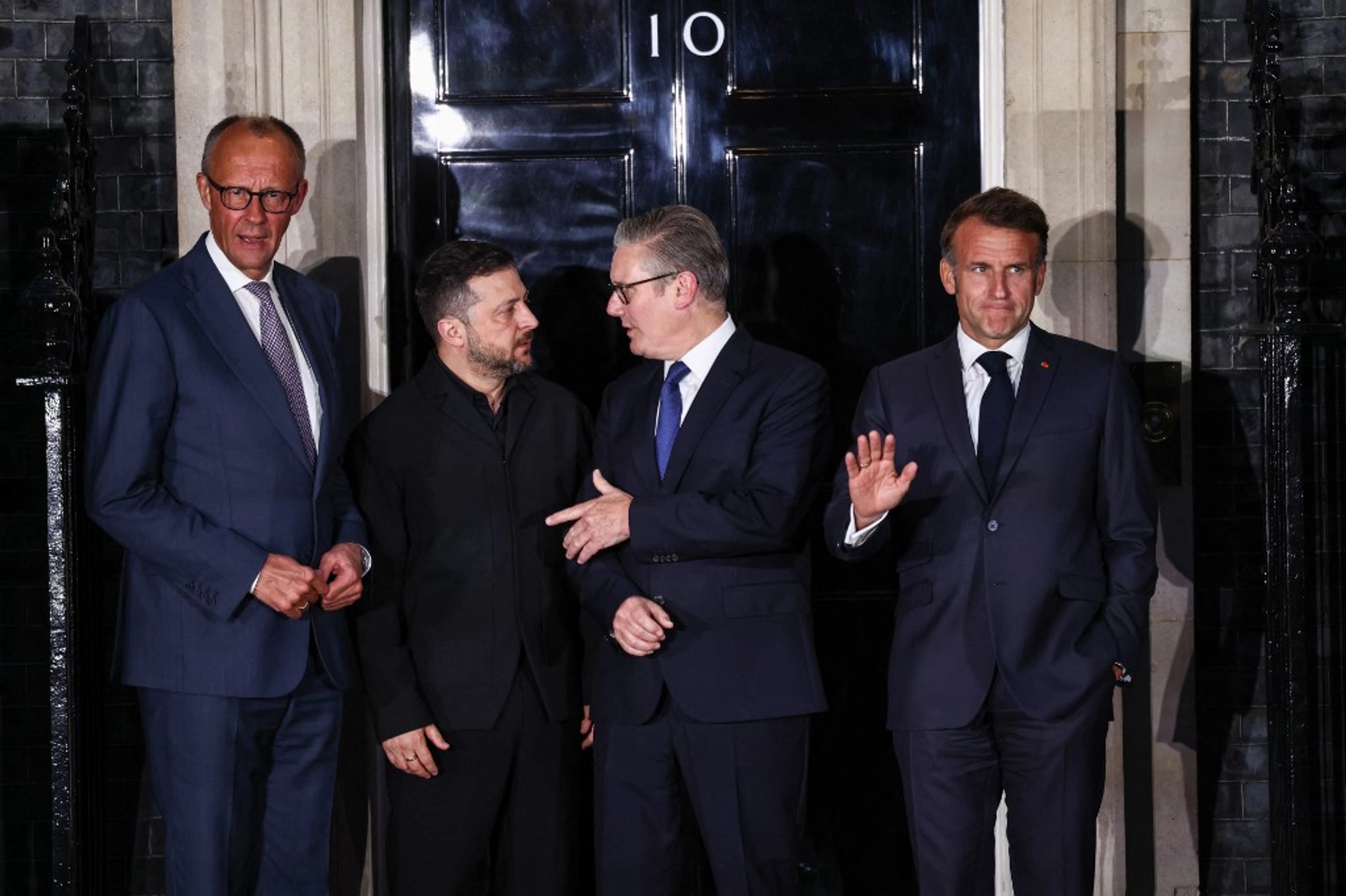
President Volodymyr Zelensky and the leaders of the UK, France, and Germany agreed on five principles for a sustainable peace in Ukraine during a high-level summit in London, reaffirming that Europe must play a central role in any future settlement.
Zelensky met British Prime Minister Keir Starmer, French President Emmanuel Macron, and German Chancellor Friedrich Merz in the so-called “E3 plus Ukraine” format on Sunday, in a show of European unity as diplomatic efforts to end Russia’s war intensify.
JOIN US ON TELEGRAM
Follow our coverage of the war on the @Kyivpost_official.
In a joint statement issued after the meeting, the leaders reiterated their “unwavering support” for Ukraine and outlined conditions they said were necessary to secure a just and lasting peace.
Five conditions for peace
First, the leaders called on Russian President Vladimir Putin to agree to an immediate and comprehensive ceasefire.
Second, they said the current front line should serve as the basis for negotiations, stressing that international borders cannot be changed by force and that Ukraine’s sovereign right to choose its security arrangements and alliances must be respected.
Third, they said Ukraine must receive robust and legally binding security guarantees once a ceasefire takes effect. Those guarantees would build on commitments agreed in Berlin in December 2025 and Paris in January 2026 and include the deployment of a multinational force in Ukraine.
Fourth, Russian assets frozen by Western countries would remain immobilized until Moscow ends its aggression and compensates Ukraine for war damages.
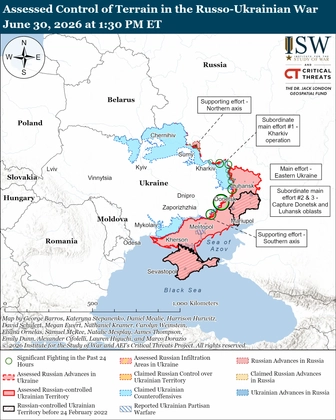
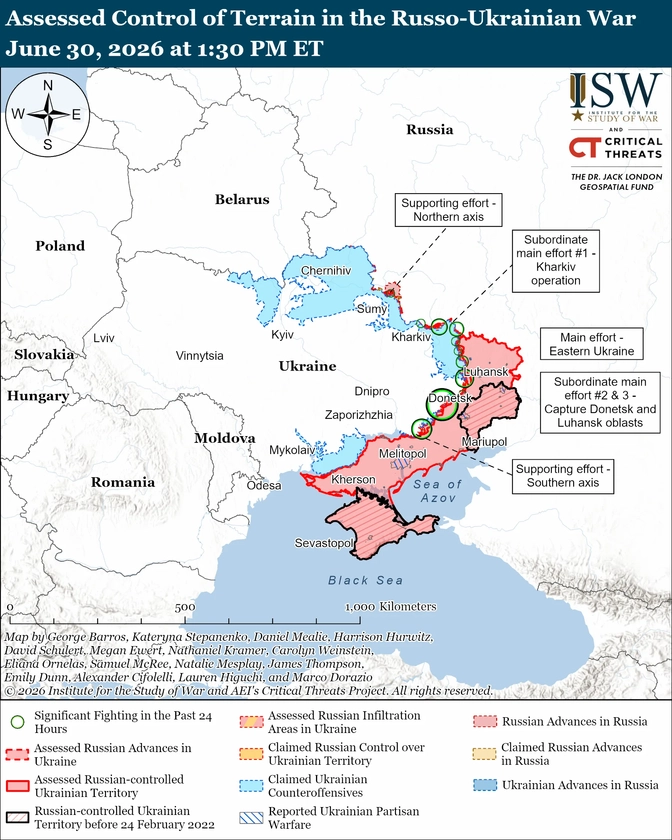
ISW Russian Offensive Campaign Assessment, June 30, 2026
Fifth, the leaders said European security interests must be protected in any agreement, adding that decisions affecting the EU and NATO would require the consent of member states and allies.
The four leaders also backed Zelensky’s proposal for direct talks with Russia, with active US and European participation, aimed at achieving a ceasefire and advancing negotiations.
Military support and pressure on Russia
Ahead of the upcoming G7 summit in Evian, the next Coalition of the Willing meeting, and the NATO summit in Ankara, the leaders pledged to coordinate additional military aid and increase pressure on Russia’s war economy.
They emphasized the need to ramp up interceptor production, jointly develop anti-ballistic missile and long-range strike capabilities, and strengthen the long-term sustainability of Ukraine’s armed forces.
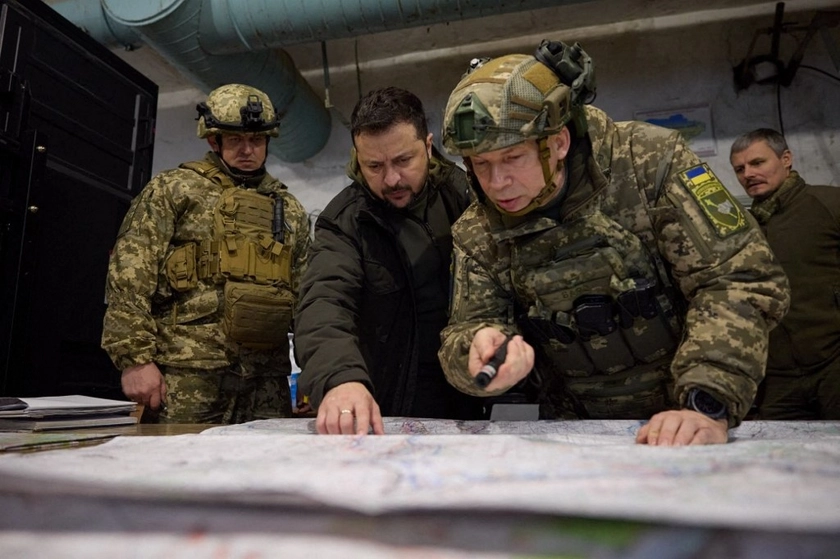
“The main thing is our defense in the war, more cooperation for the security of all of Europe in the direction of air defense, and our common view on diplomatic perspectives: Europe must be in the negotiations and must be strong,” Zelensky said upon arriving in London.
Zelensky’s visit is set to continue with further meetings on Monday, including an audience with King Charles III.
Securing Europe’s seat at the negotiating table
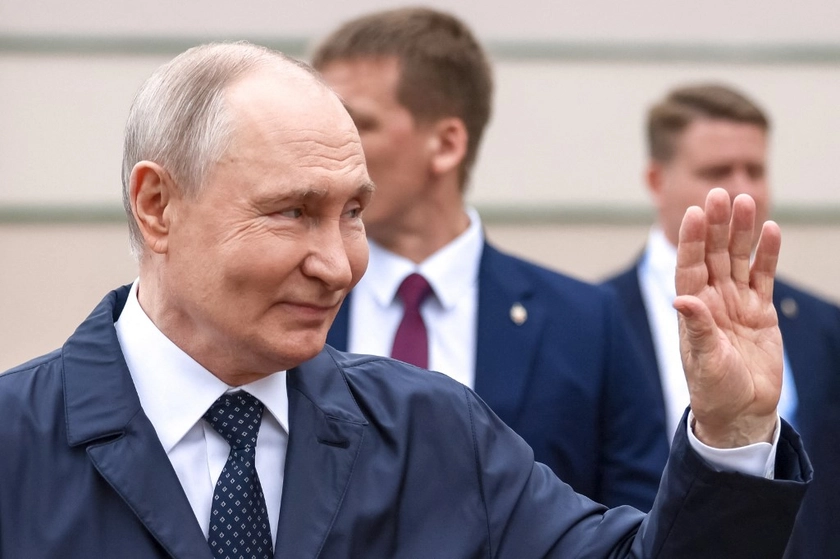
The gathering of European leaders comes at a highly volatile moment. Just days prior, Zelensky issued an open letter to Russian President Vladimir Putin challenging the Kremlin to engage in direct, face-to-face peace talks to test Moscow’s genuine willingness to end the conflict.
While Putin promptly rejected the framework, the London summit serves as a proactive measure to ensure Western allies remain lockstep.
The French Elysee Palace released a companion statement affirming that the talks are explicitly intended to coordinate the next phases of wartime assistance to Ukraine while tightening the economic and strategic screws on Russia’s war machine.
French officials reiterated that Russia continues to face a profound “military, economic, and strategic failure” despite its ongoing offensive operations on the front lines.
You can also highlight the text and press Ctrl + Enter