On June 4, 2023, Ukraine launched a counteroffensive. In military terms, the southern thrust was supposed to be the main effort, and its aim was to break Russia’s “land bridge” connecting mainland Russia to occupied Crimea.
The operational concept focused on advancing south through western Zaporizhzhia Oblast – primarily from the Orikhiv axis toward Tokmak and ultimately Melitopol on the Sea of Azov.
JOIN US ON TELEGRAM
Follow our coverage of the war on the @Kyivpost_official.
Ukraine had defined four objectives for the southern thrust:
- Capture Tokmak: Tokmak was a critical Russian logistics and rail hub. Taking it would disrupt Russian command, supply, and reinforcement routes in southern Ukraine.
- Advance to Melitopol, or the Azov coast: Reaching Melitopol would effectively sever the Russian-controlled corridor between mainland Russia, occupied southern Ukraine, and Crimea.
- Isolate Crimea operationally: Crimea depended heavily on the land corridor for logistics, fuel, ammunition, and troop movements. Even without fully reaching the coast, advancing far enough south could place key Russian infrastructure within artillery and missile range, making Russian logistics unsustainable.
- Split Russian forces in the south: Severing the land bridge would have divided Russian troops west and east of the breakthrough, complicating Russian operational coordination and potentially creating conditions for later offensives toward Crimea or Kherson.
While the 2023 counteroffensive did not completely fail – Ukraine liberated villages and degraded Russian capabilities – it failed to achieve its central strategic objective: breaking through to the Sea of Azov and severing Russia’s land bridge to Crimea.
The failure had multiple causes.
Russia was given seven months to build one of the densest defensive systems seen in Europe since World War II – an extensive network of trenches, anti-vehicle ditches, anti-personnel and anti-vehicle mines, razor wire, and dragon’s teeth, the truncated reinforced-concrete pyramids used to stop main battle tanks and mechanized infantry and channel them into artillery kill zones.
Ukraine lacked critical capabilities.
It lacked not only air superiority but air support. It lacked layered air defense to counter Russia’s air power. It lacked mine-clearance capabilities. Western equipment arrived late and in insufficient quantities, leaving Ukraine without enough armored mass for a sustained breakthrough.

Flamingos Make Progress, Crimea Choked, German High Tech
Most importantly, instead of concentrating overwhelming force on one decisive axis, Ukraine attacked along multiple axes, dispersing its forces. And Russia adapted faster than many expected.
In 2023, strongly encouraged by its international partners, Ukraine tried to fight a battle none of those partners would have attempted themselves.
The 2023 counteroffensive liberated only about 370-400 square kilometers (143-154 square miles) overall, at great cost.
No authoritative public estimate exists for the counteroffensive period alone, but Ukraine is believed to have suffered tens of thousands of casualties, killed and wounded combined.
It reportedly lost up to 20% of the newly committed Western-supplied equipment during mechanized breakthrough attempts early in the offensive.
In 2023, strongly encouraged by its international partners, Ukraine tried to fight a battle none of those partners would have attempted themselves – not without the critical capabilities Ukraine lacked.
In 2026, as drone warfare reshapes the battlefield, Ukraine is fighting a battle none of its international partners has ever fought. More telling, it is starting to achieve what the 2023 counteroffensive could not.
The battle for Crimea has started
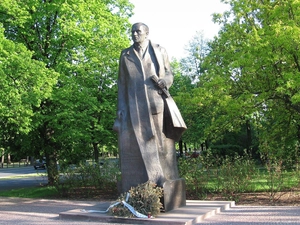
In an interview with Ukrinform on May 27, former US Army Europe commander Ben Hodges said Ukraine has the resources to liberate Crimea.
The first step, he argued, is to isolate the peninsula – “cut off the road to Dzhankoy, and destroy the bridge” – then make it impossible for Russian forces to remain.
“Crimea is the most critical location, the focal point of this war. And whichever side controls Crimea will win the war. I cannot imagine an end to the war or the achievement of long-term, sustainable peace if Russia continues to control Crimea,” Hodges said, in remarks reported in English by Ukrainska Pravda.
Russian forces in southern Ukraine depend on hundreds of trucks every day for reinforcements and supplies.
Hodges explained that Ukraine could not reach the Sea of Azov or rebuild cities such as Mariupol and Berdiansk while Russia holds Crimea. Russia would also be able to keep disrupting maritime activity – shipping, oil and gas extraction, and more – in the Black Sea.
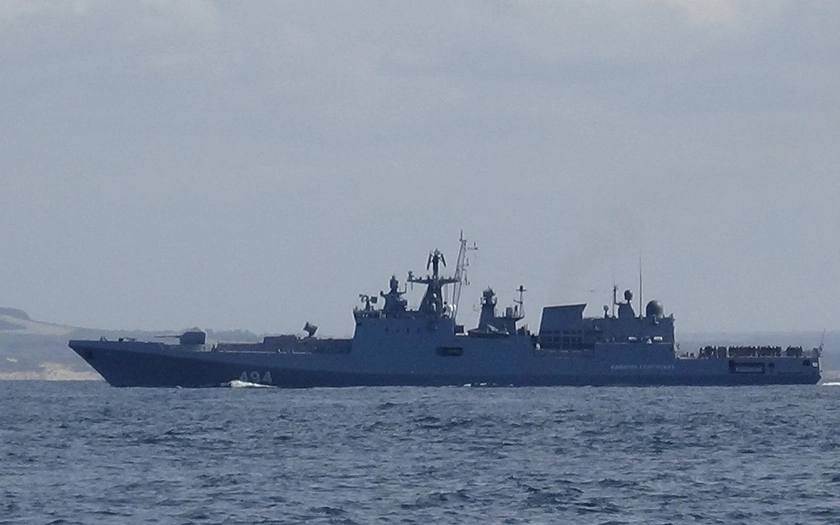
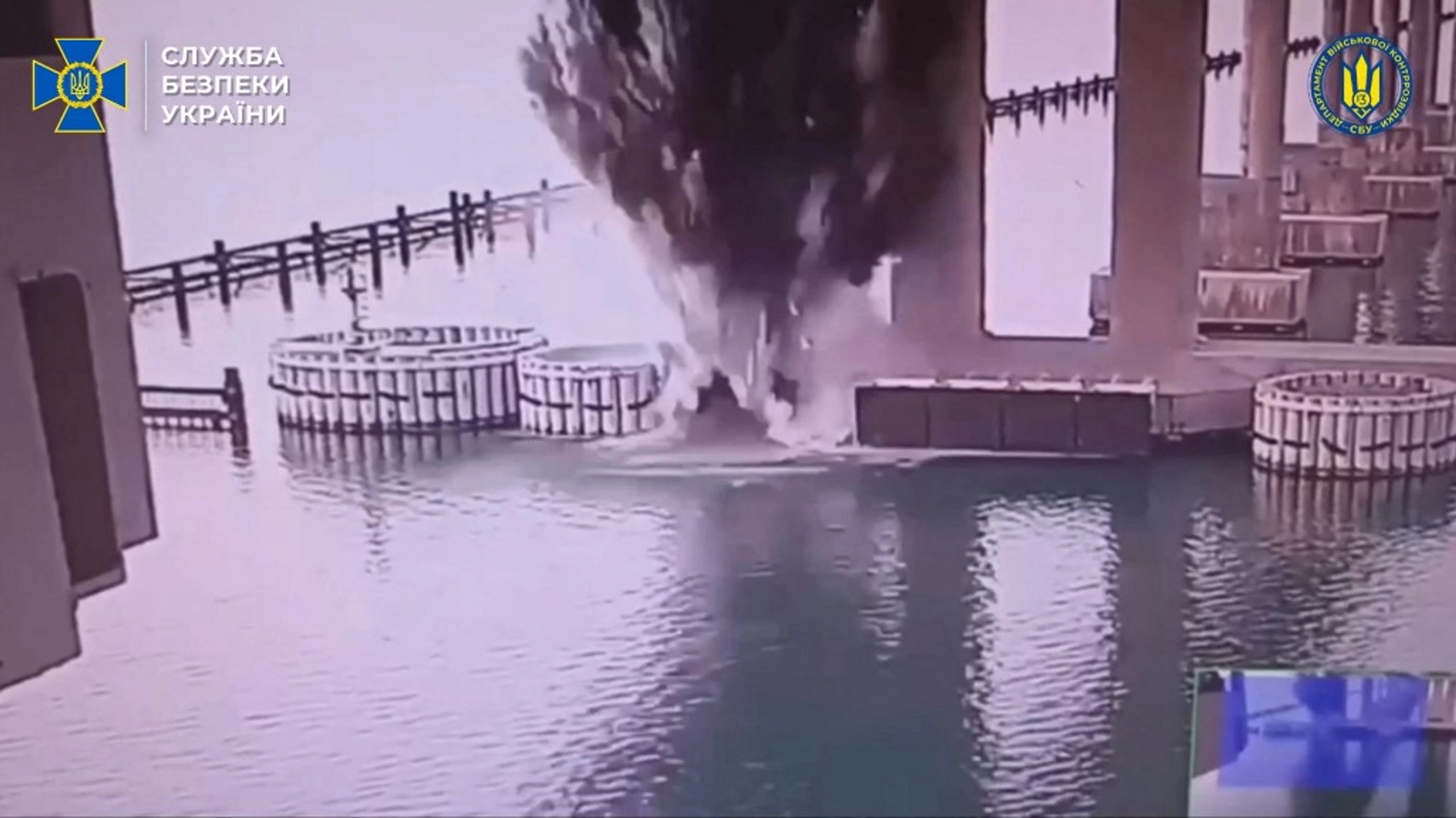
This is exactly what Ukraine is doing. It is making it steadily harder for Russia to remain on the peninsula. It has forced the Black Sea Fleet to relocate from Crimea to mainland Russia. It is striking military infrastructure across the peninsula – command-and-control facilities, air bases, air surveillance and air defense systems, fuel and ammunition depots, and logistics hubs. It has attempted to bring down the Crimean bridge at least three times.
Ukraine has also opened a battlefield air interdiction (BAI) campaign aimed at breaking the land bridge itself.
Russian forces in southern Ukraine depend on hundreds of trucks every day for reinforcements and supplies, according to Euromaidan Press.
Most travel from Rostov-on-Don in southern Russia through occupied Mariupol before heading west toward occupied Crimea or turning north toward occupied Donetsk.
Both routes – the M-14 highway from Rostov and the H-20 threading north into Donetsk – are under intensive drone attack.
Strikes on Russian logistics in the occupied south more than doubled between February and March, the Ukrainian analysis group Tochnyi found. The Russians lost ground in March and April.
Ukraine’s Armed Forces have established three distinct drone strike zones:
- Long-range first-person-view (FPV) drones patrol the zone nearest the gray zone, out to about 20 km (12 miles).
- Hornets and other AI-assisted drones, including the mysterious B-2, range as far as 150 km (93 miles), hitting logistical vehicles.
- Remote-controlled Fire Point FP-1s and FP-2s – the latter carrying warheads of up to 150 kg (331 pounds) – strike high-value targets such as supply depots, oil infrastructure, logistics centers, command posts, and air defenses out to around 200 km (124 miles).
The M-14 and H-20 sit squarely inside the middle and outer rings, putting every Russian supply convoy between Mariupol, Donetsk Oblast, and the Crimean approaches within sustained reach.
Hornet, B-2, and other AI-assisted drones are now so thick in the sky over the M-14 and H-20 that they sometimes glimpse one another in their forward-looking cameras.
There are enough of them in the air that they hit not only Russian supply trucks, but the recovery trucks sent out to retrieve the damaged and destroyed ones.
Russian forces are trying to use alternative fields and dirt roads, but Ukrainian forces are targeting those routes too.
As David Axe writes: “We don’t know how many Russian trucks and vans travel the main supply routes in southern Ukraine every day, shuttling supplies and reinforcements between logistical hubs and front-line regiments. But Ukrainian drone pilots are hitting potentially dozens of them.”
One observer scrutinized three recent 1st Azov Corps video montages and counted strikes on around 50 Russian trucks.
The videos may cover several days, so a daily strike rate is hard to calculate – and the 1st Azov Corps is not the only Ukrainian formation droning the M-14 and H-20.
The Ukrainian General Staff has, however, provided some clues to the scale and scope of the drone war across all sectors of the frontline. Analysis of its daily reports shows that Ukraine destroyed nearly 72,000 vehicles and fuel tanks during 2022-25 (2022: 4,704 / 2023: 6,606 / 2024: 21,185 / 2025: 39,502 / 2026 so far: 33,254).
The projection for 2026 alone is a staggering 74,500 – more than the grand total for the first four years of the full-scale war.
The BAI campaign is biting
Ukrainian units are potentially setting the conditions for future tactical offensives by disrupting Russian logistics.
Several indicators suggest the campaign is working.
A Russian milblogger has assessed that Ukraine’s strikes against supply lines in southern Ukraine are allowing Ukrainian forces to be more active along the frontline in the Zaporizhzhia, Huliaipole, and Orikhiv sectors.
“It’s telling that Russian forces overall lost ground in Ukraine in March and April, at the same time Russian forces are usually advancing as part of their traditional spring offensive. And it’s evident Ukrainian commanders are looking for opportunities to attack,” David Axe writes.
Russian authorities recently closed the M-14 – Russia’s main route from Rostov-on-Don to occupied Crimea – to civilian traffic. On May 22, Vladimir Saldo, Russia’s installed governor of occupied Kherson Oblast, signed a decree suspending traffic on the section running through occupied Kherson to the Dzhankoi checkpoint in northern Crimea, reportedly because Ukrainian drones were hitting Russian supply trucks along the route at a near-daily clip.
On May 27, the Institute for the Study of War (ISW) reported that Russian authorities were urgently moving supplies further into the rear, beyond occupied Mariupol, to areas Ukrainian strikes are not currently reaching.
On May 28, the ISW reported that Ukraine’s mid-range strike campaign against occupied southern Ukraine – particularly against the Russian ground lines of communication (GLOCs) connecting Rostov Oblast and occupied Crimea – appears to be forcing Russian forces to commit personnel to counter-drone operations in the rear rather than to offensive operations.
Engineer detachments of the Russian 58th Combined Arms Army (Southern Military District) allegedly clear logistics routes daily and run motorcycles and all-terrain vehicles to escort convoys. Russian milbloggers are calling for far more mobile fire teams and interceptor crews in southern Ukraine, and for ways to strike Ukrainian drone operators.
On May 30, the ISW reported that Russian forces were moving trained drone-observation troops and electronic warfare equipment away from unspecified frontline positions to protect logistics along the M-14. Russian command has reportedly ordered convoys on the highway to move at night and in bad weather, at no less than 120 km/h (75mph), with a drone-detector operator in every vehicle.
Ukraine’s campaign against Russian supply lines also includes remote mining at depths of 100 to 150 km (62 to 93 miles) behind the front. The mines can disable unarmored vehicles, force road closures, and hinder nighttime movement.
It is no longer about controlling territory but controlling the lower airspace over.
“Ukrainian forces are effectively expanding a deep zone of drone activity from the intermediate range to the frontline, which is disrupting Russia’s ability to transport personnel to the frontlines, supply and sustain frontline positions, and conduct the infiltration tactics on which Russian forces have relied to advance over the past several months,” the ISW wrote on May 31.
On June 6, the Russian command of the Eastern Grouping of Forces issued a decree prohibiting military cargo traffic along the M-14 and the A-291 (Kerch-Simferopol-Sevastopol) Tavrida highway, starting June 7.
Ukraine’s Unmanned Systems Forces (USF) Commander Robert “Magyar” Brovdi reported that logistics traffic along these routes was banned for safety reasons, given Ukrainian fire control over them.
Traffic along the M-14 – designated the R-280 “Novorossiya” highway by Russian occupation officials – had already fallen by 71% over the 14 days leading up to the ban.
Ukraine’s BAI campaign escalated in June. Between June 7-11, Ukrainian forces hit the ground lines of communication connecting the occupied Kherson Oblast and Crimea in a coordinated sequence.
On June 7, the Chonhar Bridge was struck for the first time. Two days later, it was struck again by long-range drones. According to Ukraine’s Center for Countering Disinformation, this follow-up attack severely crippled the bridge and halted Russian military traffic.
On June 10, the Henichesk-Arabat Spit Bridge was hit in a Ukrainian missile strike, suspending traffic on this alternative eastern coastal supply corridor. The following night, after the closure of the Chonhar and Henichesk routes, Ukrainian forces struck four remaining bridges in the northwestern Armiansk-Perekop corridor in a large overnight wave:
- Perekop-Armiansk road bridge – the main road crossing into Crimea.
- North Crimean Canal bridge near Preobrazhenka – heavily damaged.
- North Crimean Canal bridge near Myrne – heavily damaged.
- Stavky bridge.
On June 11, the ISW reported that Ukrainian strikes on the nights of June 7-8 and June 10-11 June, and on June 9, had temporarily disabled every land route between occupied Kherson Oblast and Crimea, and that Ukrainian forces had struck, damaged, or destroyed roughly 50 Russian military vehicles.
“Due to the fact that the Chonhar bridge was damaged, the enemy concentrated a large number of trucks with military cargo, which were moving precisely through Armiansk. Accordingly, during the attack, we managed to hit trucks carrying fuel and ammunition,” said Dmytro “Perun” Filatov, commander of the 1st Separate Assault Regiment named after Dmytro Kotsiubailo.
Ukraine’s strike campaign against Russian transport arteries has caused shortages of gasoline and basic goods in occupied Crimea. The occupation authorities are rationing fuel for civilians as Ukrainian intermediate-range strikes strain Russian logistics across the peninsula and the occupied south. Fuel shortages have already produced long lines at gas stations.
What to expect
It is no longer about controlling territory but controlling the lower airspace over it – denying Russia the ability to move forces, weapons, and supplies along the land bridge running beside the Sea of Azov.
If Ukraine succeeds, Crimea and the Russian forces in Zaporizhzhia and Kherson oblasts will grow steadily more isolated.
For Russian forces in the region, the situation will come to resemble what they faced before their forced withdrawal from western Kherson in November 2022.
Russian forces left the right bank of the Dnipro in November 2022 because sustained Ukrainian pressure made their position militarily untenable. On Nov. 9 2022, General Sergei Surovikin announced on state television that Russian forces on the western bank could no longer be adequately supplied because of Ukrainian strikes on their supply lines.
The parallel is not the terrain but the logistics.
In 2022, the vulnerability of the Dnipro bridges made Kherson untenable: Ukrainian strikes broke the crossings faster than Russia could repair them. The land bridge has no equivalent bottleneck. But Ukrainian drones now produce the same result by other means – Russia cannot rotate, resupply, or sustain its forces in theater.
Ukraine’s ability to conduct medium-range precision strikes in Russia’s rear will only grow. That trajectory is why Russia may soon be forced to announce that its forces in Kherson and Zaporizhzhia oblasts can no longer be adequately supplied – for the same reason it gave over Kherson in 2022.
When – not if – that happens, Russia’s grip on the Crimean Peninsula will weaken further.
Crucially, it would also allow Ukraine to reestablish control over the Zaporizhzhia Nuclear Power Plant, which before the war was responsible for roughly 20% of Ukraine’s electricity generation. That would greatly strengthen Ukraine’s damaged energy sector.
A Russian withdrawal would also secure the return of some of Ukraine’s most productive farmland. It would also allow Ukraine to reopen the port of Kherson, a vital year-round transport hub.
The BAI campaign is, however, also reshaping the dynamic along the 1,200 km (746 miles) front.
Tochnyi connected the dots: “The intensity of attacks on munitions storage aligns with observed reductions in Russian artillery usage, while fuel-related targeting suggests a parallel effort to constrain mechanized operations by disrupting supply chains behind the front.”
The views expressed in this opinion article are the author’s and not necessarily those of Kyiv Post.
You can also highlight the text and press Ctrl + Enter