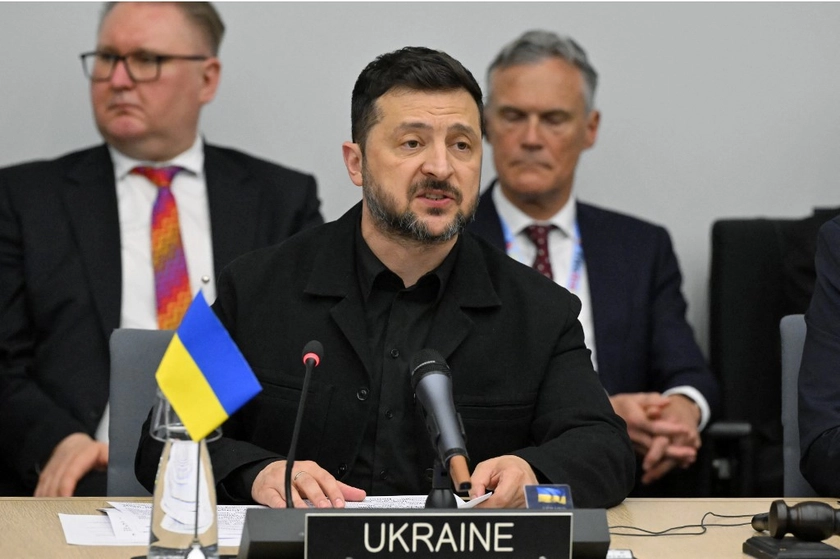
Russia is now using 20 to 25 drones in a single attack on Ukrainian energy facilities, while the overall number of strikes on the country’s power infrastructure has risen 36% compared with the first half of last year, Ukrenergo Board Chairman Vitaliy Zaichenko said.
Speaking at the Decentralized Generation in Ukraine 2.0 forum, Zaichenko said Russian tactics have evolved significantly since the start of the full-scale invasion.
JOIN US ON TELEGRAM
Follow our coverage of the war on the @Kyivpost_official.
“At the beginning of the war, Russia used three to four drones per energy facility. Today, that number has increased to 20-25,” he said, according to Ukrinform.
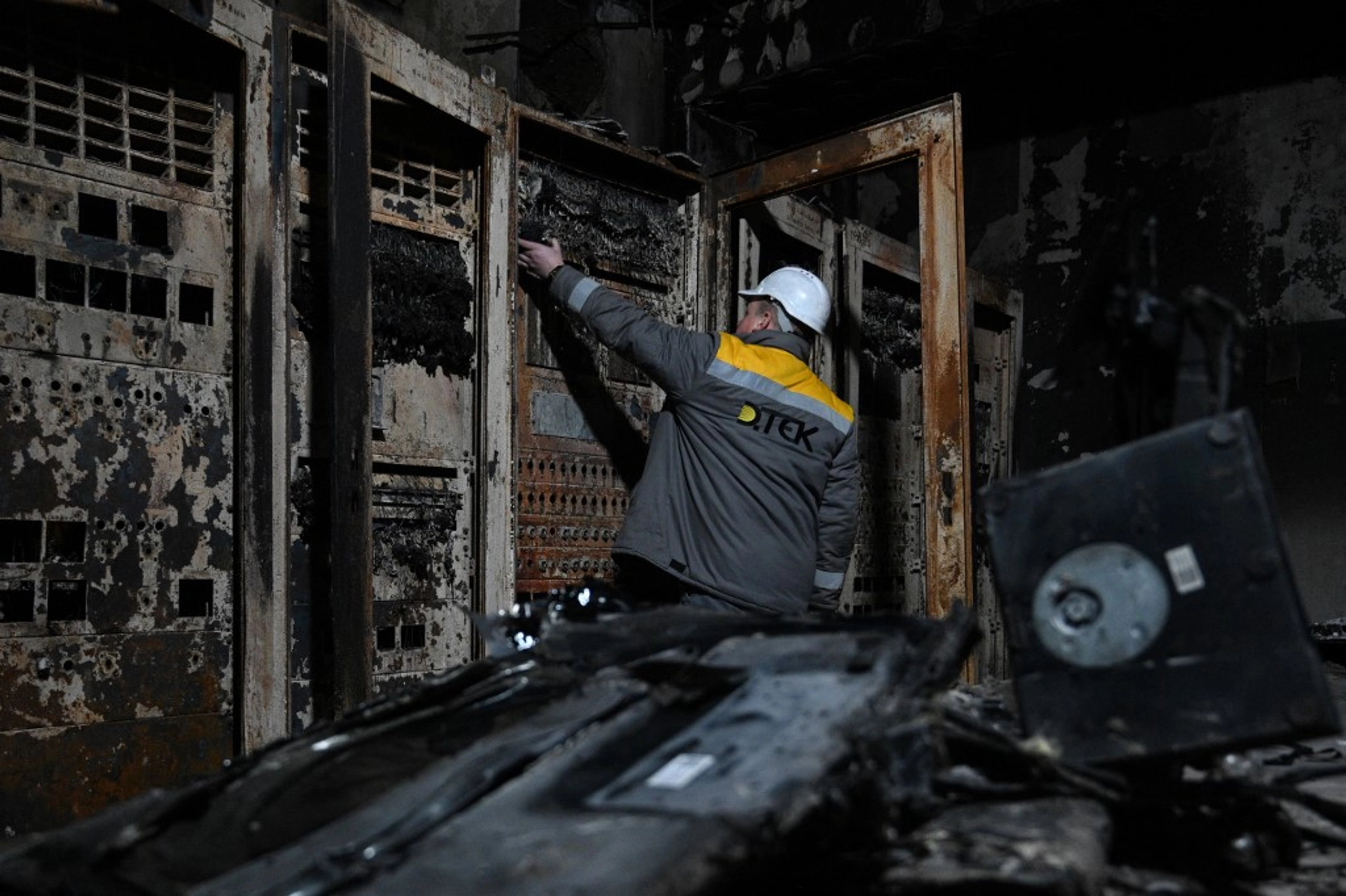
Zaichenko added that Russian forces now carry out coordinated attacks aimed at simultaneously damaging electricity generation and transmission infrastructure.
He said Ukrenergo’s direct losses have already approached Hr. 90 billion (about $2 billion).
“The number of outages is increasing, especially this year – by 36% compared with the first half of last year,” Zaichenko said.
Ukraine has already lost about 50% of its electricity generation capacity, with flexible generation suffering the heaviest damage.
Zaichenko added that Russian attacks and the resulting emergency power restrictions have cost Ukrenergo about Hr. 4 billion (roughly $96 million) in lost revenue.
“Between January and April this year, forced power restrictions reduced actual electricity consumption by approximately 6.5 billion kilowatt-hours. That is equivalent to about 1,135 days of average electricity consumption for a city the size of Kyiv,” he said.

OSCE Expert Report: Russians Systematically Indoctrinate, Militarize Ukrainian Children
According to Zaichenko, the resulting revenue shortfall has forced Ukrenergo to review its electricity transmission and dispatch tariffs.
He said Ukraine’s energy system also faces growing regional demand, the need to integrate renewable energy sources and the challenge of maintaining grid stability under continued Russian attacks.
“Developing new generating capacity is not only an economic issue but also a matter of national energy security,” he said.
Power outages
Zaichenko also outlined the scale of power outages caused by Russian strikes.
On average, 6.1 million metering points were without electricity during major attacks in January, 6.5 million in February, and 3.8 million in March.
However, “the actual number of people left without electricity was even higher,” he said.
According to Zaichenko, the largest blackout occurred on Feb. 8, when more than 12 million consumers were simultaneously without power.
In late March, Energy Minister Denys Shmyhal said Ukraine will need $91 billion to rebuild its energy sector over the next decade, citing World Bank estimates.
He called for greater private investment in battery energy storage systems (BESS), renewable energy, gas-fired generation, local power grids, gas production, and oil and gas infrastructure.
The World Bank first published the estimate on Feb. 23, identifying energy as Ukraine’s second-costliest sector to rebuild, behind transport, which will require an estimated $96 billion.
A joint assessment by the Ukrainian government, the World Bank Group, the European Commission, and the UN, estimated Ukraine’s overall reconstruction needs at $587.7 billion over the next decade, based on damage recorded through Dec. 31, 2025.
The assessment does not include the extensive damage inflicted during Russia’s attacks on Ukraine’s energy system in early 2026, which triggered widespread blackouts lasting more than 48 hours during periods of subzero temperatures.
Systematic attacks on Ukraine’s energy grid
Since launching its full-scale invasion in 2022, Russia has repeatedly targeted Ukraine’s energy infrastructure, intensifying attacks during the summer of 2024 and the winter of 2025-26.
Initially focused on transmission networks and gas infrastructure, the strikes later expanded to power generation facilities across the country.
By the summer of 2024, Kyiv Post estimated Ukraine had lost nearly 27 gigawatts of its pre-war 36 GW generating capacity after power plants were destroyed or occupied. Officials at the time estimated reconstruction costs at roughly $1 billion per gigawatt.
Although Ukraine restored part of its capacity, Russia resumed large-scale strikes between September 2025 and early March 2026, targeting thermal power plants supplying heat and electricity to Kyiv and contributing to a winter heating crisis.
Ukraine has since sought to strengthen the grid by decentralizing electricity generation, expanding smaller power plants, and deploying battery storage systems.
The future of the Russian-occupied Zaporizhzhia Nuclear Power Plant, which before the invasion generated nearly 6 GW of electricity, remains one of the biggest uncertainties for Ukraine’s long-term energy recovery.
You can also highlight the text and press Ctrl + Enter