EU defence procurement shouldn’t be focused on a single European system but rather on fostering development across various competing programmes to boost innovation, Carsten Stawitzki, the head of the armaments department of Germany’s defence ministry, told Euractiv.
In an interview ahead of the launch of a dedicated Brussels bureau for the Federal Office of Bundeswehr Equipment, Information Technology and In-Service Support, or BAAINBw for short, Stawitzki argued that the EU’s drive to create a single European defence market risks stifling technological competition by encouraging joint procurement over the development of rival systems.
JOIN US ON TELEGRAM
Follow our coverage of the war on the @Kyivpost_official.
“In my view, there is a fundamental realisation that has not yet sunk in in Brussels,” said Stawitzki. “We must move away from competition based on public procurement law – which leads to the harmonisation of the European defence market – towards technological competition, in order to secure the best products for our security and defence.”
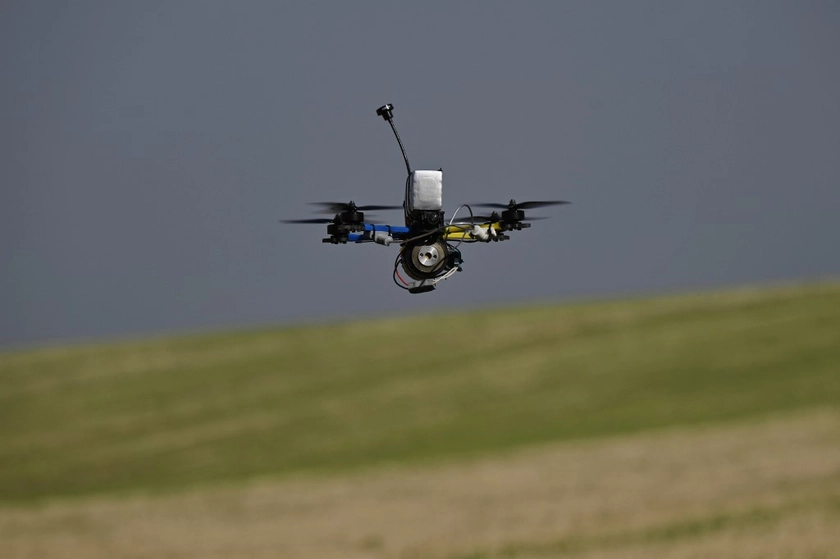
He said that Europe should invest in competing technologies to produce the best military equipment, pointing to Ukraine’s wartime procurement model as an example.
The new BAAINBw office in Brussels expected to launch as early as September or October with an eventual team of 25 to 30 people, Stawitzki said. It will allow German officials to engage directly with the European Commission and other EU institutions.
EU Blacklists Russian Hackers and Firms Over Cyberattacks on Europe and Ukraine
One is not always better
The EU has geared recent defence regulations towards the creation of a single European defence market to improve interoperability and reduce costs by cutting the number of national defence systems.
But this will force competitors into joint ventures to develop a joint product, Stawitzki argued. “If I want technological competition in order to get the best product, I must be prepared to invest the necessary funds and develop two or three products, at least as prototypes, up to a certain point.”
The Brussels office aims to bridge that fundamental ideological difference.
“If we can sit down directly in Brussels with those who are actually able to amend the regulations, then we’ll make significant progress,” Stawitzki said. It would enable the Germans to provide input to the Commission and others, “rather than saying afterwards, ‘You meant well there in Brussels, but we simply can’t make it work.’”
“This branch office in Brussels is not only geared towards the EU institutions; for me, it is also very much an outpost aimed at industrial partners, specifically to carry out market analysis,” Stawitzki also said.
If you want to go fast, go alone
Germany has been criticised by some European partners as it re-arms, primarily for going solo and overwhelmingly benefiting domestic players or non-EU companies. That’s despite Defence Commissioner Andrius Kubilius insisting that EU-wide joint procurement could save up to 30% in costs.
Stawitzki defended the approach, saying Germany’s defence procurement is driven by the need to prepare the country to deter a potential Russian attack by 2029, leaving little time for lengthy multinational programmes.
“Everything to do with 2029 is driven above all by the motto ‘if you want to go fast, go alone’,” he said.
Where Stawitzki does agree with Kubilius is on the need not to seek the perfect, often costly, solution. Berlin has, as such, instructed its procurement agency to prioritise rapid delivery over bespoke requirements.
“In 2022, we told our procurement department that speed comes first, then costs, and that’s why you need to scale back your demands – forget about haute couture and the gold-plated solution – because ‘good enough’ is sufficient,” he said.
According to Stawitzki, Berlin is still keen to include its partners, as compatible or even identical equipment across allies on the battlefield would be the preferred outcome.
“Whenever I’m currently starting an arms project, I first look within Europe to see if there’s a partner who already has a comparable product that meets the requirements,” he said.
He argued though that most European nations are currently “focusing on national rather than joint armament” and that multinational programmes are often slowed by negotiations over industrial work-share and participation rules.
“Then things start to get so complex that I find myself saying in a procurement agency: ‘Well, before I’ve worked all this through, I’ll go alone, because I have to go fast.’ Instead of: ‘I’d like to go far, and I’d like to go together.’ After all, that is ultimately what we actually want to achieve,” he said.
Deregulation not enough
Stawitzki did welcome recent EU efforts to slash red tape for defence companies but said they did not go far enough, arguing these efforts “can be summed up as follows: we are regulating deregulation”.
The European Commission has already proposed higher thresholds for defence contracts to be exempt from public procurement rules and is expected to present a broader overhaul of EU defence procurement legislation later this year – just in time for the opening of the new German office.
“I would actually have been more pleased if we’d had the courage to impose a moratorium for two to three years, temporarily suspending certain regulations,” Stawitzki said, arguing that such a pause would allow Europe’s defence industry and procurement authorities to accelerate rearmament.
See the original here.
You can also highlight the text and press Ctrl + Enter

ANALYSIS: Ukraine’s Hidden Defense Advantage