The EU introduced sanctions on Friday, July 17, against five companies comprising the Russian military-industrial group ABS Electro and its leadership, aiming to restrict the production of navigation modules used in drones and ballistic missiles.
Vladyslav Vlasiuk, Ukraine’s presidential commissioner for sanctions policy, said in a comment to Kyiv Post that the new restrictions target the entire corporate structure responsible for the development, production, management, and financing of the “Kometa” navigation module.
JOIN US ON TELEGRAM
Follow our coverage of the war on the @Kyivpost_official.
The module is utilized in “Shahed” and “Geran” drones, as well as Iskander-M ballistic missiles, increasing their resistance to electronic warfare systems.
Vlasiuk stated that sanctioning the complete production chain is the most effective approach, as it complicates attempts to bypass restrictions through changes in ownership structure, production redistribution, or the use of affiliated companies.
The sanctions list includes ABS Electro enterprises that coordinate activities, manage assets, and develop electronic components. The EU also sanctioned Iryna Kharisova, chair of the board of directors of ABS Electro and director of several participating enterprises. Vlasiuk noted that this approach increases the personal responsibility of enterprise managers involved in weapons production.
The restrictions also target JSC ABS ZEiM Automation. In addition to its role within ABS Electro, the company supplies automated control systems for refining, storage, and transport facilities of Russian oil and gas companies, generating financial revenue for the Russian government.
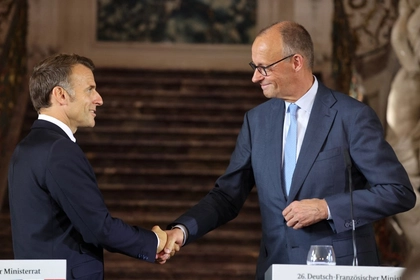
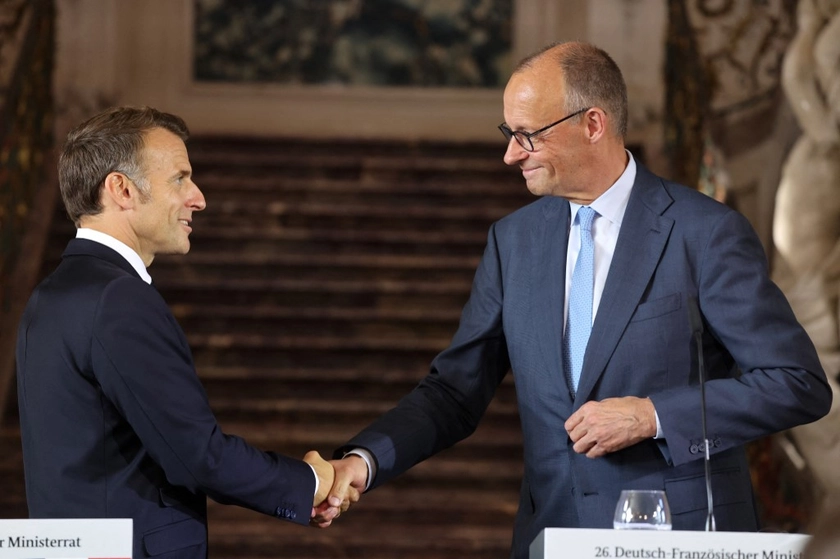
Germany and France Sign Agreement on Defense Cooperation and Nuclear Deterrence
EU imposed sanctions on Russia in response to the attacks on Kyiv
According to the EU Council, the sanctions were introduced in response to Russian strikes on Kyiv and civilian infrastructure on July 1 and July 5.
Ukraine previously included all the sanctioned physical and legal entities in its own sanctions package on March 14, 2026.
Vlasiuk emphasized that synchronizing decisions among the sanctions coalition limits Russia’s ability to maintain the production of critical weapon components.
You can also highlight the text and press Ctrl + Enter

OPINION: The Bill for Crimea Comes Due for Putin