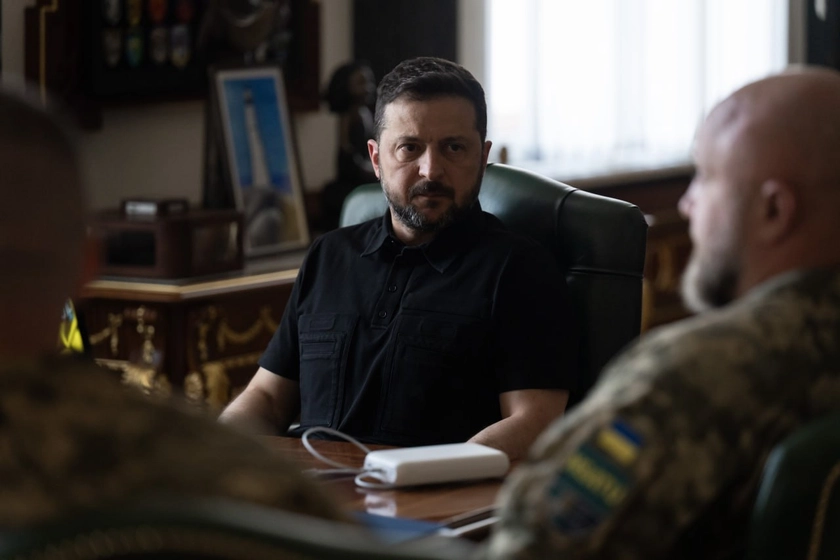
President Volodymyr Zelensky triggered anxiety among Ukrainians and allies after firing tech guru Mykhailo Federov as defense minister after only six months in the job because he was butting heads with the Commander-in-Chief of the Armed Forces, Oleksandr Syrsky.
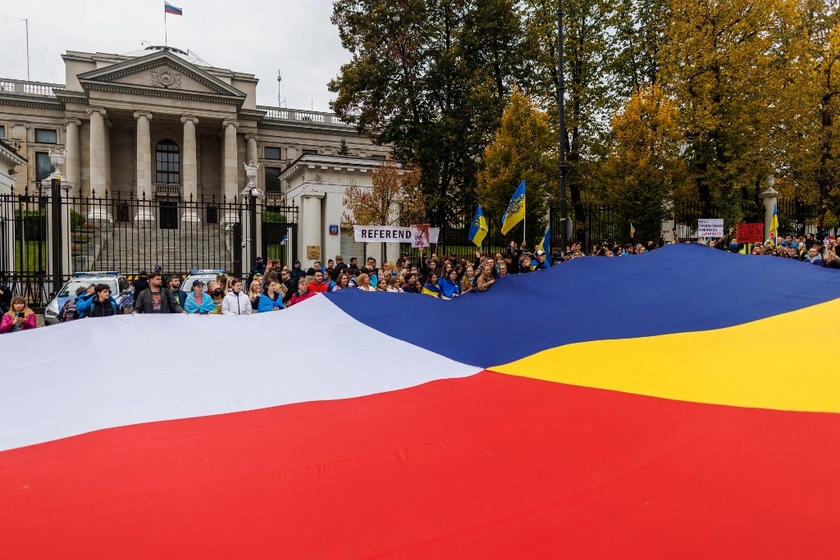
Zelensky also dismissed the country’s Prime Minister, dissolved her cabinet, and may fire General Syrsky too, after Federov claimed he enabled corruption. Protesters hit the streets of Kyiv in support of Federov, and Russian propagandists, led by “milbloggers,” announced that Federov’s departure would cripple Ukraine on the battlefield. But such predictions are wrong.
JOIN US ON TELEGRAM
Follow our coverage of the war on the @Kyivpost_official.
Zelensky has reshuffled his government four times since Russia’s 2022 invasion, still fends off Russia, and will replace Federov with arguably a more experienced drone and military guru, Yevhenii Khmara. Ukraine will remain the world’s foremost drone nation. As CIA director John Ratcliffe recently noted: “Ukrainian artificial-intelligence-guided drones have reduced the average battlefield survival time of new Russian recruits to 20 or 30 minutes.”
The slaughter is so fierce that Russian recruiters are being kicked out of poor countries, Bloomberg reported. For instance, Botswana’s government has raised the alarm over the escalating “alarming rate” of its citizens being tricked into traveling to Russia under pretenses – such as fake job or military training offers – only to be coerced and trafficked into active combat on the front lines of the Ukraine war, where they are mostly incinerated.
Russia Struggles to Staff New Drone Force as Military Recruitment Falters – Report
Zelensky’s new defense minister is Yevhenii Khmara, a counterterrorism and drone/tech expert, has been leading the attacks inside Russia and orchestrated the incredible “Operation Spiderweb” in 2025. His black ops teams hid 117 powerful drones and transported them in containers to remote Russian bases. Simultaneously, lids were opened remotely, and swarms of drones destroyed critical aircraft, worth $7 billion. It was inventive, masterful, and effective.
Khmara is a security service officer who has spent 90% of his time during the war at or behind the front line. Military expert Ivan Stupak stated: “He knows how to cross, go in, carry out operations in the occupied territories, and return; he knows how drone units operate.” Even so, the Kyiv Independent strongly opposed the removal of Federov. “By sacking him, Zelensky risks turning the tide of war back in Russia’s favor. In what could prove to be his most harmful decision of the war in recent years, President Volodymyr Zelensky has just chosen to dismiss the man who has been the driving force of this change in fortunes. After months of conflict between Fedorov and Commander-in-Chief of the Armed Forces Oleksandr Syrskyi – who espouses a contrasting strategic worldview and leadership culture – Zelensky has sided with Syrskyi. The decision bears all the hallmarks of Zelensky’s tendency to dismiss top officials and commanders who get too popular, ahead of hypothetical elections that will never happen if Russia overwhelms Ukraine.”
Clearly, Zelensky could not allow a battle to continue between his two senior defense officials and decided he had to replace Federov and chose Khmara because he has tech expertise and support. Oleh Rybachuk, head of the Center for Joint Action, a think tank, listed his combat credentials – special forces, drone technology, and new warfare. “He is not a political hack; he is principled, he is pro-Ukrainian, he created the special forces unit, Alfa,” he told RFE/RL’s Ukrainian Service. Former minister and economist Tymofiy Mylovanov said there will be no slippage technologically, adding that “this is completely overblown when people say, oh, Federov is gone, so defense tech is gone. That’s not true. The appointment of Khmara shows that defense tech is a priority.”
However, just days later, on July 18, Zelensky began backing off and acknowledged the demonstrations supporting Fedorov. “Yesterday and today there were many consultations. Of course, I hear what people are saying,” the President stated. He spoke with both Fedorov and Syrsky and said “decisions regarding the army will be worked out,” without providing further specifics. Fedorov also commented on the situation in response to the protests. In a social media post, he confirmed that “there is a dialogue” and stated that “changes will definitely happen.” He thanked his supporters and expressed gratitude to the military and veterans for holding the front line. Syrsky issued a response thanking Fedorov for his work and urging unity, without directly addressing the allegations.
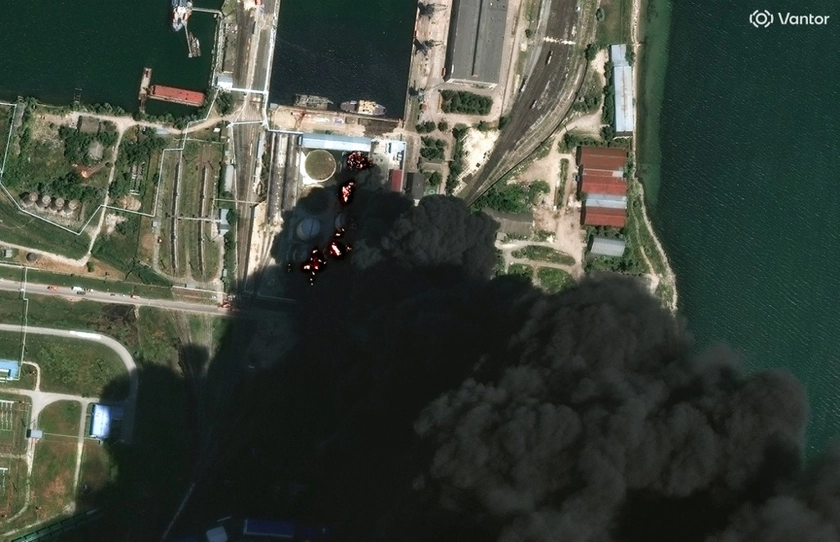
Clashes in war rooms are not unusual, nor is public adulation of military leaders during war. So the backlash following Fedorov’s firing was hardly surprising. The same reaction occurred after Zelensky removed General Valerii Zaluzhny in 2024, who is now serving as Ukraine’s Ambassador in the UK. Fortunately, such political battles haven’t impeded Ukraine’s military. In recent weeks, Kyiv took the war to Russia, and its 40-day campaign against Russia, which began in late June, has demolished logistics centers, oil refineries, and military facilities across Russia. Nearly half of its energy facilities and exports have been destroyed, damaging Putin’s war effort and shrinking his war chest.
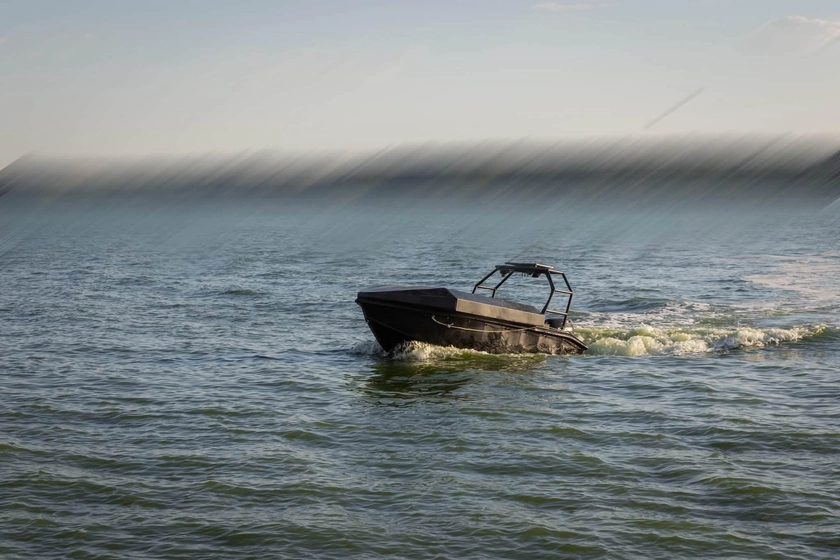
There are now hundreds of drone attacks daily deep inside Russia, leading to fuel shortages, export bans, and rationing across Russia. Putin’s beloved Crimea is under siege, thanks to drones, and the nearby Sea of Azov has been virtually cleared of all Russian oil tankers. In April, Ukraine also launched a “middle-strike” campaign targeting bridges, railways, fuel depots, and highways in southern Ukraine and Crimea that supply Russian forces. Claims are that this campaign has crippled the enemy and that, when combined with the deep attacks inside Russia, there have been drone attacks against one million Russian targets (including 200,000 troops) since January.
Atop it all, the recent death of pro-Ukraine Senator Lindsey Graham will hurt Russia if Congress and the President expedite his sanctions bill on all of Russia’s oil and gas clients. It will impose 100% sanctions on the world’s top five buyers of Russian crude oil and natural gas, notably China and India. Allies will be partially exempt, but only if they are taking drastic steps to reduce their dependence on Russia. In addition, Ukraine’s incredible drone “revolution” has impressed US intelligence and caused a shift in rhetoric by President Donald Trump, leading to his permission to allow Ukraine to produce Patriots to counteract Russian ballistic missile attacks on its civilians, wrote Kyiv Post.
Trump’s Patriot announcement at the recent NATO summit in Ankara, Turkey, has been met with disdain by some who claim that Ukraine won’t be able to make Patriots for years, as has been the case with Germany and Japan. But the reality is that nobody dreamed that a struggling country like Ukraine, without an army, navy, or air force, could reinvent warfare and engineer incredible technologies that have halted and will eventually defeat Russia’s gigantic military. This is a democratic nation with a staggering collective IQ that has overcome all odds and will continue to do so. Thus, when Zelensky stated recently that Ukrainians will produce Patriots by the end of 2026, that’s a promise that can be taken to the bank.
Reproduced with permission. Read the original version of this article here.
The views expressed in this opinion article are the author’s and not necessarily those of Kyiv Post.
You can also highlight the text and press Ctrl + Enter

OPINION: The Bill for Crimea Comes Due for Putin