The issue of easing employment regulations for foreign nationals seeking to work for Ukrainian companies, including state-owned enterprises, has been actively discussed in recent months. Kyrylo Budanov has emphasized that such measures could help businesses partially address the country’s growing workforce shortage.
Over the past few years, Ukraine’s defense industry has achieved what once seemed impossible. Back in 2022, it was difficult to imagine that Ukraine would be home to dozens of new defense manufacturers, thousands of engineers, and hundreds of new technological solutions. Today, Ukraine has become one of the world’s leading hubs of military innovation. Production rates of unmanned systems, electronic warfare (EW) systems, signals intelligence (SIGINT) capabilities, and other defense technologies is now measured not in individual units – or even hundreds – but in thousands and hundreds of thousands every month.
JOIN US ON TELEGRAM
Follow our coverage of the war on the @Kyivpost_official.
At the same time, another message is increasingly coming from the military: There is more technology, but not enough people. In reality, this challenge extends far beyond the front line. It affects the entire defense ecosystem – from combat units to manufacturing facilities.
This is precisely why Ukraine is being forced to consider attracting foreign nationals, including for military service. According to data released in the spring of 2026, up to 20,000 foreign volunteers from more than a dozen countries are already serving in the Armed Forces of Ukraine (AFU). That represents approximately 2% of the country’s total military personnel.
Poland Reports Massive Drop in Irregular Border Crossings from Belarus
Some may consider this a significant figure. I see it differently.
If we are talking about a war whose outcome will determine not only Ukraine’s future but also the security of Europe as a whole, then having just 2% of foreign nationals serving in Ukraine’s defense forces is the beginning of the conversation – not its conclusion.
At the same time, workforce shortages are becoming an increasingly pressing issue not only for the military but also for Ukraine’s defense industry. The sector continues to operate under significant staffing constraints. These shortages existed even before Russia’s full-scale invasion, although demand for qualified personnel has grown dramatically since then. As a result, some positions have become critically difficult to fill.
For years, Ukrainian defense companies have competed for highly qualified specialists with foreign employers and the IT sector – first with Russian companies, and later with European ones. The war did not create this problem. It simply made it impossible to ignore.
While discussions about foreign nationals serving in Ukraine’s defense forces are becoming increasingly common, almost no one talks about foreign professionals working in Ukraine’s defense industry. If you asked me whether foreign nationals are involved in weapons manufacturing in Ukraine, my answer would be virtually no. They account for roughly 0.1% of the workforce.
For example, during BlueBird Tech’s three years of operation, only two foreign candidates have ever approached the company – and neither had an engineering background.
War requires people beyond the front line
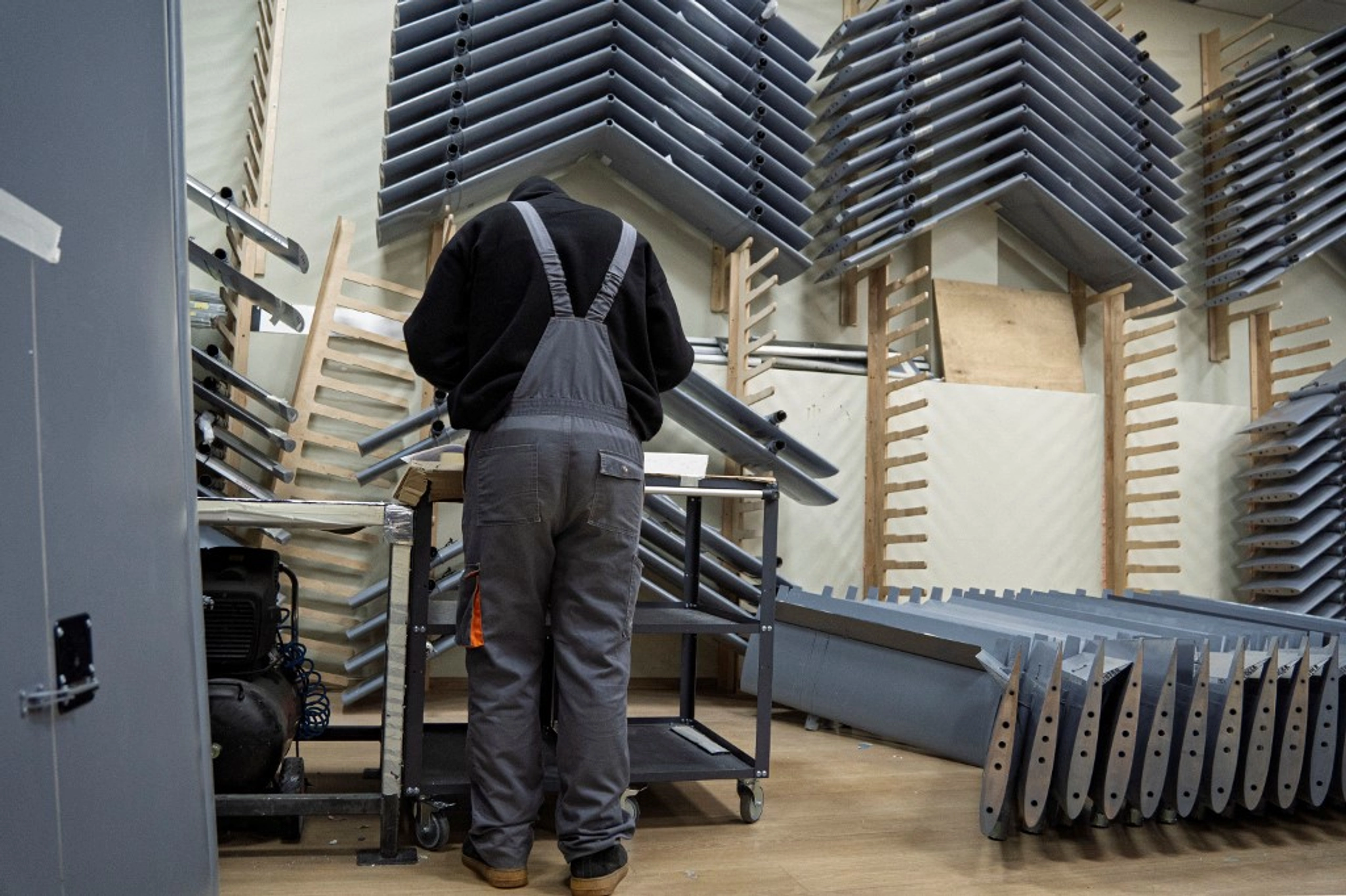
Modern warfare requires specialists not only on the battlefield. There is an urgent need for engineers, designers, software developers, test engineers, equipment operators, logisticians, and dozens of other professionals without whom drones, electronic warfare (EW) systems, drone detectors, and other technologies that save soldiers’ lives every day would never reach the front line.
Over four years of full-scale war, Ukraine’s defense industry has undergone a fundamental transformation. In 2022, the country relied largely on nationwide mobilization and the volunteer movement. Today, however, we see a mature defense industrial base comprising hundreds of companies, established manufacturing supply chains, global ambitions, and growing competition for engineering talent.
At the beginning of the invasion, there were more volunteers than opportunities. People wanted to contribute, support the military, and influence the course of the war. That collective energy became one of the foundations upon which Ukraine’s modern defense technology sector was built.
Today, the situation has changed. Defense companies can no longer rely on enthusiasm alone. The industry has become increasingly professionalized, production has expanded many times over, and expectations for employees have risen accordingly. At the same time, the defense sector remains one of the few industries where people are motivated not only by competitive salaries, but also by the knowledge that their work directly contributes to the country’s future.
Increasingly, we see people choosing not between a defense company and the civilian economy, but between a defense company and military service. A few years ago, such a choice seemed unlikely. Today, it has become a reality. The AFU has become far more technologically advanced, specialized units have emerged, and people can consciously choose their area of service. As a result, the defense industry and the military are effectively competing for the same pool of highly motivated professionals.
Does this mean that Ukraine’s defense industry is experiencing a catastrophic labor shortage? In my opinion, no.
There are enough people overall. What we lack are specific specialists – above all, engineers. Moreover, the more sophisticated the technology becomes, the more acute the shortage grows. While it is still possible to recruit assemblers, production technicians, or soldering specialists – roles that are undoubtedly essential – it is far more difficult to find engineers with highly specialized expertise in advanced electronics, radio-frequency technologies, or specific areas of software engineering.
At the same time, it is important to understand that even finding the right specialist does not solve the problem overnight. Every new employee must be trained or retrained, guided through multiple practical iterations, and given time to build experience. In high-tech manufacturing, this process takes months.
This is precisely why workforce shortages directly constrain production capacity. No manufacturing operation can function without people. Fully automated factories do exist around the world. However, Ukraine’s defense industry today consists primarily of flexible, distributed manufacturing facilities capable of adapting rapidly to the evolving demands of war. And at the center of these production systems remains the human being.
The more production lines are launched, and the more new technologies are developed, the more qualified specialists are required to create them. Consequently, talent acquisition is gradually becoming one of the decisive factors in the future growth of Ukraine’s defense industry.
Sooner or later, Ukraine will have to look for answers not only within its own borders but beyond them as well. Today, companies are no longer competing only with one another – they are competing with the entire world for talent. And if we want to maintain the pace of innovation in defense technologies, we must begin thinking now about how to attract the best specialists, regardless of where they were born.
How foreign specialists can help solve the talent shortage
Every manufacturing operation ultimately depends on people. You can purchase equipment, secure funding, build production facilities, or open new offices. But if there is no one to operate them, all that hardware becomes meaningless.
Every specialist is more than just another employee. Each one directly translates into more products reaching the front line. That is why, in my view, attracting foreign talent is not simply an option – it is a strategic necessity.
The world has long understood a simple truth: Talent must be competed for. One of the best examples is the US. For decades, it has built its competitive advantage not only on domestic resources but also on its ability to attract the world’s brightest minds – engineers, scientists, physicians, entrepreneurs, and software developers.
Ukraine must begin thinking the same way. This is not about bringing in migrants for the sake of numbers. It is about attracting highly qualified professionals who can contribute new knowledge, fresh perspectives, and valuable experience.
For the defense industry, the highest priority is engineers and specialists in electronics, radio-frequency technologies, telecommunications, software engineering, mechanical engineering, and industrial automation. These are professionals with relevant education and experience working on complex technological projects – people who can not only develop new solutions but also transfer their expertise to Ukrainian teams.
At BlueBird Tech, we are already working to attract such specialists to our R&D centers abroad. The company already has a presence in the US and is currently expanding into the EU. Our primary objective is to bring together Ukrainian engineers who have relocated abroad, but attracting international specialists is equally important.
The greatest value, however, is not simply filling an individual vacancy. It is the transfer of knowledge. A single world-class engineer can mentor dozens of Ukrainian colleagues, and that expertise will remain in the country long after a specific project has been completed.
I firmly believe that foreign specialists should never be viewed as replacements for Ukrainian professionals. On the contrary, they can become catalysts for the development of Ukraine’s own engineering talent.
Another important question is whether foreign professionals are willing to work with Ukraine during wartime. My experience suggests that they are.
Engineers around the world want to work where technological breakthroughs are happening. Salary is important, but for many, the opportunity to contribute to technologies that are changing the world is equally motivating.
That is exactly what is happening in Ukraine today. In the field of defense technology, we have become one of the world’s leading centers of innovation. Solutions developed here are being studied by military organizations, defense manufacturers, and researchers across the globe. For many international specialists, this represents a unique opportunity to contribute to developments that will shape the future of defense technology for years to come.
For this reason, I do not believe that war automatically makes Ukraine unattractive to talented professionals. Quite the opposite. If we can present the right value proposition and establish transparent mechanisms and meaningful opportunities for professional growth, Ukraine can become a destination where top specialists choose to work – even during turbulent times.
Ultimately, the real question is not whether Ukraine needs foreign specialists. The question is whether we are prepared to compete with the rest of the world for them. Today, the global competition for talent is just as important as the competition for investment or technology. And the countries that succeed in attracting the best people will gain far greater opportunities for long-term development.
There are countless examples.
Google built a significant portion of its engineering workforce by recruiting immigrants and professionals from around the world. In its US operations, nearly half of the company’s employees were born outside the US. This global talent pool became one of the key factors that enabled Google to scale its search engine, cloud services, and, ultimately, its artificial intelligence capabilities.
Microsoft has followed a similar strategy. For decades, the company has built its R&D teams as multinational organizations, recruiting engineers from India, Europe, China, and many other regions. Many of its flagship products – including the Azure cloud platform – were developed in multicultural engineering environments that combined diverse technical schools and approaches.
Tesla provides another compelling example. International talent has been instrumental to the company’s rapid growth. Engineers from Europe, Asia, and other regions contributed to battery technologies, manufacturing processes, and autonomous driving systems, enabling Tesla to scale electric vehicle production at extraordinary speed.
Google, Microsoft, and Tesla are far from unique. Hundreds of the world’s most successful companies have built their competitive advantage by attracting the best talent from across the globe.
How this could work in practice
Whenever the idea of attracting foreign professionals to Ukraine’s defense industry is raised, it is usually met with a series of questions. Where would they work? How would security be ensured? Would Ukrainians lose their jobs? Would the working environment be welcoming? And would the language barrier become another obstacle?
In my view, the answers to most of these questions are much simpler than they may seem.
First, attracting foreign specialists does not necessarily mean relocating them to Ukraine. The defense industry has long operated in an international environment. Some specialists can work remotely, while others can be based at research and engineering centers abroad that are managed by Ukrainian companies.
Many Ukrainian defense technology companies are already moving in this direction. Under this model, specialists contribute to individual projects or specific areas of development while remaining fully integrated into the overall product development process.
This approach addresses two challenges simultaneously: It provides access to international expertise while reducing security risks. Security is indeed one of the key concerns for the defense industry. However, I believe its importance is sometimes overstated when discussing foreign specialists.
In reality, the risk of information leakage always exists, regardless of a person’s nationality. Any employee – Ukrainian or foreign – can violate security protocols or act in the interests of a third party. That is why modern defense companies do not build their security around a simple distinction between “insiders” and “outsiders.” Instead, they rely on robust information access control systems.
The more complex a project becomes, the more it is divided into separate components. Each employee is granted access only to the information required to perform their specific responsibilities. This is how major technology companies around the world operate, and it is precisely this approach that enables organizations to scale their teams without creating unacceptable security risks.
Moreover, employing foreign specialists does not automatically grant them access to the most sensitive technologies. Some work can be carried out outside Ukraine, some can be performed within dedicated research projects, and some may focus exclusively on dual-use technologies with applications beyond the defense sector.
Another common concern is whether Ukrainians would lose their jobs. I am convinced they would not.
Ukraine is currently facing a situation where workforce shortages are limiting the growth of entire industries. This is not a competition for a limited number of jobs. There is a shortage of qualified people needed to deliver projects that already exist.
Within this model, a foreign specialist does not replace a Ukrainian employee. On the contrary, they help create new products, launch additional production lines, scale businesses, and ultimately create more employment opportunities for Ukrainian professionals.
This is exactly how the world’s most successful economies operate. Australia, Canada, Germany, the UK, and the US have spent decades attracting talent from abroad – not because they lack their own citizens, but because competing for the world’s best specialists has become a fundamental element of their long-term economic strategy.
For Ukraine, this issue will become increasingly important, particularly in light of the demographic losses caused by the war and the large-scale migration of recent years.
Another argument frequently raised concerns the language barrier. In my opinion, however, the problem does not lie with foreign specialists.
The global technology industry operates in English. Scientific research, technical documentation, international conferences, and professional communities have long adopted English as their common language. If Ukraine wants to remain part of the global technology ecosystem, we must be able to operate confidently in that environment.
That is why English proficiency should no longer be viewed as an advantage – it has become a fundamental professional skill for the future development of Ukraine’s defense industry.
Most importantly, however, attracting foreign talent requires clear and transparent employment regulations, straightforward residency procedures, competitive and predictable tax policies that do not discourage highly qualified professionals, and an openness to international cooperation.
Global experience demonstrates a simple principle: Countries that succeed in attracting talented people develop faster. Those who isolate themselves from the rest of the world inevitably fall behind in the competition for the future. For Ukraine, the choice between these two paths will be one of the defining strategic decisions of the coming years.
What foreign specialists can offer Ukraine
At first glance, the answer seems straightforward: more people mean greater production capacity. More engineers, technicians, and skilled professionals mean more drones, communication systems, electronic warfare (EW) capabilities, and other defense technologies reaching the front line every day.
However, the real multiplier effect of attracting foreign specialists extends far beyond increasing manufacturing output. It is not merely about quantity – it is about improving the quality and long-term development of the entire defense ecosystem.
Today, Ukraine receives financial and technological support from its international partners largely because it has demonstrated openness to cooperation and the ability to integrate into global innovation networks. In other words, the world is investing not only in Ukraine as a country, but in Ukraine as an open technology platform capable of collaborating with the international community.
In this context, attracting foreign specialists is not simply a workforce policy – it is a strategic signal. It demonstrates that Ukraine is not isolating itself from the world. On the contrary, it is becoming an integral part of the global market for technology, knowledge, and talent.
That openness can also influence international investment. Investors evaluate far more than financial performance or market potential. They look at whether a country can integrate external expertise, build multinational teams, and scale innovation beyond its domestic market.
If Ukraine succeeds in building such an ecosystem, it will significantly strengthen its position as an international technology hub.
It is also important to recognize that foreign specialists are not merely additional employees. They bring experience, engineering methodologies, management practices, and quality standards developed in other markets. Most importantly, they can serve as a bridge between Ukraine and the global technology ecosystem.
In the long term, this could become one of the key factors enabling Ukraine to establish itself as an international center for defense innovation. Achieving that goal, however, requires more than simply recruiting talented people. It requires a broader vision of how Ukraine engages with the world.
The conversation should shift from asking only “What can Ukraine gain?” to asking “What can Ukraine contribute to international partnerships?” Because successful international cooperation is always a two-way exchange.
Under such a model, Ukraine stands to gain far more than it could achieve on its own. This is the fundamental principle of partnership: one plus one equals more than two.
The views expressed in this opinion article are the author’s and not necessarily those of Kyiv Post.
The views expressed in this opinion article are the author’s and not necessarily those of Kyiv Post.
You can also highlight the text and press Ctrl + Enter
OPINION: The Bill for Crimea Comes Due for Putin