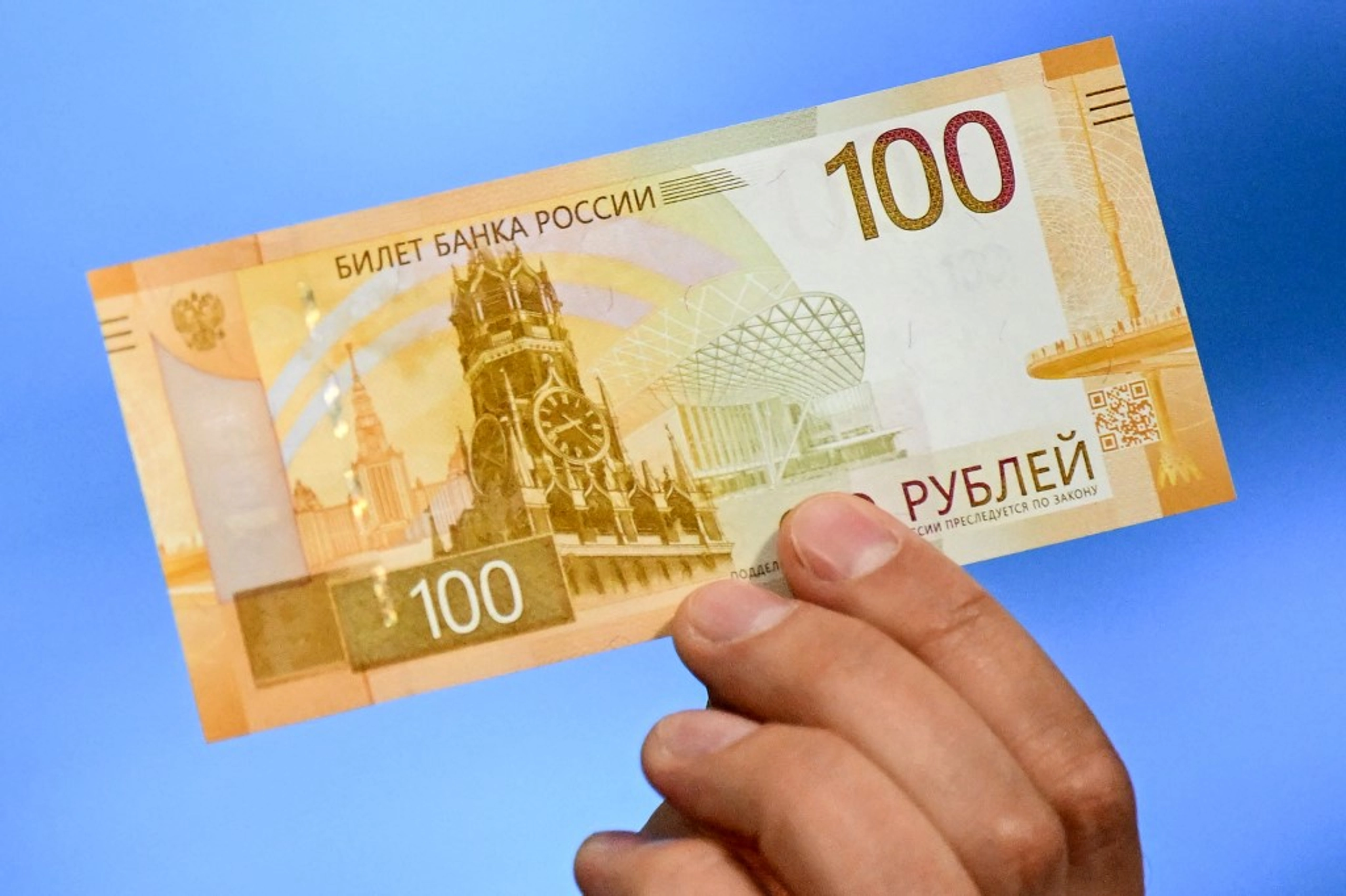
Cash in circulation rose by 513 billion rubles (€5.75 billion) in the first half of July, after increasing by 479 billion rubles (€5.37 billion) in June, according to data from the Central Bank of Russia. Since the start of February, the total has climbed by more than 2.4 trillion rubles (€26.9 billion).
The spike comes amid a wave of Ukrainian drone attacks that have repeatedly prompted the Kremlin to shut down mobile internet across large parts of the country, leaving many people unable to pay by card. Moscow says the outages are intended to help counter the strikes.
JOIN US ON TELEGRAM
Follow our coverage of the war on the @Kyivpost_official.
It also comes as economic pessimism reaches its highest level in two decades. A recent Gallup survey found that 60% of Russians believed local economic conditions were worsening, while 56% said living standards were declining.
Bank borrowing surges
Economists say persistent inflation, rising taxes and tighter government oversight of financial transactions have added to the uncertainty and encouraged some Russians to move money outside the banking system.
“In essence, the country has reached an imbalance between money returning to banks and money being withdrawn by the public,” economist Igor Lipsits told The Moscow Times.
The flight into cash has left banks short of ruble liquidity, forcing the Central Bank of Russia to sharply increase lending to the sector.

Russia Approves State-Funded IVF for Widows as Birth Rates Hit Historic Low
Over the first three weeks of July, the central bank provided lenders with an additional 2.099 trillion rubles (€23.5 billion) through repo operations, bringing their total debt to the regulator to 6.243 trillion rubles (€70.0 billion), nearly double the level at the end of last year.
“The Bank of Russia is trying to treat the liquidity problem by refinancing the banking system, primarily the largest banks,” economist Alexander Abramov told The Moscow Times.
‘Significant problems’
Abramov also pointed to “signs of problems” in the interbank market, where banks lend to one another, with borrowing costs remaining above the central bank’s key rate despite the regulator’s increased liquidity injections.
The strain is being compounded by troubled loans, whose share has exceeded 10%, according to central bank data.
Under International Monetary Fund methodology, that level signals “significant problems” in the banking system that could take a long time to resolve, analyst Maximilian Hess told The Moscow Times.
You can also highlight the text and press Ctrl + Enter