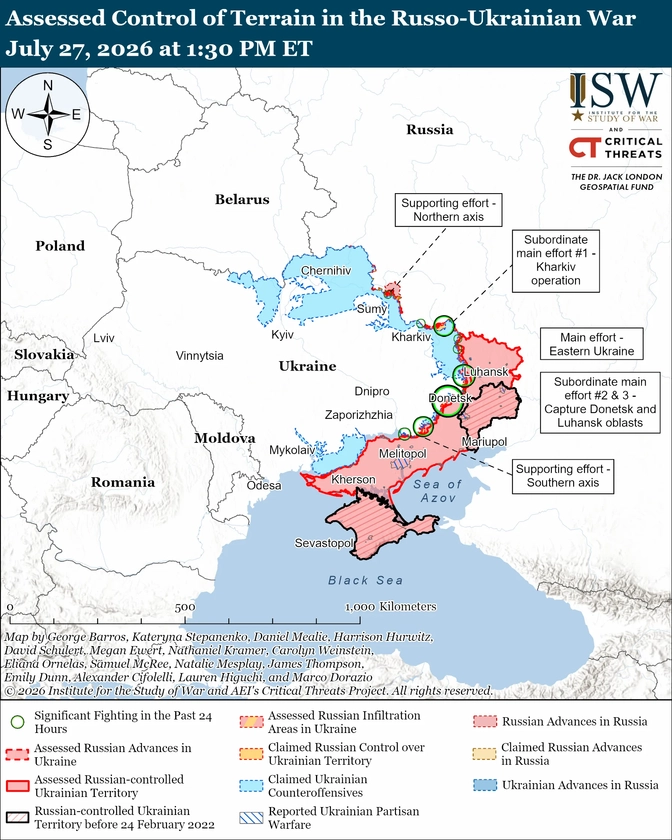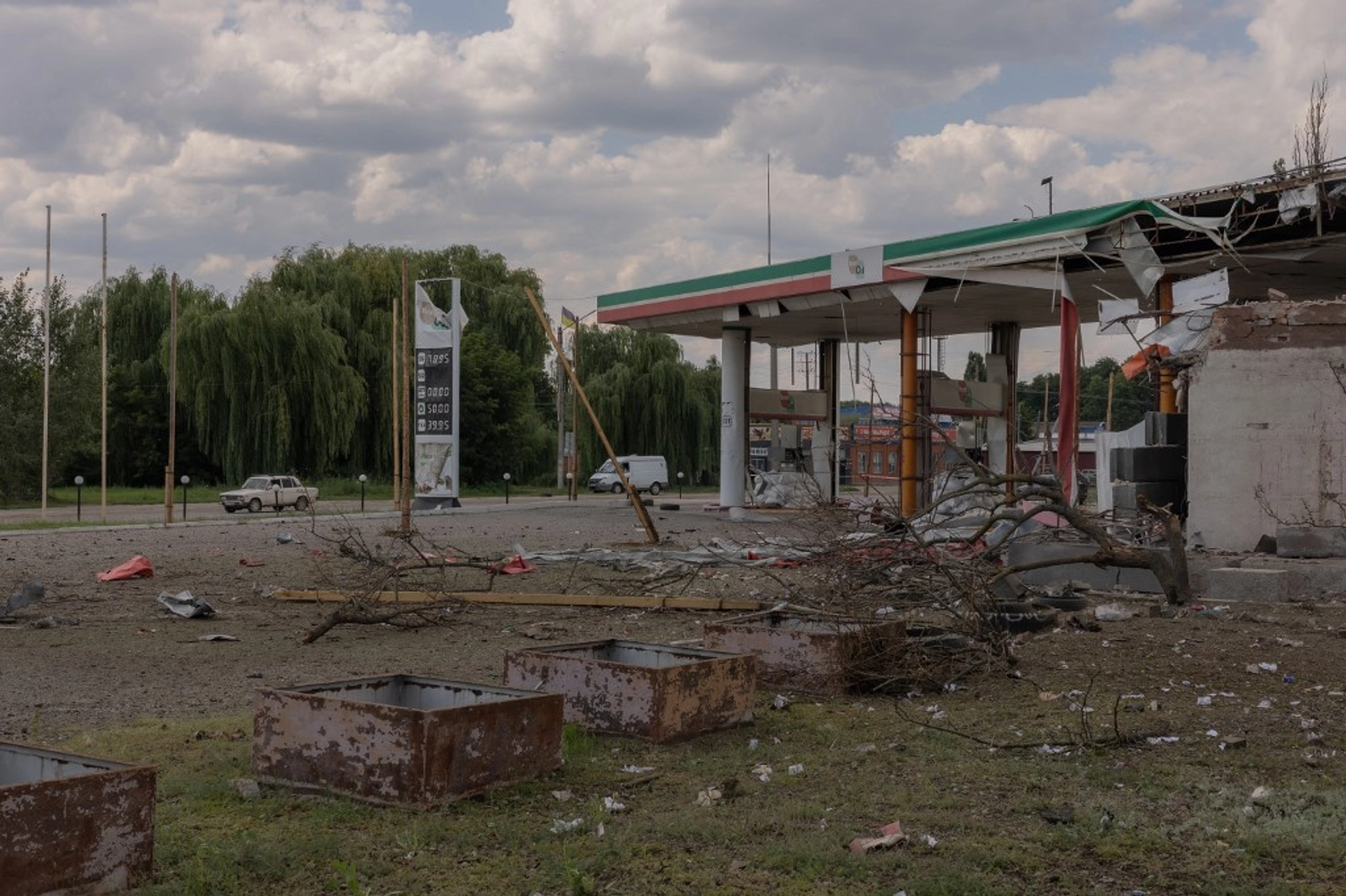
Russian armed forces have destroyed more than 80 petrol stations in the Kharkiv region, leaving the entire 140-kilometer (87-mile) Kharkiv-Poltava stretch of the route without a single functioning filling station, Kharkiv Regional Council deputy Oleksandr Skoryk told Espreso TV on Monday.
Skoryk said that the situation is worsening daily, and that the last working gas station in the village of Valky was destroyed on Sunday, July 26.
JOIN US ON TELEGRAM
Follow our coverage of the war on the @Kyivpost_official.
However, the head of the Kharkiv Regional Military Administration pushed back on that claim just hours later.
“More than 200 gas stations have been destroyed in Ukraine, more than 80 of them in Kharkiv and Kharkiv region. But there is no crisis. We live, we fight,” Skoryk said.
Entire highway stretch left without fuel access
The most severely affected section runs along the Kharkiv-Kyiv highway, specifically between Kharkiv and Poltava, where Skoryk said every single station has been wiped out – including “in the city of Chutovo, and further on the road to Poltava.”
He urged drivers planning to travel this route to stock up on fuel in advance, warning that there are now practically no opportunities to refuel anywhere along that stretch.
Despite the scale of destruction, Skoryk said that any talk of a fuel or food crisis is premature. According to him, daily life and the war effort continue uninterrupted.
However, Syniehubov dismissed those claims.
“I want to separately emphasize: information from some media that not a single operating gas station remains on the highway from Kharkiv to Poltava does not correspond to reality,” Syniehubov said in a statement on his Telegram channel.

Pentagon Admits US Drone Production Remains Far Behind Ukraine
“There is no fuel shortage in the region,” he added.
Part of a broader logistics campaign
The destruction in Kharkiv Oblast fits a pattern flagged earlier this month by Ukraine’s Military Intelligence (HUR), which warned that Russia’s “Rubikon” drone unit had been ordered to intensify strikes on civilian gas stations, trucks, buses and vehicles in border regions.
According to HUR, the campaign appears to be a response to Kyiv’s own intensified “middle strike” operations against Russian energy and oil infrastructure supplying occupied Ukrainian territory, suggesting both sides are increasingly targeting each other’s fuel and transport networks.
Over the past few weeks, Ukraine has been conducting relentless campaigns aimed at isolating Crimea from mainland Russia, while also seeking to degrade its value as a military base.
As of July 13, Russia’s oil refinery output has dropped by over 60%, hitting its lowest level in 21 years since 2005, according to data from Energy Aspects (EA). According to Bloomberg, Russia’s current refining capacity is around 3.91 million barrels per day in July 2026, – down 1.4 million barrels compared to the previous year’s average.
Ukraine has likely struck at least 24 of Russia’s 34 large refineries in 50 attacks over the past 100 days, as per the same Bloomberg report, with Kyiv reporting that the campaign is an effort to pressure Moscow into possible peace negotiations.
Around the same time in July, Ukraine’s General Staff reported that the strikes disabled 42.7% of Russia’s total projected oil refining capacity.
The months-long campaign against Russia’s supply networks has led to an extensive fuel crisis in both Russia and occupied parts of Ukraine, prompting Russia to ban exports of gasoline starting in April, of jet fuel starting June 1, and of diesel starting July 8.
You can also highlight the text and press Ctrl + Enter