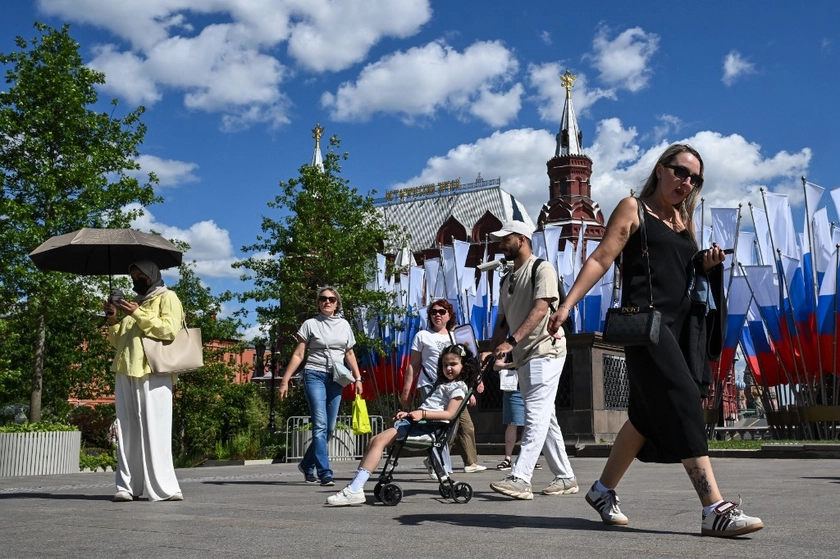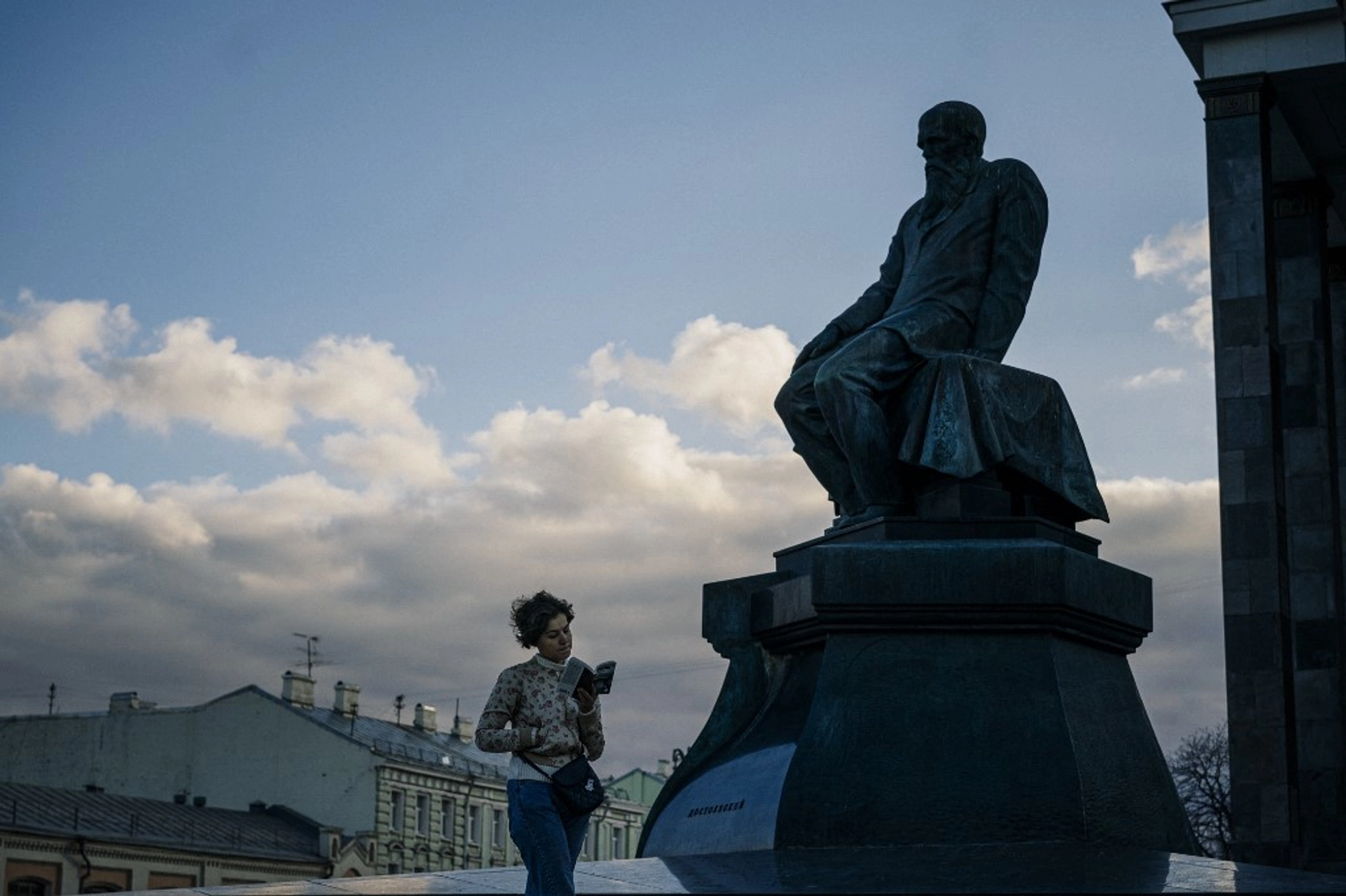
As Russians celebrate their “Russia Day,” let’s pause to reflect on the essence of the Russian souls as Dostoevsky captured it, but which many Westerners largely still fail to grasp.
“But what about Dostoyevsky?”
JOIN US ON TELEGRAM
Follow our coverage of the war on the @Kyivpost_official.
Since the start of Russia’s full-scale invasion of Ukraine in 2022, it has become one of the West’s favorite appeals in defense of Russia and its culture.
Yes, I have read him. Like millions of people across the former Soviet Union, I studied
Dostoyevsky at school. During one visit to my cousin’s apartment, I even borrowed a copy printed in pre-revolutionary Russian. Years later, I watched The Idiot television series and read the much less popular Humiliated and Insulted, a story of St. Petersburg’s gutter – both moral and physical.
Since then, I have given up on Russian literature.
With the exception of Bulgakov, whose Heart of a Dog contains historical elements relevant to my line of work, I refuse to read it – not merely because of Russia’s ongoing war against Ukraine, but because I simply cannot comprehend, or accept, its nature.
Whatever the book, the themes seemed remarkably similar: alcoholism, emotional abuse, allusions to sexual perversion, chaotic love affairs, the inevitability of doom, and internal submission.
Why did Raskolnikov kill the old woman and her sister in such a gruesome manner?
Kasparov: Ukrainian Flag in Sevastopol Is the Shock Russia Needs to Accept Empire Is Dead
What explains Prince Myshkin’s sudden romantic pivot from Nastasya Filippovna to Aglaya Epanchina?
Why does Natasha sacrifice herself for the comfort of her lover, Count Alyosha, who, having destroyed her life, abandons her for another woman?
Over the years, after reading many books and witnessing Russia’s war against Ukraine, I found only one answer: the unscrupulousness of the whimsical mind.
Perhaps to the Western mind this appears enigmatic. I have heard nothing but praise for Russian classical literature. Yet to me – and I consider myself at least partly Western, having spent a considerable amount of time abroad – it is precisely this unscrupulousness of the whimsical mind that explains the conduct of these characters.
Let us focus on Dostoyevsky’s chief novel, Crime and Punishment, the story of Rodion Raskolnikov, a young man living in poverty who comes to believe that he has the moral right to commit murder.
For many in the West, it is a story of humanism and redemption.
But is it really?
The entire premise of the novel rests on the fact that Raskolnikov lives in an environment of profound social injustice. The Russian Empire is economically backward, with serfdom having been abolished only a few years earlier. It would take another fifty years for the empire to create a parliament – an extraordinarily late development for a European state.
Yet while much of Western Europe is busy confronting social inequality through labor movements and political activism, Raskolnikov, morally repulsed by Marmeladov’s story of poverty and his daughter Sonia’s prostitution, decides to take an axe to an elderly woman.
He then convinces himself that he is an exceptional individual with exceptional rights, asking: “Am I a trembling creature, or do I have the right?”
A phrase perhaps better rendered as: “Am I a frightened nobody, or can I do as I please?”
The answer to that question appears with remarkable frequency in Russian life.
Modern-day Russia
A brief internet search for Russians killing people with axes produces a host of modern-day Raskolnikovs.
A sixteen-year-old axed his grandmother in the Tuapsinsky District. In Protykhalovka, a man axed an elderly woman. In Lipetsk, a twenty-five-year-old man axed his own grandmother. A twenty-seven-year-old, Nikolai Tropin, axed an elderly woman.
One would assume that the motives behind these crimes must have been some grand vice.
But much like in Raskolnikov’s case, they often involved money – sometimes as little as 200 rubles (about $3) – or a petty dispute.
Then there are the even more disturbing stories.
In 2019, renowned St. Petersburg historian and Napoleon enthusiast Oleg Sokolov killed and dismembered his 24-year-old lover, Anastasia Yeshchenko, one of his students.
He was later detained on the embankment of the Moika River while attempting to dispose of a backpack containing two severed female hands and a traumatic pistol. Intoxicated, he fell into the river himself.
He shot Yeshchenko with a sawed-off small-caliber rifle during an argument. Later, he claimed that he intended to kill himself while wearing a Napoleonic uniform at the Peter and Paul Fortress.
Like Raskolnikov, he appears to have imagined himself as Napoleon.
And Yeshchenko? She spent years sacrificing herself to the needs of an idiosyncratic professor with an oversized ego.
Then there is the more recent case of Artem Buchin, a Wagner Group member who was released from prison to fight in Ukraine after murdering a young nurse in 2021. Upon returning to Russia, he married a woman with a young daughter, who appeared to have turned a blind eye to his record.
He strangled, raped, and killed them both. All because of a petty dispute.
The problem is not that such stories are unique to Russia, nor that Dostoyevsky somehow caused them.
His genius lies precisely in his ability to capture the essence of the society around him.
He did so brilliantly.
But as a literary virtuoso, he could also have imagined a different outcome for his characters – even one rooted in wishful thinking.
He did not.
Instead, there is death, dubious sacrifice, destructive choices, and mental asylums in Switzerland.
Raskolnikov’s eventual acceptance of the notion that little can be done because we are all “little men” and the implicit beginning of redemption, may tell readers not to kill, but it lacks the torment of conscience found in, for example, Émile Zola’s Thérèse Raquin, a devastating story of passion culminating in murder.
Nor does it contain a call to action like Zola’s Germinal, a tale of coal miners fighting for their rights in 19th century France.
What it does contain is an ending in which Sonia Marmeladova follows Raskolnikov to Siberia, presumably in a sudden act of atonement for her own sins.
The image is strikingly reminiscent of Somerset Maugham’s Christmas Holiday, whose Russian émigré Lydia works as a prostitute in a Paris cabaret as “atonement” for a crime committed by her husband.
To Maugham’s credit, he does not glorify this “sacrifice.”
And there is a good reason for that: it is inherently unhealthy to do so.
The views expressed in this opinion article are the author’s and not necessarily those of Kyiv Post.
You can also highlight the text and press Ctrl + Enter

Russia Hit by 660-Drone Overnight Barrage Targeting Moscow, Crimea and Key Military Sites