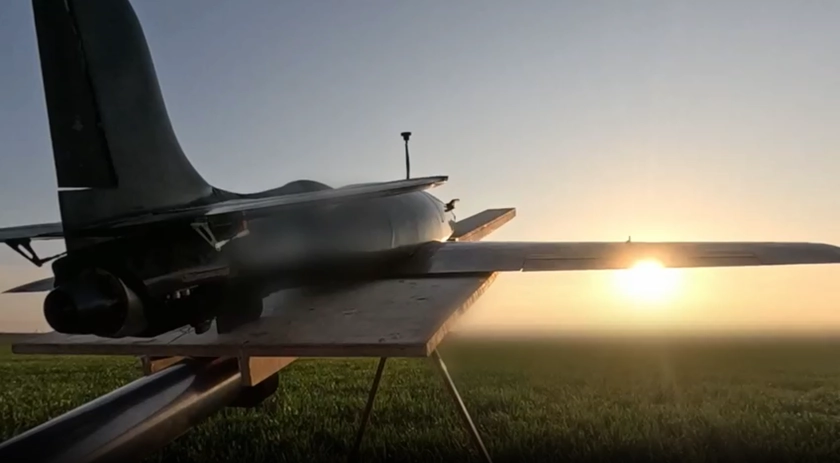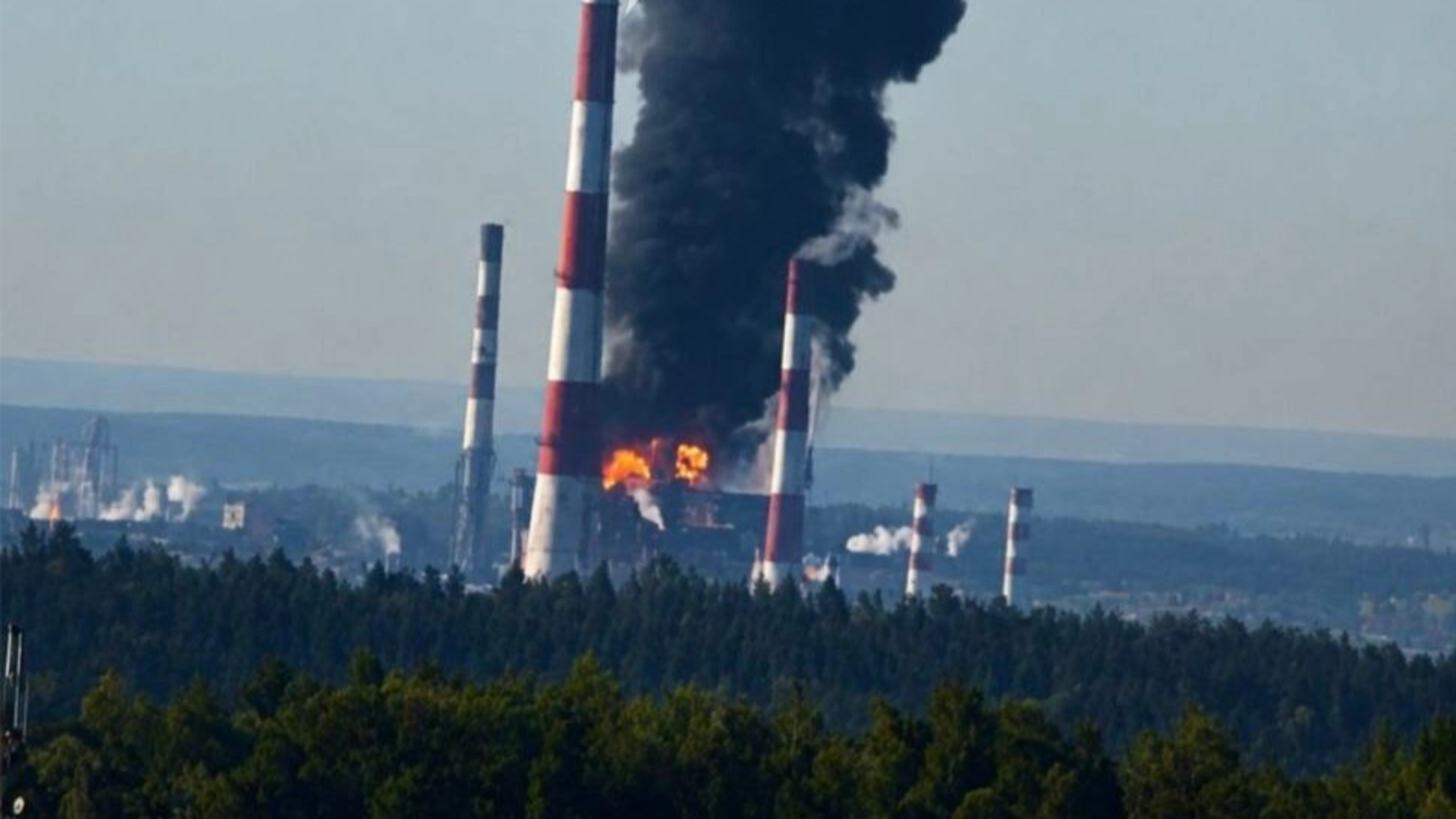
US intelligence has reportedly helped Ukraine’s long-range drones bypass Russian air defenses and strike deep inside Russia, contributing to a record wave of attacks on oil refineries that is prompting the Kremlin to suppress domestic coverage.
According to the Financial Times (FT) analysis based on data from Poland’s Rochan Consulting, Ukrainian forces carried out a record 16 successful refinery strikes in May.
JOIN US ON TELEGRAM
Follow our coverage of the war on the @Kyivpost_official.
Since the start of 2026, Russian refineries have been hit at least 194 times, an 11-fold increase compared with the same period the year before.
Unnamed senior Ukrainian officials told the FT that US intelligence has helped Kyiv identify optimal flight paths for its drones, allowing them to bypass Russian air defenses and reach targets deep inside Russia.
The FT previously made similar claims in October 2025, citing unnamed US and Ukrainian officials.
Analysts also credited Ukraine’s expanding domestic drone production and improved coordination for the campaign’s growing success.
“Ukraine has had a technological breakthrough, which allowed them to produce more long-range drones and increase overall mass production,” Stefan Meister, head of the Eurasia program at the German Council on Foreign Relations, told the FT.
Official Russian defense ministry figures cited by the FT claim that 63,933 Ukrainian drones were intercepted over Russia and occupied Ukrainian territory during the first six months of 2026.
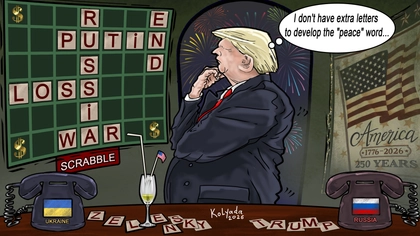
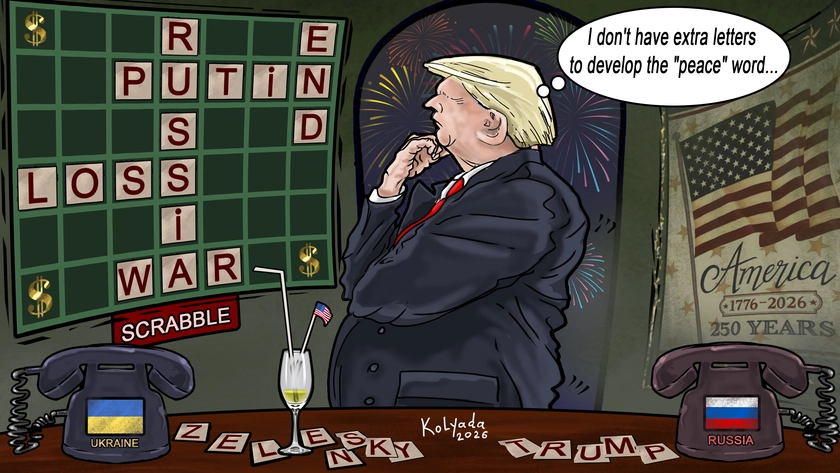
CARTOON: Scrabbling for Peace or Playing Mind Games?
However, the outlet added that the number of drone attacks has risen so sharply that Russia’s air defenses are coming under increasing strain, making it harder to protect key military and energy infrastructure.
The campaign is also undermining the Kremlin’s efforts to shield Russians from the realities of the war.
“At a fundamental level, we can see Putin has made another fatal strategic error in this war, thinking for some reason that time was only on his side. He couldn’t get Ukraine to capitulate, but he gave them enough time to develop mass production of ‘deep strikes,’” Ruslan Pukhov, director of Moscow’s Center for Analysis of Strategies and Technologies, told the outlet.
The report comes as President Volodymyr Zelensky has announced a 40-day campaign of long-range strikes aimed at increasing pressure on Russia and forcing Moscow to end its war against Ukraine.
The Kremlin’s information blackout
At the same time, Russia’s presidential administration has reportedly instructed state-controlled media to stop covering the aftermath of Ukrainian strikes inside Russia, according to the independent Russian outlet Verstka, citing three sources working for pro-government media.
The sources said the directive came directly from the Kremlin in the second half of June.
“They insisted that we stop publishing videos and photos showing the aftermath of Ukrainian strikes on our territory,” one source told the outlet, adding that editors were instead encouraged to focus on the consequences of Russian strikes against Ukraine.
Another source said the Kremlin was dissatisfied with the extensive coverage of Ukrainian attacks.
“They were unhappy that the consequences of Ukrainian strikes were being shown from every angle and in every possible format,” the source said.
Following the directive, several major Telegram channels linked to the Kremlin or Russia’s defense ministry – including Mash, Baza, and Shot – either sharply reduced their coverage of Ukrainian attacks or stopped reporting on them altogether.
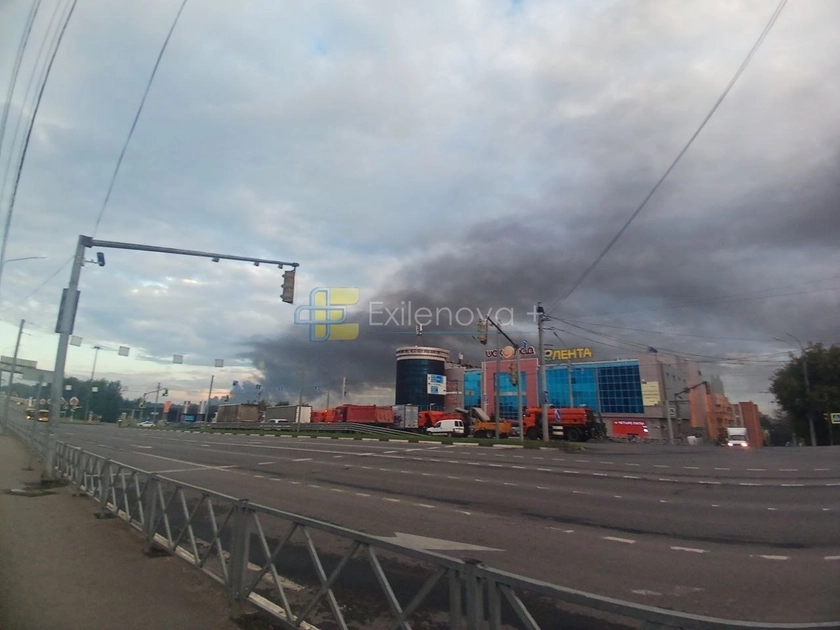
According to Verstka, the channels largely ignored strikes on the Slavyansk-on-Kuban and Kstovo oil refineries, as well as an attack on a defense plant in Penza. Some also removed previously published photos and videos showing the aftermath of Ukrainian strikes on Moscow.
One source said similar restrictions have long been in place in many Russian regions, with violations punishable under administrative law. At the same time, the source claimed that some hardliners within Russian President Vladimir Putin’s inner circle are pushing for even tougher measures.
“There are hawks who demand criminal penalties with long prison terms for such publications, but officials in the presidential administration don’t want to go that far,” the source said.
After the June 18 attack on Moscow, a host on the state-affiliated Solovyov Live channel urged Russian security services to open treason cases against Moscow residents who recorded footage of the attack.
Earlier, when asked about what was described as the largest drone attack on Moscow since the start of the war, Kremlin spokesman Dmitry Peskov deflected attention to Russian strikes on Ukraine, as per The Moscow Times.
“The footage is impressive, based on the results of strikes by our armed forces,” Peskov said, urging reporters to focus on videos from Ukraine instead.
He added that Putin is briefed “several times a day” on Ukrainian strikes inside Russia, although the Kremlin leader rarely comments publicly on attacks targeting the country’s energy or military infrastructure.
Russia’s offensive running out of steam
Despite the growing attacks, the Kremlin leader has shown no sign of softening his position and continues to insist that Russia can achieve its military objectives.
Senior Ukrainian officials involved in the peace process told the FT that Russian negotiators continue to demand sweeping concessions from Kyiv and that US-mediated peace talks are unlikely to resume before the end of the summer.
Publicly, the Kremlin has continued to demand that Ukraine withdraw from parts of the Donbas region that Russia has failed to win militarily as a precondition for negotiations, with top Kremlin officials hinting that it was part of the agreements made with the US during the August 2025 Alaska summit, a point contested by Washington.
A person in Moscow involved in back-channel contacts told the newspaper that meaningful negotiations are unlikely before next year.
“The preferred option of the Russians so far remains that the Americans will ‘deliver’ Ukraine for us,” the source said. “They are not hinting at any concessions. They keep repeating the same objectives... Their basis for negotiations essentially means there is no basis for negotiations.”
Moreover, the FT, citing Zelensky, a Ukrainian intelligence assessment, and sources familiar with the Kremlin, reported that Putin has ordered Russian forces to capture the remainder of Ukraine’s Donetsk region by the end of the year despite Russia’s slow and costly advance.
Zelensky mocked Moscow’s proposed deadline on June 30 by noting that it had shifted the deadline at least 15 times without capturing the Ukrainian region.
In an interview with The Times published on Saturday, US Vice President JD Vance also said Russia has nearly exhausted its ability to sustain further offensive operations in Ukraine.
According to Vance, Russian forces are paying “a lot for every square kilometer” of territory they capture.
“Frankly, the Russians are in a place right now where the amount that they can get through continued offensive operations is vanishingly small – and getting close to zero. That very well may create the space that we need to bring this thing to a close,” Vance added.
He argued that this situation developed after the Trump administration encouraged Ukraine to prioritize a defensive strategy.
Additionally, Vance added that Ukraine’s extensive use of drones to wear down Russian forces has proven more effective than launching large-scale offensives to retake occupied territory.
You can also highlight the text and press Ctrl + Enter