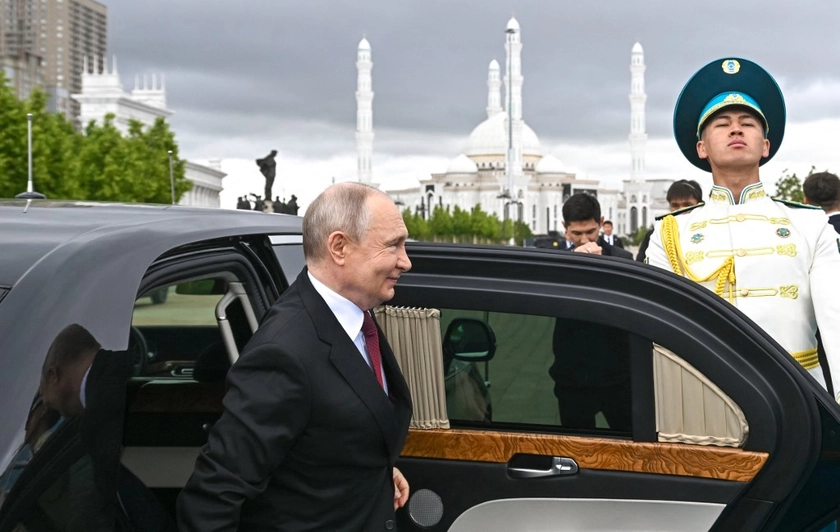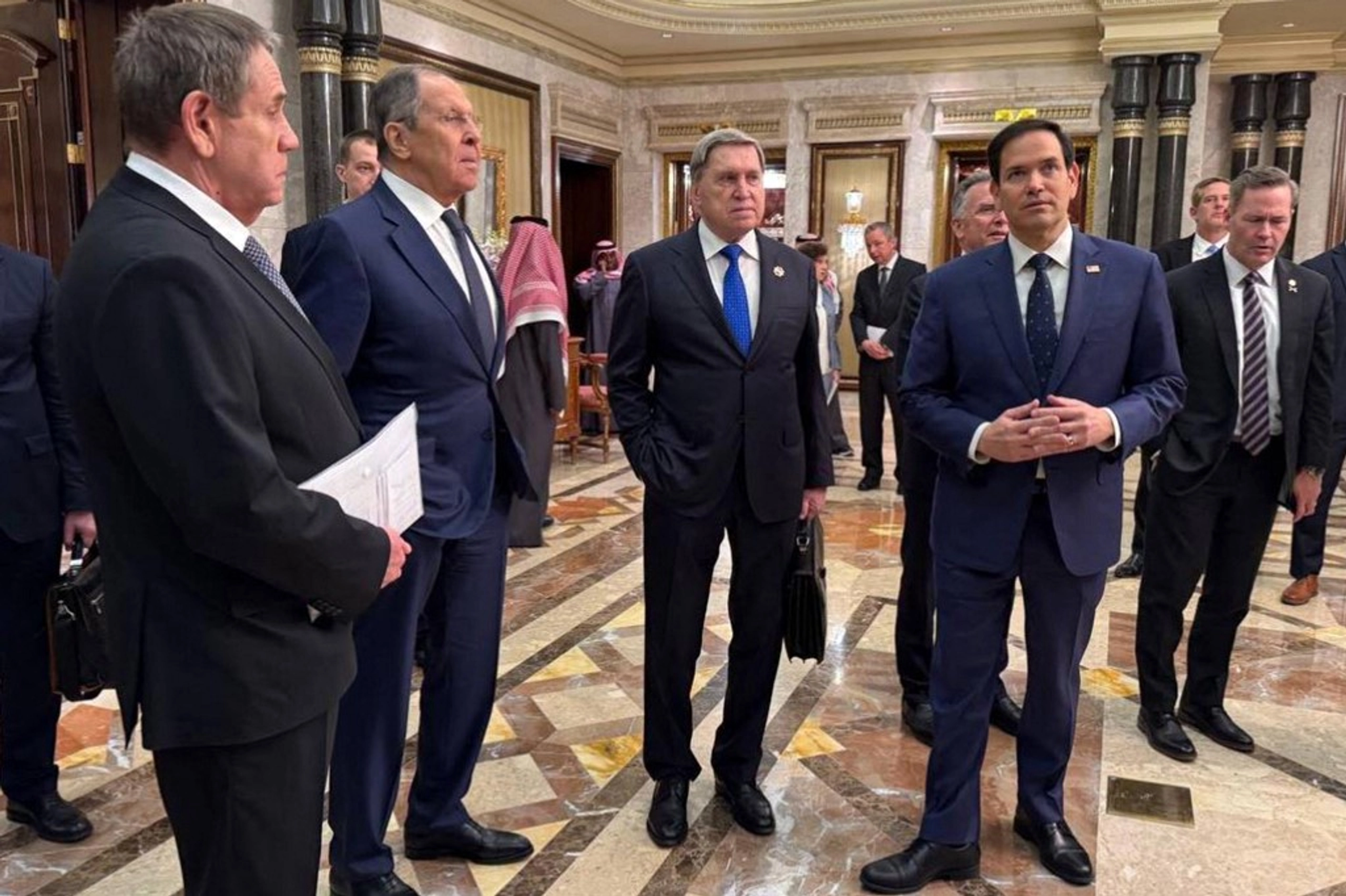
Russian-US dialogue in Riyadh has stumbled to a close – a diplomatic dance that promised much but has delivered little beyond vague assurances and a masterclass in Kremlin foot-dragging.
After marathon sessions stretching over 12 hours earlier this week, both sides issued statements hinting at progress – a 30-day ceasefire on energy strikes and a Black Sea shipping deal. After that, static, then silence. There was no deal, and there has been no suspension of hostilities.
JOIN US ON TELEGRAM
Follow our coverage of the war on the @Kyivpost_official.
The White House touts a “framework” for peace, while Russia’s Foreign Ministry spins it as a step toward ending Moscow’s isolation. But “frameworks” don’t stop bullets, and rather than pause for peace, Russia has increased its operational tempo over the past week, suffering its fourth largest single day casualty record, losing 1,800 soldiers in a single day as it tripled down on meat wave attacks.
During the Riyadh talks, Ukrainian cities were attacked nightly, with Russia prioritizing its usual target list – high density urban housing, clinics and hospitals. Scores of civilians were wounded and dozens died.
With Ukraine sidelined from the table at Riyadh, Kyiv could do nothing but watch suspiciously, its fate dangling between vaporous superpower promises and battlefield realities.
The Kremlin’s playbook hasn’t changed: to delay, obfuscate, and demand concessions while offering nothing concrete. US National Security Adviser Mike Waltz, perhaps concealing his own confusion, spoke of territorial negotiations and security guarantees, but specifics were missing in action and may now be presumed dead.
Ukraine Launches Drone Blitz on Russian Explosives Plants and Fuel Hubs
In Riyadh, Russia’s foreign minister Sergei Lavrov whipsawed negotiations by rejecting NATO troops in Ukraine under any flag after the Kremlin signaled it would be willing to see their deployment.
Putin’s maximalist agenda is unchanged. He is demanding that Ukraine cedes Kherson, Zaporizhzhia, Donetsk and Luhansk, even though none of these Oblasts are under full Russian military control. It is plain now that Russia seeks victory at the negotiation table, hoping to be given terrain its troops cannot capture.
Ukraine says that US officials will meet in Kyiv next, but the lack of both progress and transparency fuels distrust. Russia’s endless demands signal a wide, and likely unbridgeable, chasm between the parties.
Did anyone really expect results from Riyadh results? Probably not. If the Riyadh conference had been a real-world business meeting, accounting would chalk it up as a frequent flier boondoggle.
And back at the Zero Line, Ukrainian intelligence has noted preparations for what looks like a major Russian offensive along the entire 1,000-kilometer line of contact – the jagged scar of trenches and minefields that is the crucible of Ukraine’s fight for freedom.
What is Moscow secretly planning?
Here are some facts. Moscow is gearing up for war, not peace. Intelligence sources report that Russia’s central, eastern, and southern military districts are syncing operations in Donetsk, hinting at a broader push. Ukraine’s Main Directorate of Intelligence (HUR) reveals that North Korea has delivered over five million artillery rounds and 100 KN-23/24 ballistic missiles to Russia. Sixty of Russia’s 194 ballistic missile strikes in 2024 were North Korean-supplied – that’s 30% of the missiles dropped on Ukrainian civilians. And with Pyongyang still shipping weapons, with that number climbing.
This isn’t a pause – it’s a reload. A wide-ranging Russia offensive is in the works. This will mean more meat waves, but Ukrainian intel believes the assaults will take place from Kupiansk to Kherson – the entire length of the line of contact.
Russia’s “attack on all vectors” strategy is as old as blitzkrieg but simpler. Russia lacks both military leadership talent and well-trained soldiers. Meat waves are about all they can hope to pull off.
The coming Russian offensive will be about engaging and seeking to overwhelm Ukraine’s defenses across a sprawling front, exploiting gaps with sheer mass. Russian attacks will continue – the Kremlin more than happy to trade thousands of faceless, nameless Vatniks for Ukraine’s sons, brothers and fathers. It’s a bad trade.
The goal? Stretch Ukraine thin, force a collapse, and dictate terms. Putin’s betting on attrition, banking that time and bodies will outlast Western resolve. Moscow is recruiting 30,000 troops monthly – these are only sufficient to sustain staggering his losses. But you may be certain that the Russians will press on, regardless of the human cost.
History shows us that Moscow does not see its soldiers as a precious resource, but as an expendable commodity. Putin’s supposedly 72-hour “Special Military Operation” is approaching one million casualties – 350,000 Russian dead and 750,000 grievously wounded. Russia doesn’t care. Putin himself said he is willing to lose two million men in Ukraine. For once, he can be taken at his word.
Ukraine’s prosperity – in fact, its very survival – hinges on NATO and the US delivering more than words. The State Department’s March 12 update boasts $1.6 billion in arms exports since 2015, including anti-armor systems and air defenses.
But many weapons systems have yet to ship, others are delayed, and many of the promised big-ticket items, like more patriot systems, simply never materialized.
Kyiv needs more – more of everything including F-16s, SAM complexes to weave a layered nationwide air defense, and tons of ammo – to counter Russia’s barrage. Trump’s push for peace is noble, but without firepower, it’s hollow.
Ukraine’s future isn’t forged in Riyadh’s palaces – it’s defended on the Zero Line, where NATO’s promises must become steel, or Putin’s killers will prevail.
The views expressed are the author’s and not necessarily of Kyiv Post.
You can also highlight the text and press Ctrl + Enter

Putin’s Worst Nightmare